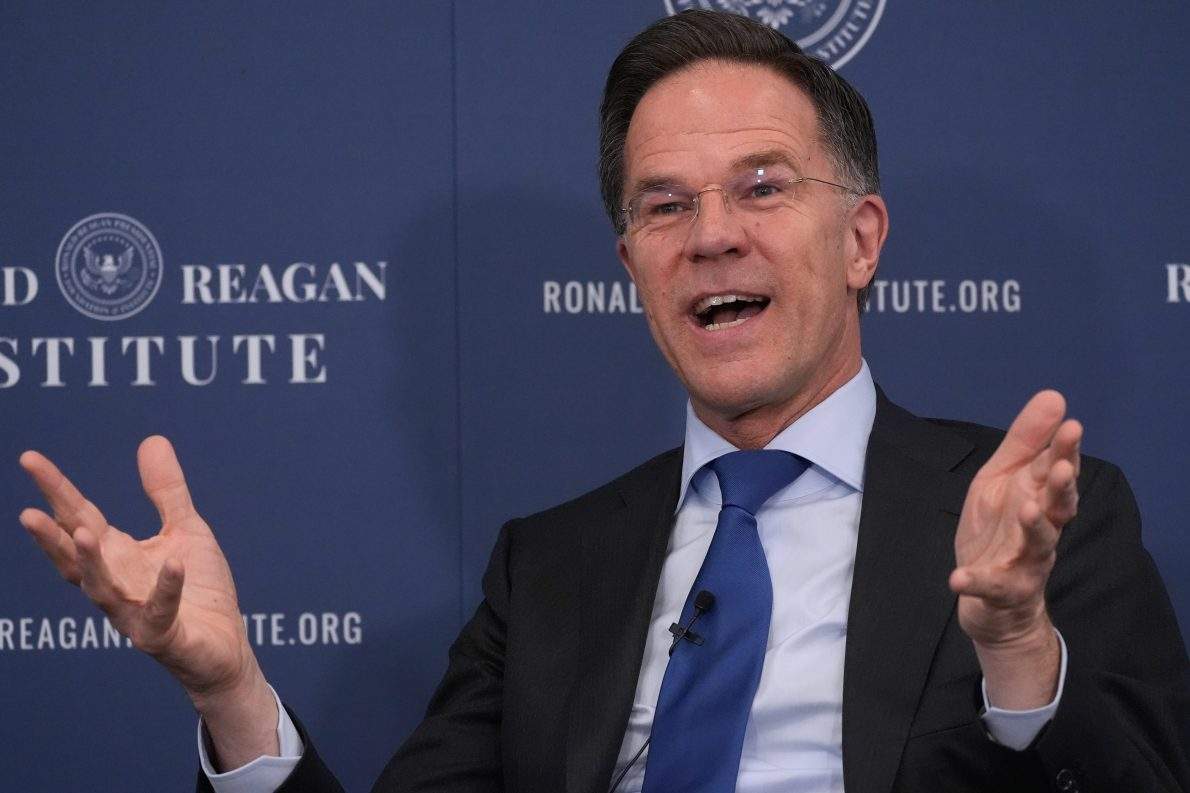
The media loves a good "disappointed parent" narrative. When the NATO Secretary General nods along to American grievances about defense spending or Middle East policy, the pundits frame it as a diplomatic breakthrough. They call it "understanding" or "alignment." It isn't. It is a desperate attempt to maintain the facade of a 20th-century alliance in a world that has moved on to a more brutal, transactional reality.
We are told the friction within the alliance stems from a failure of communication or a "lack of burden-sharing." This is a shallow reading of a much deeper rot. The tension isn't about the 2% GDP spending target or who likes which Iranian general. The tension exists because the United States and Europe no longer share a definition of security. One side views NATO as a global police force; the other views it as a regional insurance policy they hope they never have to claim. Recently making waves lately: Moscow Sounds the Alarm as Israeli Strikes Threaten to Fracture Middle East Diplomacy.
The Myth of the "Disappointed" Superpower
The narrative that the U.S. is "disappointed" with its allies is a rhetorical trick. It implies a moral hierarchy where Washington is the hard-working provider and Europe is the lazy teenager. I have sat in rooms with defense contractors and policy wonks where this frustration is vented, and it is almost always rooted in a fundamental misunderstanding of why sovereign nations spend money on defense.
Nations do not spend 2% of their GDP on tanks and jets because a treaty tells them to. They do it because they perceive a threat that requires tanks and jets. For decades, the U.S. has subsidized European security to maintain a footprint in the hemisphere and ensure a stable market. Now, Washington wants to keep the influence but stop paying the bill. You cannot have it both ways. If you demand your allies act like independent powers on the world stage—specifically regarding Iran or China—you must accept that they will develop independent interests that may directly contradict yours. Further insights on this are detailed by The Washington Post.
The "disappointment" isn't about money. It’s about control.
The Iran Trap: Why Logic Fails the Alliance
The competitor articles often highlight NATO’s "understanding" of U.S. positions on Iran as a sign of unity. This is a tactical lie. European capitals and Washington are fundamentally at odds regarding the Middle East, and no amount of polite press releases will change the math.
For the U.S., Iran is a geopolitical chess piece, a way to project power and manage oil flows. For Europe, Iran is a neighbor and a potential source of massive migration waves and energy instability. When the U.S. pressures allies to fall in line on Iran, it isn't asking for help with a shared problem; it is asking Europe to set its own backyard on fire to satisfy a domestic political agenda in D.C.
The "nuance" the mainstream media misses is that Europe’s refusal to follow the U.S. lead on Iran isn't a sign of weakness. It is a rare moment of strategic clarity. They know that if the Middle East de-stabilizes further, the refugees don't go to New York. They go to Berlin, Paris, and Rome.
The Burden-Sharing Delusion
Let’s talk about the 2% rule. It is the most overused, least understood metric in modern geopolitics.
- Input vs. Output: Spending 2% of GDP on a bloated, inefficient military bureaucracy is worse than spending 1.2% on a lean, high-tech force. Greece consistently hits the 2% target. Does anyone truly believe Greece is the backbone of NATO’s deterrent power?
- The Procurement Loop: Much of that 2% is expected to be spent on American-made hardware. When D.C. demands higher spending, it is often a subsidized sales pitch for Lockheed Martin and Raytheon.
- The Geography of Risk: A tank in Poland serves a different purpose than a drone in the Mediterranean. NATO treats "defense" as a monolithic block, but the security needs of a Baltic state are lightyears away from the needs of Portugal.
The U.S. complains about the cost of the "nuclear umbrella," but that umbrella is exactly what keeps the U.S. at the head of the table. If Europe truly militarized to the level Washington claims to want, the first thing they would do is stop listening to Washington.
The Strategic Autonomy Fever Dream
On the flip side, the European "Strategic Autonomy" crowd is equally delusional. You see this in the high-minded speeches from Brussels about a "European Army." I’ve seen these white papers; they are masterpieces of bureaucratic fiction.
You cannot have strategic autonomy without a unified foreign policy, and you cannot have a unified foreign policy when Poland views Russia as an existential threat while Germany views Russia as a complicated gas station. Europe’s "disappointment" with the U.S. is just as hollow as the U.S. "disappointment" with Europe. Both sides are clinging to a relationship that neither is willing to fund or define.
The Brutal Reality of 21st-Century Alliances
If you want to understand the future of NATO, stop reading the communiqués. Look at the logistics.
Real security is not a "holistic" (to use a word I despise) agreement between 30+ nations. It is a series of bilateral "pay-to-play" arrangements. Poland is buying American tanks because they want American boots on Polish soil. It has nothing to do with "Atlantic values" and everything to do with the fact that they don't trust the Germans or the French to show up if the border gets hot.
The mainstream press asks: "Can NATO survive?"
The real question is: "Does a 1949 solution work for a 2026 problem?"
The answer is a resounding no. We are witnessing the slow-motion car crash of an alliance that refuses to admit its core premise—collective defense—is being replaced by selective cooperation.
The Actionable Truth
If you are a policy maker, a business leader, or just someone trying to navigate this mess, here is the unconventional reality:
- Ignore the 2%: It’s a red herring. Watch for "interoperability." If a country's systems can't talk to the U.S. network, they aren't an ally; they're a liability, regardless of what they spend.
- Bet on Regional Blocs: NATO is too big to be effective. The real power is shifting to smaller, more agile groups like the "Lublin Triangle" (Poland, Lithuania, Ukraine) or the "Nordic-Baltic Eight." These groups have skin in the game.
- Energy is the Real Defense Budget: A country with a secure energy supply is more "defended" than a country with a squadron of F-35s and a shuttered power grid.
Stop looking for "unity." Unity is a lie told to keep the stock prices of defense contractors stable. We are entering an era of "Transactional Security." It’s messy, it’s loud, and it’s a lot more honest than the "disappointment" theater we’re being sold today.
The U.S. doesn't want allies; it wants vassals who pay their own way. Europe doesn't want an alliance; it wants a bodyguard it doesn't have to tip. Until both sides admit the old NATO is dead, they will continue to play this charade of "understanding" each other's frustrations while the world burns around them.
The alliance isn't breaking; it’s finally being seen for what it actually is: a marriage of convenience where both parties have been sleeping in separate bedrooms for twenty years. Stop trying to save the marriage. Start negotiating the divorce settlements for specific regions and threats. That is the only way to build something that actually survives the next decade.
Accept the friction. Embrace the transaction. Stop waiting for a "return to normalcy" that was never normal to begin with.


