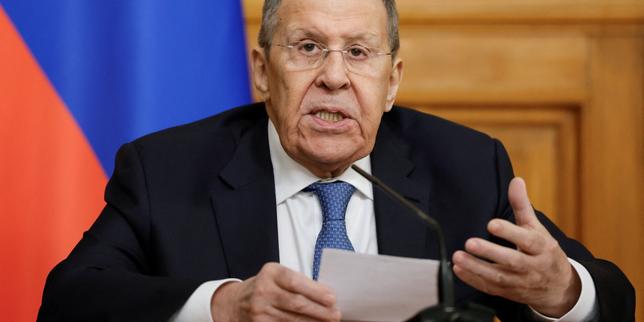
Sergei Lavrov knows exactly which buttons to press. When the Russian Foreign Minister recently claimed that Vladimir Putin and Donald Trump share a "mutual respect," he wasn't offering a diplomatic insight or a heartfelt observation. He was deploying a calculated psychological tool designed to influence Western political discourse. This narrative of "respect" is a smokescreen. It masks a brutal, transactional reality where both leaders view the other not as a peer to be admired, but as a variable to be manipulated in a high-stakes geopolitical endgame.
The Kremlin’s current strategy relies on the hope that a change in Washington will lead to a collapse in Western support for Ukraine. By framing the relationship between Putin and Trump as one of professional regard, Lavrov is signaling to the American electorate and the international community that a "deal" is not just possible, but inevitable. However, a deeper investigation into the mechanics of Russian foreign policy reveals that this "respect" is entirely one-sided in its utility. For Putin, Trump represents a potential disruption to the NATO alliance. For Trump, Putin represents a strongman archetype that mirrors his own preferred image of leadership.
The Architecture of Russian Influence
Moscow’s diplomatic machinery does not operate on sentiment. Every statement from the Foreign Ministry is vetted for its ability to create friction within the Atlantic alliance. When Lavrov speaks of respect, he is targeting the "realist" wing of the American political establishment. He wants to convince policymakers that the war in Ukraine is merely a misunderstanding that can be settled over a cigar and a map, rather than a fundamental assault on the post-war European order.
This tactic is effective because it plays into a specific American desire for quick resolutions. The public is tired. Billions of dollars in aid are scrutinized daily. By dangling the carrot of a "respectful" dialogue, Russia attempts to bypass the grueling reality of trench warfare and move straight to a partition of Ukrainian territory. It is a classic maskirovka—a deceptive maneuver intended to make the enemy miscalculate the true intentions of the state.
Russia’s true objective remains unchanged: the neutralization of Ukraine as a sovereign entity and the rollback of NATO’s presence in Eastern Europe. No amount of personal rapport between heads of state changes the structural reality that Russia views a Western-aligned Ukraine as an existential threat. The "respect" narrative is merely the lubricant for a very rusty and dangerous machine.
The Trump Variable and the Art of the Leverage
Donald Trump’s approach to foreign policy has always been defined by personal chemistry rather than institutional memory. He views global affairs as a series of bilateral trade negotiations. This is precisely why Lavrov’s comments are so well-timed. The Kremlin understands that Trump values the optics of being a "tough negotiator" who can talk to anyone.
During his first term, Trump’s rhetoric often drifted toward praising Putin’s strength. Moscow hasn't forgotten this. They view his "America First" policy as an opportunity to hollow out the multilateral institutions that have contained Russian expansionism for decades. If the United States retreats from its role as the primary guarantor of European security, the "respect" between the two men becomes the only thing standing between Russia and its regional ambitions.
But there is a flaw in the Kremlin's logic. Trump is notoriously unpredictable. While he may speak fondly of Putin, his administration also oversaw the delivery of Javelin anti-tank missiles to Ukraine—a move the Obama administration had resisted. The "respect" is a thin veneer that can crack the moment American interests, or Trump’s personal brand of strength, are perceived to be slighted.
The Burden of History and the Cost of Miscalculation
To understand the present, we must look at the 2018 summit in Helsinki. That moment, where Trump appeared to side with Putin over his own intelligence agencies, is often cited by the Kremlin as proof of a special bond. In reality, it was a low point for American institutional credibility and a high-water mark for Russian propaganda.
The danger today is that both sides are overestimating their ability to control the other. Putin believes he can charm or coerce a second Trump administration into abandoning Kyiv. Trump believes he can end the war in 24 hours through the sheer force of his personality. Both assumptions are likely wrong. The war in Ukraine has evolved into a war of attrition that involves complex supply chains, European energy security, and the long-term stability of the global grain market. It cannot be solved by a handshake.
European Anxiety and the Shadow of Abandonment
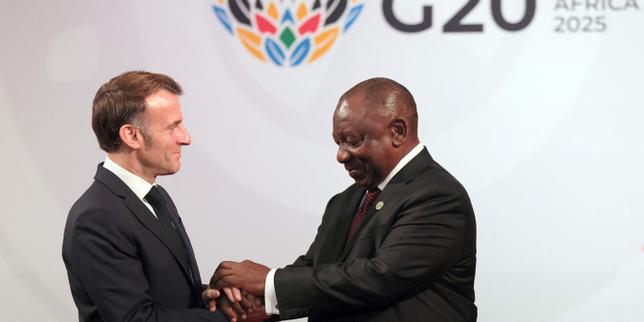
Across the capitals of Europe, Lavrov’s words are met with a cold shudder. For Poland, the Baltic states, and even France and Germany, the idea of a "Putin-Trump" axis is a nightmare scenario. If Washington and Moscow decide the fate of Europe over the heads of the Europeans, the European Union as a political project faces a slow death.
This anxiety is driving a frantic push for "strategic autonomy" within Europe. If they cannot rely on the whims of an American president who claims to respect the man currently bombing European cities, they must arm themselves. The irony is that Lavrov’s attempt to project stability through this "mutual respect" is actually accelerating the militarization of the European continent.
- Poland is spending 4% of its GDP on defense.
- Germany is slowly shaking off decades of pacifism through its "Zeitenwende" policy.
- The Baltics are fortifying their borders with a fervor not seen since the Cold War.
These are not the actions of nations that believe a "respectful" deal is coming. These are the actions of nations preparing for a long, cold winter of Russian aggression, regardless of who sits in the Oval Office.
The Ukrainian Perspective
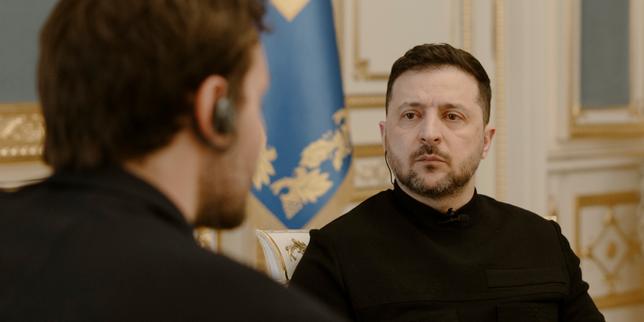
In Kyiv, the talk of "respect" is viewed with a mixture of contempt and terror. For President Volodymyr Zelensky, the math is simple: any deal made without Ukraine’s participation is a betrayal of the thousands who have died. The Ukrainian government knows that "respect" in the Kremlin’s dictionary is often a synonym for "submission."
Ukraine has spent the last two years proving that it is a serious military power. They have moved beyond being a recipient of charity to becoming a critical frontline state that protects the rest of the continent. If a future U.S. administration attempts to force a peace treaty based on the personal rapport between Trump and Putin, they will find a Ukrainian military that is battle-hardened and potentially unwilling to lay down its arms.
The Reality of the Transactional State
We are entering an era where personal diplomacy is being used to bypass traditional statecraft. This is a dangerous development. When foreign policy is reduced to the egos of two men, the risk of a catastrophic misunderstanding increases exponentially.
Lavrov’s comments are a reminder that Russia is playing the long game. They are waiting for the West to blink. They are waiting for the American political system to consume itself. They are betting that "mutual respect" will eventually translate into "American indifference."
The "respect" Lavrov speaks of isn't the respect of friends. It's the respect of two predators circling each other in the dark. They are gauging weaknesses, testing boundaries, and waiting for the moment to strike. The world must look past the diplomatic pleasantries and recognize the chilling reality: Russia is not looking for a partner in peace; it is looking for an opening.
Analyze the flow of capital, the movement of munitions, and the rhetoric of the Kremlin’s top diplomat. The conclusion is unavoidable. The talk of respect is a tactical weapon, a way to soften the ground for a future where might makes right and the sovereignty of smaller nations is a tradable commodity. The only way to counter this narrative is to maintain the very institutional strength and international alliances that the "respect" narrative seeks to undermine.
The next eighteen months will determine if the global order holds or if it dissolves into a series of "respectful" partitions. Those who believe a simple personality-driven deal can end a century of regional tension are ignoring the bloody history of the Eurasian landmass. Moscow isn't looking for a friend in Washington; it's looking for a way out of a corner, and it will use any narrative, no matter how flimsy, to get there.
Watch the arms shipments to the front lines instead of the soundbites from the diplomats.