The "lazy consensus" has already decided the 2026 MLB season. If you listen to the talking heads at the sports desk, the script is written: the Dodgers’ $400 million payroll makes them inevitable, the Orioles’ "process" is flawless, and the Tigers are one Tarik Skubal start away from a pennant.
It’s a comfortable narrative. It’s also statistically illiterate.
Most preseason predictions are built on "linear progression bias"—the flawed belief that a young team that won 90 games last year will naturally win 95 this year. In reality, the 162-game grind is a meat grinder of regression, injury volatility, and the "Information Gap" that modern analytics has ironically made wider, not narrower.
If you want to know who is actually going to hold the trophy in October, you have to stop looking at the back of baseball cards and start looking at the structural rot hidden beneath the league’s "elite" rosters.
The $400 Million Glass House in Los Angeles
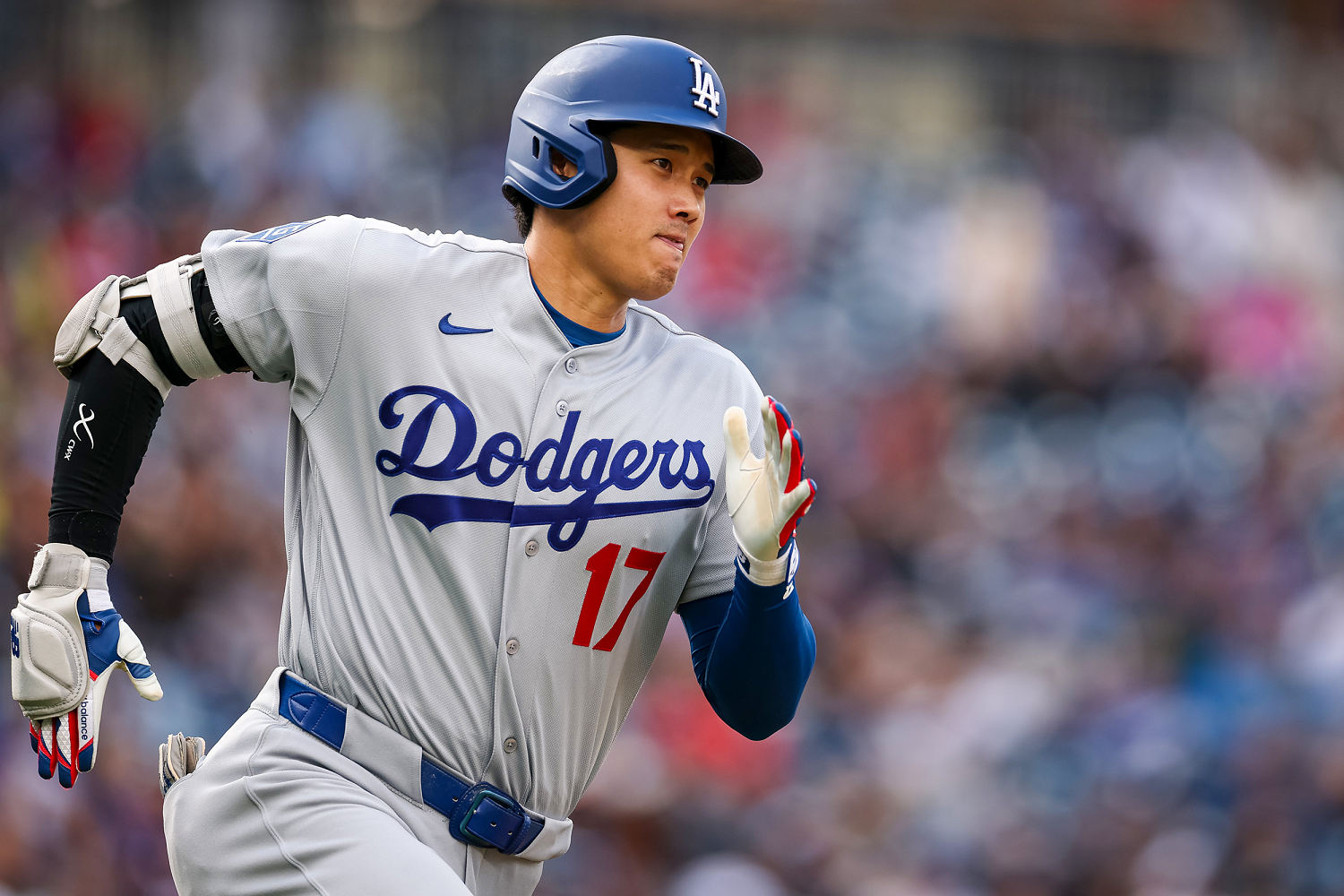
The Los Angeles Dodgers are currently the most overrated "sure thing" in the history of professional sports. Yes, their payroll sits at a staggering $401 million. Yes, they have Shohei Ohtani and Mookie Betts. But they are building a roster on a foundation of sand.
Professional bettors and sharp analysts know the "Fragility Index." When you tie up that much capital in a handful of players over the age of 30, you aren't buying a championship; you’re buying a high-variance lottery ticket. The Dodgers’ rotation is essentially a prestigious orthopedic waiting room. Relying on pitchers like Blake Snell and Tyler Glasnow to provide 180+ innings is like expecting a vintage Ferrari to win a cross-country rally without a mechanic in the passenger seat.
I’ve seen front offices blow hundreds of millions trying to "buy" a rotation. It fails because the playoffs aren't about who has the best Number 1 starter—it's about who has the best Number 4. By October, the Dodgers’ depth is historically paper-thin because their top-heavy spending kills their ability to pivot when the inevitable arm fatigue sets in.
The "Young Core" Fallacy
Every year, we hear about the "breakout" teams. This year, it's the Pirates and the Reds. The logic? They have "young talent."
Here is the truth: Young talent is the most overvalued currency in baseball. The league has never been better at adjusting to hitters. The "Sophomore Slump" isn't a myth; it’s a data-driven reality where pitchers now have 40,000 frames of high-speed video to find the one hole in a rookie’s swing.
Look at the Cincinnati Reds. Public projections have them flirting with .500, but the "smart money" is pounding the Under. Why? Because their pitching development hasn't kept pace with their hype. You cannot win a division in the NL Central with a bullpen that ranks in the bottom third of "Stuff+" metrics. Hope is not a strategy, and "potential" doesn't lower an ERA.
The Detroit Tigers: The Shiny Object No One Should Touch
The Tigers are the "sexy" pick this year because Tarik Skubal is a generational talent. But banking on one arm to carry a franchise is a 1990s mindset.
Detroit’s lineup remains a black hole of inconsistency. Beyond their top-tier pitching, they lack the "Length of Lineup" (LoL) required to survive the AL East and West powerhouses. A team that relies on winning 2-1 games is a team that is one blown save away from a tailspin. If you're betting on the Tigers to win the AL Central, you're essentially betting that Skubal will never have a sore shoulder. That’s a bad bet.
The Real Value: The "Boring" Bullpen Factories
If you want to find the team that actually disrupts the 2026 hierarchy, look at the organizations that don't make "bold" splashes.
The Tampa Bay Rays are moving back to Tropicana Field, and the market is sleeping on them because their payroll is a fraction of the Yankees’. But the Rays have mastered the "Pitching Shape" revolution. While other teams are chasing 100 mph fastballs, the Rays are identifying "Dead Zone" hitters and building a staff specifically designed to exploit them.
Imagine a scenario where a team with a $98 million payroll wins 95 games simply because they’ve identified that the league-wide swing-and-miss rate on "sweeper" sliders has peaked. That is where the actual advantage lies—not in Juan Soto’s $51 million salary, but in the $700,000 middle reliever who has a vertical break no one can track.
The World Series Truth
The New York Mets spent $369 million to build the "most expensive infield in history." It looks great on a poster. It’s a nightmare for a manager. Huge contracts create "roster stasis." You can’t bench a guy making $30 million even when he’s hitting .210 with a 35% strikeout rate in August.
The teams that win in 2026 will be the ones with "Roster Fluidity." The ability to cycle through fresh arms and platoon hitters based on real-time data is worth more than a "Superstar" who is declining in real-time.
Stop looking at the standings from last year. Stop believing the payroll determines the outcome. The 2026 season belongs to the teams that realize "star power" is the ultimate distraction from statistical efficiency.
The Dodgers might win the offseason. They won't win the World Series.