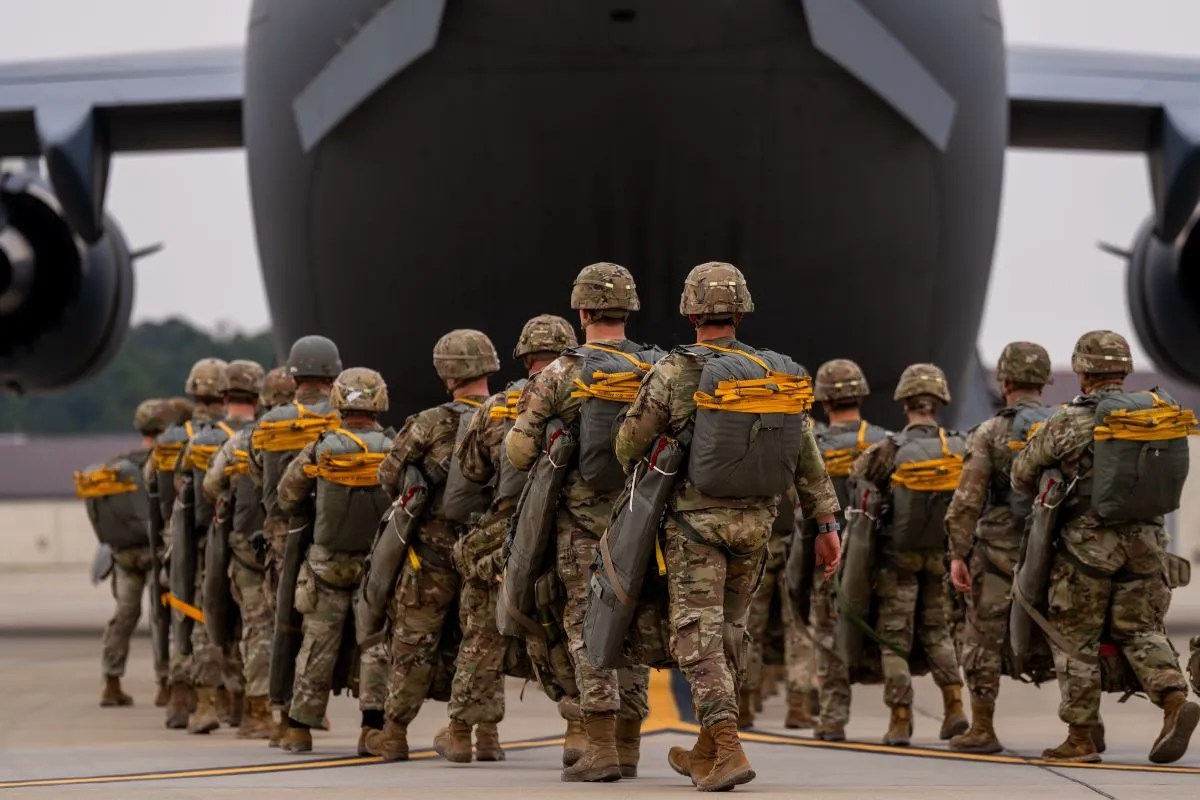
The media is obsessed with a binary question that doesn't matter: Will the U.S. send more boots to the Middle East or won’t it? Every time a carrier strike group nudges closer to the Red Sea, pundits scramble to interpret the "signals." They treat troop counts like a scoreboard for global relevance.
They are looking at the wrong map.
The "lazy consensus" suggests that American military presence—or the lack thereof—is the primary lever for stability in the region. This is a 20th-century ghost story. Whether the Pentagon deploys 5,000 soldiers or 50,000 is a rounding error in a world where the theater of war has shifted from physical territory to digital and economic choke points. We aren't watching a chess match; we’re watching an outdated operating system try to run high-definition software.
The Myth of Presence as Power
For decades, the standard foreign policy doctrine has been "deterrence through footprint." If you park enough hardware in the desert, the bad actors stay home.
I’ve spent years analyzing the flow of logistics and risk in these corridors. I can tell you that the deterrent value of a static infantry battalion is plummeting. Regional powers like Iran or non-state actors like the Houthis don't care about the number of American uniforms in a base in Qatar. They care about the cost-to-kill ratio.
When a $2,000 off-the-shelf drone can threaten a billion-dollar destroyer or shut down a shipping lane that handles 12% of global trade, the traditional military "deployment" becomes a liability, not an asset. Each soldier is just another target to be leveraged in a domestic political cycle back in D.V.
The "Big Information" coming out of Washington right now isn't about strategy; it's about optics. They are moving pieces to look busy while the actual influence—the kind that moves markets and secures borders—is being outsourced to local actors and algorithmic warfare.
The False Security of "Stable Information"
The competitor headlines love to talk about "revealed details" and "major updates" regarding troop movements. It’s a distraction.
Real power in the Middle East in 2026 isn't measured in barracks. It’s measured in:
- Energy Autonomy: The shift toward green hydrogen and domestic nuclear power in the Gulf.
- Integrated Air Defense: Software-defined networks that link Israel, Jordan, and Saudi Arabia without needing a single U.S. general in the room.
- Currency Hegemony: The silent battle between the Petrodollar and the rise of digital settlement layers.
If you are waiting for a press release from the Pentagon to understand if the region is safe, you have already lost the trade. The U.S. military is currently acting as a high-priced security guard for a mall that is moving entirely to e-commerce.
Stop Asking "If" and Start Asking "Why"
The public keeps asking: "Will they deploy?"
The smarter question is: "Why does it still matter to you?"
The premise that U.S. interventionism is the only thing standing between order and chaos is a vanity project. We have seen trillion-dollar occupations result in zero long-term geopolitical shift. The nuance everyone misses is that regional players—Riyadh, Tehran, Abu Dhabi—have realized they can negotiate more effectively when the U.S. is not the primary mediator.
The "shuttle diplomacy" of the past is dead. It has been replaced by cold, transactional realism. When China brokered the Iran-Saudi deal, they didn't send a single soldier. They sent a ledger.
The Logistics of Obsolescence
Imagine a scenario where the U.S. doubles its troop count tomorrow. What changes?
- Supply Chain Fragility: More troops require more fuel, more food, and more protection, creating a massive tail of vulnerability.
- Political Hostage-Taking: Every base becomes a focal point for local grievances, giving minor militias a "veto" over American foreign policy by simply firing a mortar.
- The Opportunity Cost: While the Pentagon focuses on 1940s-style troop maneuvers, the real war for the 21st century—semiconductor dominance and AI-driven intelligence—is being underfunded.
The U.S. military is currently the world’s most expensive analog clock in a digital age.
The Brutal Reality of Regional Alliances
We are told that our "allies" in the region are desperate for more U.S. troops. That is a lie told to satisfy Congressional subcommittees.
In reality, Middle Eastern capitals are diversifying their portfolios. They want U.S. weapons systems and satellite data, sure. But they don't want the political baggage of a permanent U.S. garrison that could be withdrawn at the whim of the next election cycle. They are building their own "Fortress Middle East."
The reliance on U.S. boots is a sign of weakness for a sovereign nation. The states that are winning are the ones building their own drone factories and cyber-command centers. They don't need a "big brother" who is constantly looking at the exit door.
The Misdirection of Conventional Media
The reports claiming "major information" about troop deployments are designed to keep you emotionally invested in a narrative of American exceptionalism. It’s comfortable to believe that the world stops spinning if a few thousand Americans leave a base in the desert.
It’s also wrong.
The Middle East is decoupling from Western security oversight. This isn't a "failure" of policy; it’s an evolution of the market. The U.S. is no longer the sole provider of "security" because security is no longer a product you can deliver via an aircraft carrier. It’s a product delivered via encryption, food security, and desalination technology.
Your Move
If you are a business leader or an investor, stop tracking troop numbers.
Track the number of subsea cables being laid in the Mediterranean.
Track the sovereign wealth fund allocations into defense tech in the UAE.
Track the talent migration of software engineers to Tel Aviv and Riyadh.
The "major information" isn't coming from a Pentagon briefing. It’s happening in the data centers and the port authorities where the U.S. has no "troops" to deploy.
The era of the American Centurion is over. The era of the regional architect has begun. Every soldier sent to the Middle East today isn't a sign of strength—it’s a confession that we don't know how to lead any other way.
Stop looking at the boots. Look at the wires.
Would you like me to analyze the specific economic impact of the Red Sea maritime shift on European manufacturing hubs?