The air in the humidity-drenched corridors of Hong Kong’s government offices doesn’t usually vibrate with the scent of Arabian oud and cardamom. But lately, the aesthetic has shifted. There is a specific kind of silence that falls over a boardroom when a long-held map of the world is folded up and replaced with something new. For decades, the compass needle of this city pointed toward London and New York. Now, it is spinning toward Riyadh and Abu Dhabi.
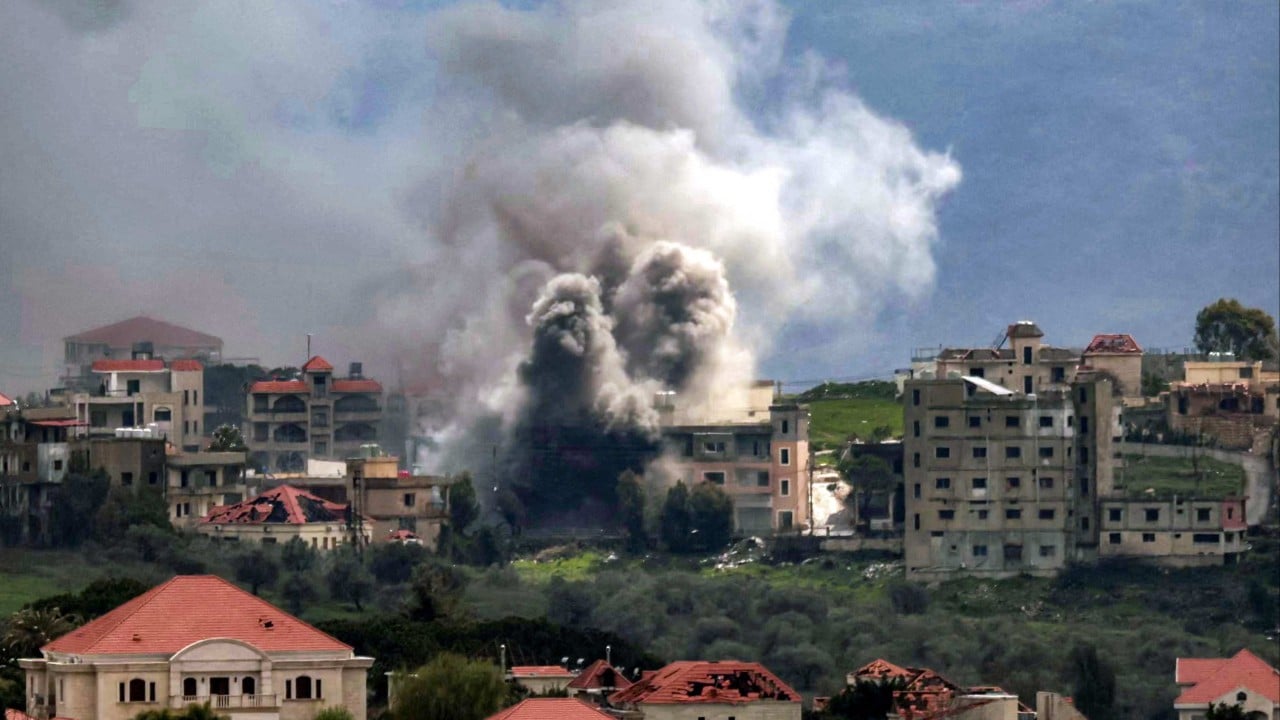
Consider a hypothetical fund manager named Elias. He has spent twenty years navigating the glass towers of Central, the heart of Hong Kong’s financial district. He knows the rhythm of the Nasdaq. He understands the mood swings of the Federal Reserve. But today, Elias is looking at a spreadsheet of sovereign wealth funds from the Gulf Cooperation Council (GCC). He is trying to reconcile a paradox. On his television screen, news tickers flicker with reports of escalating regional tensions in the Middle East. At his desk, his phone is buzzing with invitations to investment summits in Dubai. For a different look, read: this related article.
The friction between those two realities is where the future of Hong Kong is currently being forged.
Beyond the Horizon of Smoke
Standard financial reporting treats the expansion of ties between Hong Kong and the Middle East as a bureaucratic checklist. A memorandum of understanding signed here. A trade delegation sent there. This lens misses the visceral stakes. When Hong Kong’s leaders talk about "pressing ahead" despite regional unrest, they aren't just being stubborn. They are making a calculated bet on a world that is no longer unipolar. Related insight on the subject has been provided by Financial Times.
The world is messy.
If global finance waited for perfect tranquility, no capital would ever move. The current push toward the Middle East is an admission that the old dependencies are fraying. Hong Kong is repositioning itself as the primary bridge for the "petrodollar recycling" of the 21st century. The math is simple, even if the geopolitics are not. The Gulf nations are sitting on trillions of dollars in capital that they need to diversify away from oil. China possesses the manufacturing might and the technological hunger that needs funding.
Hong Kong sits in the middle. It is the lungs of this new trade body, inhaling capital from the desert and exhaling it into the Greater Bay Area.
The Invisible Gravity of the Silk Road
The skepticism is easy to find. Critics point to the headlines and ask why a city would double down on a region defined by volatility. But look closer at the movement of people. In the last year, the number of direct flights between Hong Kong and Saudi Arabia has surged. These aren't just tourists looking for a change of scenery. These are engineers, lawyers, and tech founders.
They are building what some call the "Digital Silk Road."
It’s one thing to read a statistic about "increased bilateral cooperation." It’s another to watch a young entrepreneur from Shenzhen pitch a smart-city AI solution to a Saudi prince in a Hong Kong ballroom. The stakes for that entrepreneur are total. If he wins the contract, his company scales globally. If he fails, he remains a local player. This is the human pulse behind the policy. The unrest in the region is a shadow, but the light of the capital is brighter.
Business history is littered with examples of growth happening in the teeth of chaos. The rebuilding of post-war Europe or the rise of Southeast Asian markets in the 90s didn't happen because the world was peaceful. They happened because the necessity of growth outweighed the fear of the unknown.
The New Currency of Trust
Trust is the hardest commodity to trade. For a long time, the Middle East viewed the West as the only reliable vault for its wealth. That perception is changing. There is a growing desire in Riyadh and Doha to find partners who don’t lecture, but instead, build.
Hong Kong offers a unique proposition: a common law legal system, a world-class stock exchange, and a direct, unfiltered pipe into the Chinese economy. To a Gulf investor, Hong Kong looks like a hedge. It is a way to participate in the rise of Asia without abandoning the structured, professional environment they are used to in London or New York.
This isn't just about money. It’s about a shared vision of the future. Both the Middle East and Hong Kong are obsessed with "Vision" projects—massive, generational shifts in how their societies function. Whether it is Saudi Arabia’s Vision 2030 or Hong Kong’s integration into the tech hubs of the mainland, the language is the same. It is the language of transformation.
The Risk of the Status Quo
What happens if Hong Kong doesn't make this move?
The alternative is a slow slide into irrelevance. The traditional western capital flows that once fueled the city are facing their own headwinds—political pressure, high interest rates, and a shifting sense of global priority. To stay still is to sink. The "regional unrest" often cited as a reason for caution is actually a catalyst for urgency. When the world is unstable, you don't want fewer friends. You want more.
The city is currently courting the listing of Saudi Aramco, the world's largest oil company, on its exchange. This is the white whale of the financial world. If it happens, it won't be because the Middle East suddenly became a peaceful utopia. It will be because Hong Kong proved it could provide a stable, deep pool of liquidity when the rest of the world was looking elsewhere.
The Sound of Shifting Plates
In the quiet hours of the morning, when the neon signs of Wan Chai are still humming, you can almost hear the plates of global power shifting.
It is a grinding, uncomfortable sound. It sounds like a businessman learning his fifth Arabic greeting of the week. It sounds like a legal team in a high-rise staying up until 4:00 AM to synchronize with a closing bell in Riyadh. It sounds like the skepticism of those who believe the old ways will last forever.
The unrest is real. The risks are documented. The volatility is a constant companion. But for a city that has survived transitions of sovereignty, global pandemics, and economic crashes, "pressing ahead" is more than a policy. It is a survival instinct.
Elias, our hypothetical fund manager, eventually closes his laptop. He has booked a flight to Riyadh for next month. He isn't going because he ignores the news. He is going because he knows that the most significant stories in human history are rarely written during times of ease. They are written by those who see a path through the smoke and decide to walk it anyway.
The compass has settled. The needle points West by Northwest, toward the dunes, and the city follows.