Italy is currently posturing as the new guardian of the Strait of Hormuz. Prime Minister Giorgia Meloni talks about restoring "freedom of navigation" as if the Italian Navy can simply park a frigate in the water and magically lower the price of crude oil. It’s a comforting narrative. It’s also a total fantasy.
The idea that medium-sized European powers can "stabilize" the world’s most volatile maritime chokepoint through sheer willpower and a few deployments is the lazy consensus of the decade. We are watching a performance, not a policy. While Rome signals its commitment to the global order, it is ignoring the cold, hard mechanics of energy logistics and the reality of asymmetric warfare.
Italy isn't fixing a problem in the Middle East. It’s spending political capital on a solution that doesn't exist for a problem it can't solve.
The Myth of the "Italian Shield"
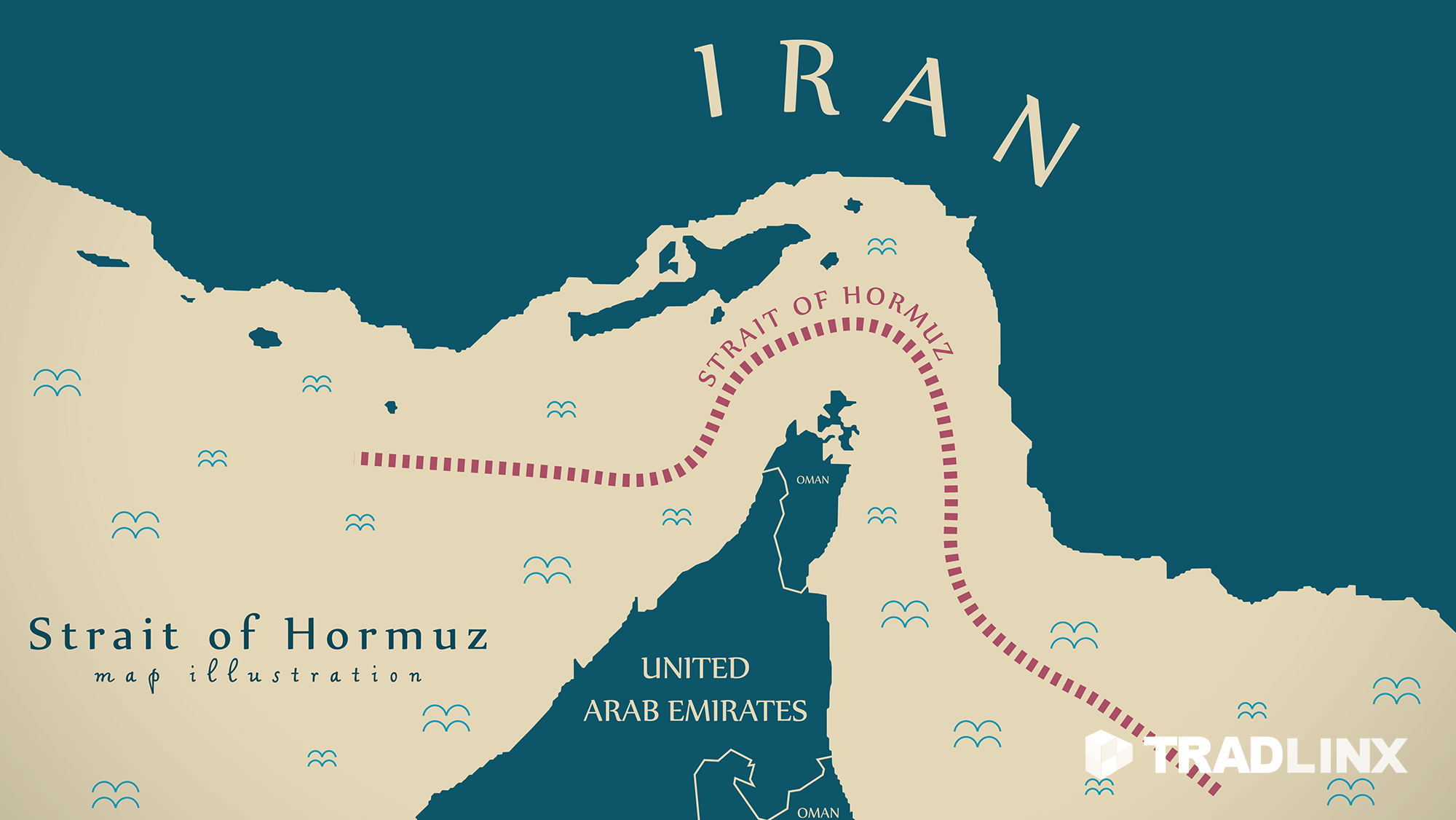
The Strait of Hormuz is a narrow strip of water—about 21 miles wide at its tightest point. Through it flows roughly 20 to 30 percent of the world’s total oil consumption. When Meloni speaks of restoring freedom of navigation, she’s implying that the presence of Italian vessels will deter regional actors like Iran or its proxies from disrupting traffic.
This ignores the last twenty years of maritime history. In a narrow, crowded waterway, the advantage lies entirely with the shore-based actor. You don't need a blue-water navy to disrupt the Hormuz. You need cheap drones, fast-attack boats, and $50,000 anti-ship missiles.
Italy’s navy is sophisticated. Its Bergamini-class frigates are masterpieces of engineering. But they are also incredibly expensive targets. Sending a billion-dollar asset to play traffic cop in a zone saturated with low-cost "suicide" drones isn't strength; it’s an invitation to a PR disaster. If a single Italian sailor is harmed or a ship is damaged, the domestic political fallout in Rome would end the mission in forty-eight hours. The "deterrence" only works if the other side believes you are willing to go to total war. Italy isn't. Everyone in Tehran knows it.
The Energy Independence Delusion
The logic goes: We protect the Strait to protect our energy prices.
This is the most pervasive lie in geopolitics. Even if the Italian Navy managed to keep every tanker moving, oil is a fungible global commodity. If there is tension in the Gulf, insurance premiums for tankers skyrocket. If insurance premiums go up, your gas prices at the pump go up.
A military presence does not lower the cost of maritime insurance; in many cases, it signals that the risk is high enough to justify the premium hike. We saw this in the Red Sea with Operation Aspides. Did the presence of European warships stop the Houthi rebels from driving up shipping costs? No. It just provided a target-rich environment.
True energy security for Italy doesn't lie in the Persian Gulf. It lies in the North African pipelines and the Mediterranean gas fields. Rome is looking 3,000 miles away for a solution that is actually sitting in its own backyard.
The "Middle Power" Identity Crisis
Italy is desperate to prove it is more than just a Mediterranean vacation spot. By jumping into the Hormuz fray, the Meloni government is trying to secure a seat at the big kids' table with the U.S. and the UK.
I’ve seen this play out in boardrooms and cabinets for years. A junior partner tries to take on a massive, systemic risk just to prove they belong. It usually ends in a quiet, expensive retreat.
The United States has an entire fleet—the 5th Fleet—dedicated to this region. If the U.S. Navy, with its carrier strike groups and massive logistical footprint, struggles to maintain "absolute" freedom of navigation against asymmetric threats, what exactly is Italy adding to the mix?
- Tactical redundancy: Italy adds a ship or two that must be integrated into a complex command structure.
- Political cover: It allows the U.S. to claim a "coalition," even if the coalition is mostly symbolic.
- Resource drain: Italy diverts its best naval assets away from the Mediterranean, where migrant smuggling and Russian submarine activity are actual, immediate threats to Italian soil.
Why "Freedom of Navigation" is a Tired Catchphrase
We use this term because it sounds noble. It sounds like we’re protecting the "open sea."
In reality, the Strait of Hormuz isn't the open sea. It is a territorial nightmare. Much of the navigable channel falls within the territorial waters of Iran and Oman. When we talk about "restoring freedom," we are often talking about asserting transit passage rights that are contested every single day.
Imagine a scenario where an Italian vessel attempts to intercept a boarding party from a regional power. Does Italy have the legal framework or the political stomach to initiate a kinetic strike? If they don't, their presence is worse than useless—it’s a bluff that’s been called.
The technology on these ships is designed for high-end, ship-to-ship combat. It is not designed to distinguish between a civilian fishing dhow and a drone-carrying insurgent vessel at two in the morning in a crowded shipping lane. The risk of a "Sinceny" moment—a tragic mistake that sparks a regional conflict—is far higher than any potential benefit of "stabilizing" the market.
The Real Question Rome Won't Ask
If Italy wants to be a leader in maritime security, why is it obsessed with the Hormuz instead of the Suez-Gibraltar corridor?
The Mediterranean is becoming a crowded lake of competing interests. Turkey, Russia, and various North African factions are carving up influence while Italy looks east. This is a classic case of geopolitical FOMO (Fear Of Missing Out). Meloni wants to be relevant on the global stage, so she picks the most "famous" chokepoint in the world to defend, despite the fact that the Suez Canal is far more vital to the Italian economy than the Hormuz.
If the Hormuz closes, oil goes up, but it still finds a way around the Cape of Good Hope. If the Mediterranean becomes a contested zone, Italy’s entire economic model—based on being a logistics hub for Europe—collapses.
Stop Playing the 19th-Century Game
The era of "Gunboat Diplomacy" is over. You cannot secure a 21st-century energy supply with 20th-century naval patrolling tactics.
The disruption in the Strait of Hormuz is a political problem that requires a political solution. It is a byproduct of the friction between Washington and Tehran. Italy inserting itself into that friction doesn't lubricate the gears; it just puts another hand in the fire.
We need to stop applauding "commitments" to naval missions that have no clear exit strategy and no measurable KPIs. How do we measure success? By the number of days without an attack? That’s a correlation, not causation. By the price of Brent crude? Italy has zero control over that.
Italy’s strength has always been its ability to act as a bridge—a diplomatic "mediator" in the Mediterranean. By militarizing its stance in the Gulf, it trades its unique diplomatic leverage for a redundant military role.
The smart move isn't to send more ships. The smart move is to double down on the Mattei Plan for Africa, secure the Sicilian Channel, and let the superpowers exhaust themselves playing cat-and-mouse in the Persian Gulf.
Meloni isn't restoring freedom. She’s buying a ticket to a theater where Italy doesn't even have a speaking part. It’s time to stop the performance and look at the map. The real threats—and the real opportunities—are much closer to home.
Protect the Mediterranean. Leave the Hormuz to those who still think they can control the wind with a sword.