India’s traditional posture of "strategic autonomy" is currently facing a structural stress test as the conflict in West Asia—specifically the Israel-Hamas-Hezbollah nexus—threatens to destabilize the primary transit corridors of the Indo-Abrahamic architecture. While rhetorical calls for India to "take the lead" are common in diplomatic circles, a rigorous analysis reveals that any successful intervention depends not on moral standing, but on the precise calibration of three distinct variables: asymmetric leverage, transactional trust, and the mitigation of the "Two-Front" maritime risk.
The core logic of Indian intervention is rooted in its unique position as the only major power maintains high-level security cooperation with Israel while simultaneously holding a strategic partnership with Iran and deep energy dependencies on the Gulf Cooperation Council (GCC) states. This is not merely a "balancing act" but a functional capability to operate across fractured diplomatic lines.
The Tri-Node Leverage Framework
To understand why India is positioned to mediate, one must look at the specific nodes of influence it holds over the primary combatants and their backers.
- The Israeli Defense-Technology Node: India is the largest buyer of Israeli defense equipment. This creates a feedback loop where New Delhi has the "buyer’s leverage" to request tactical restraint in exchange for long-term procurement stability.
- The Iranian Energy-Logistics Node: Through the development of the Chabahar Port and the International North-South Transport Corridor (INSTC), India provides Iran with a critical economic bypass to Western sanctions. This gives New Delhi a "stabilization seat" at the table in Tehran that Western powers lack.
- The GCC Capital Node: The UAE and Saudi Arabia are transitioning from oil-based economies to investment-led entities. India represents their most significant long-term market for both energy exports and diversified capital deployment.
The Cost Function of Inaction
The argument for Indian leadership is often framed as an opportunity, but for a data-driven analyst, it is more accurately described as a risk-mitigation necessity. The cost of a prolonged regional war in West Asia impacts the Indian economy through three direct transmission channels:
- Energy Inflationary Pressure: Every $10 increase in the price of a barrel of crude oil expands India’s current account deficit by approximately $12 billion. Given that India imports over 80% of its oil, regional instability acts as a direct tax on Indian GDP growth.
- Remittance Vulnerability: Over 8.5 million Indians live and work in the Gulf. A widening of the conflict to include state-on-state warfare between Israel and Iran would necessitate the largest non-combatant evacuation operation in human history, paralyzing the Indian foreign ministry and severing a $40 billion annual remittance stream.
- Logistical Obsolescence: The India-Middle East-Europe Economic Corridor (IMEC) is the strategic counterweight to China’s Belt and Road Initiative. The corridor’s viability is contingent on a normalized security relationship between Israel and its Arab neighbors. Each day the war continues, the "time-to-market" for IMEC recedes, allowing Chinese-backed routes to consolidate their lead.
The Mechanism of "Multi-Alignment" Mediation
Mediation in the Middle East is rarely about achieving a final peace treaty; it is about managing the escalation ladder. India’s strategy should be viewed through the lens of Interests-Based Negotiation, where the goal is to find the "Zone of Possible Agreement" (ZOPA) between parties that do not recognize each other’s right to exist.
The primary bottleneck in current mediation efforts by the U.S. or Qatar is the perceived bias or the lack of "skin in the game" regarding the secondary consequences of the war. India’s lack of colonial history in the region and its refusal to join sanction regimes (such as those against Iran) provide it with a "neutrality premium."
However, this neutrality is not passive. It is a transactional neutrality. India can offer Israel long-term security guarantees through increased maritime surveillance in the Red Sea (where the Indian Navy is already active) while simultaneously offering Iran a guarantee that its economic corridors to the East will remain open, provided regional proxies are restrained.
Structural Constraints and The Great Power Divergence
Any strategic plan must account for the limitations of Indian power. Unlike the United States, India cannot project overwhelming kinetic force to "enforce" a peace. Its power is derived from its status as a swing state.
The primary constraint is the "Zero-Sum Trap." If India leans too far toward supporting Israeli security concerns, it risks alienating the "Street" in the Arab world, potentially cooling relations with key energy partners like Qatar. Conversely, if it adopts a strictly pro-Palestine or pro-Iran posture, it jeopardizes the high-end technology transfers from Jerusalem that are vital for India’s own border security against China.
Furthermore, the "China Factor" acts as a structural shadow. Beijing has already attempted to position itself as a mediator (notably with the Saudi-Iran deal). If India remains on the sidelines, it cedes the diplomatic "high ground" in the Global South to its primary strategic rival.
Operationalizing the "Third Way"
For India to move from a passive observer to an active mediator, it must deploy a tiered diplomatic strategy:
Phase I: Tactical De-escalation (The Maritime Buffer)
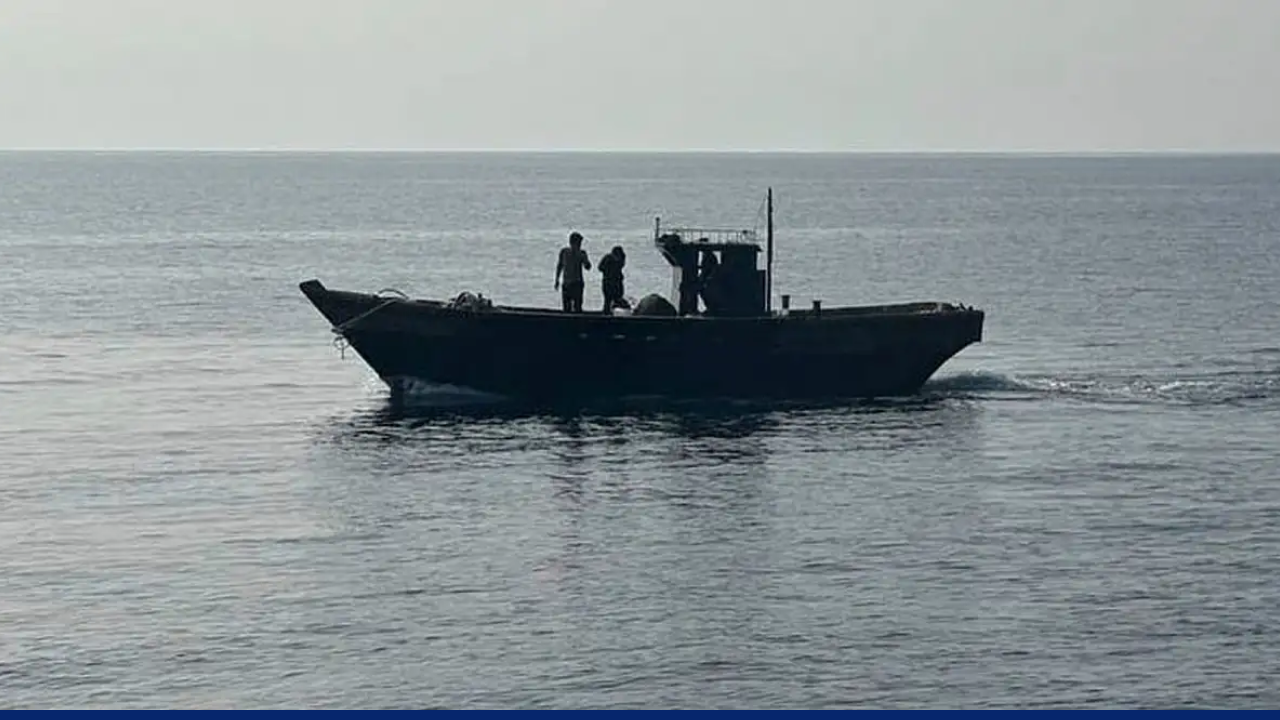
India should utilize its expanded naval presence in the Arabian Sea to act as a "de-confliction coordinator." By securing shipping lanes without joining a Western-led combat coalition (like Operation Prosperity Guardian), India can protect global trade while signaling to Tehran that it is protecting everyone’s interests, not just the West’s.
Phase II: The Economic Pivot (IMEC as an Incentive)
New Delhi must frame the end of hostilities not as a moral requirement, but as the "unlock" for the IMEC. By presenting a concrete, $20 billion+ infrastructure roadmap that benefits Saudi Arabia, Jordan, Israel, and India simultaneously, India provides the "Economic ZOPA" required for parties to justify a ceasefire to their domestic audiences.
Phase III: The Minilateral Integration
India should bypass the gridlocked UN Security Council and instead utilize the I2U2 Group (India, Israel, USA, UAE). This framework allows for "back-channel" security discussions that are shielded from the performative politics of larger international bodies.
The Strategic Forecast
The probability of a total regional collapse remains moderate, but the probability of a "Gray Zone" conflict—a state of perpetual low-level kinetic exchanges—is high. India cannot afford a Gray Zone reality. The strategic imperative is to shift the conflict from an identity-based struggle to a resource-based negotiation.
India’s move must be to transition from "Strategic Autonomy" (staying out of trouble) to "Strategic Convergence" (creating a center of gravity that others must align with). If New Delhi can successfully broker even a temporary localized ceasefire in exchange for maritime security guarantees, it will have demonstrated that the "Multiplex World" is no longer unipolar or even bipolar, but centered on the functional ability to bridge the East-West and North-South divides.
The final play is not a grand peace summit in New Delhi. It is a series of quiet, bilateral security-for-trade agreements that make the cost of continuing the war higher than the cost of a compromised peace for all stakeholders involved. India should focus on the micro-mediation of supply chains, knowing that in the modern era, the flow of goods is often more persuasive than the flow of rhetoric.