The humid air of Imphal doesn’t care about your resume. It doesn’t care if you’ve fought in the dust of Libya or if you’ve sat on the shiny leather couches of American talk shows. When the Manipur police intercepted Matthew VanDyke, they didn't see a freedom fighter or a documentary filmmaker. They saw a man with the wrong papers in the wrong place at a very dangerous time.
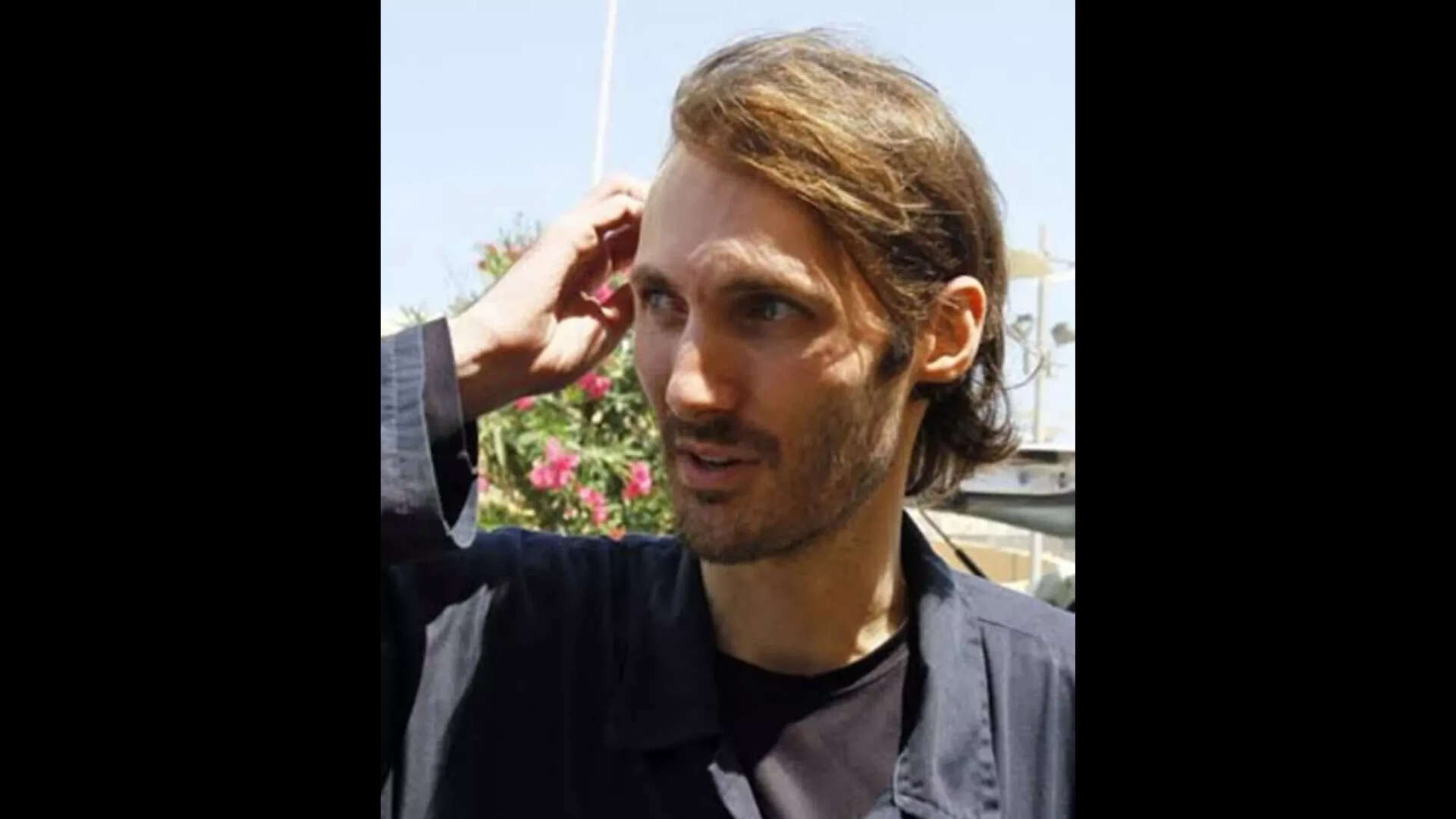
Most people know the name Matthew VanDyke from the grainy footage of the Arab Spring. He was the "freedom fighter" with the carefully maintained stubble, the American who swapped a camera for a Kalashnikov to join the rebels against Muammar Gaddafi. He spent months in a Libyan prison, a harrowing ordeal that would have broken most men. Instead, it minted him a brand. He returned to the United States not as a survivor, but as a protagonist.
But brands require maintenance. They require new chapters. And that is how a man from Baltimore ended up in the crosshairs of Indian counter-terrorism agencies in a remote corner of the Northeast.
The Geography of Suspicion
To understand why VanDyke’s presence in Manipur sent shockwaves through the Ministry of Home Affairs, you have to look at the map. Manipur isn't just a scenic border state. It is a complex web of ethnic tensions, insurgent groups, and a porous border with Myanmar. It is a place where the Indian government maintains a delicate, often strained, grip on order.
Imagine a stranger walking into a high-stakes poker game where everyone is already holding a gun under the table. That is what it looks like when a high-profile Westerner with a history of "revolutionary" involvement enters a restricted zone without a Protected Area Permit (PAP).
The facts are as cold as the cell he found himself in. VanDyke was arrested under the Foreigners Act. The official charge was a violation of visa norms. But the whispers in the corridors of power in New Delhi were much louder. They weren't just worried about a missing permit. They were worried about what a man who trains militias for a living was doing in a region plagued by active insurgency.
A Career Built on the Edge of the Frame
VanDyke’s life has always been a blur between journalism and combat. He calls it "participatory journalism," but to a sovereign state, that looks a lot like mercenary work. After Libya, he founded an organization called Sons of Liberty International (SOLI). The mission was clear: provide free military training and consulting to local forces fighting terrorists, specifically targeting groups like ISIS in Iraq.
It is a noble-sounding cause on a pitch deck. In the real world, it’s a legal nightmare.
When he arrived in India, he wasn't there to film a travelogue about the local markets. Reports suggested he was looking for a new "project." In his world, a project usually involves a group of men in fatigues who need to know how to move through a jungle or clear a room. In Manipur, where the Kuki and Meitei communities have been locked in a tragic cycle of violence, a foreign "consultant" is the last thing the Indian state wants.
The irony is thick. VanDyke, a man who built his reputation on the idea of helping the oppressed find their voice through arms, found himself silenced by a bureaucratic technicality. He wasn't captured by a dictator this time. He was picked up by a local police unit in a state that was already on fire.
The Invisible Stakes of International Meddling
Why does this matter to someone sitting thousands of miles away? Because the story of Matthew VanDyke is the story of the modern "Main Character" syndrome fueled by the digital age.
We live in an era where conflict is content. We watch revolutions on TikTok and scroll through war zones on our lunch breaks. For VanDyke, the line between his life and his brand had become non-existent. But sovereign nations have a different perspective. They see a violation of their borders as a fundamental threat, regardless of the "hero's journey" the violator thinks they are on.
The Indian authorities weren't just being difficult. They were responding to a reality where foreign intervention, even well-meaning, often acts as an accelerant. If an American citizen is seen consorting with one side of an ethnic conflict, it gives the other side a reason to escalate. It turns a local tragedy into an international incident.
Consider the logistical nightmare. The moment the handcuffs clicked, the U.S. Consulate had to get involved. Diplomacy, which usually moves at the speed of a glacier, had to suddenly sprint. The Indian government had to weigh the diplomatic cost of holding a "celebrity" prisoner against the security risk of letting a wildcard roam a sensitive border.
The Reality of the Cell
The narrative of the daring adventurer falls apart when it hits the reality of a standard-issue prison bed. There are no cameras there. There is no lighting crew to make sure your profile looks heroic against the bars. There is only the smell of disinfectant, the sound of a ceiling fan that never quite moves enough air, and the realization that your passport doesn't make you invincible.
VanDyke has survived worse. He survived the Makslim prison in Libya. He survived the front lines of Sirte. But India is not a failed state. It is a bureaucracy with a very long memory and a very specific set of rules. You don't "liberate" a state that has its own constitution, its own army, and its own deep-seated suspicion of outsiders with cameras and military tactical manuals.
His arrest serves as a jarring reminder of the friction between the digital "influencer-warrior" and the physical reality of border security. You can be a hero in a documentary, but in a courtroom in Imphal, you are just another defendant who didn't fill out the right paperwork.
The Cost of the Story
Every time VanDyke enters a conflict zone, he raises the stakes for every other legitimate journalist and aid worker in the field. When the line between a filmmaker and a combatant is blurred, the people who actually need to tell the story—without picking up a rifle—are the ones who pay the price. They are the ones who get denied visas. They are the ones who get followed by intelligence officers.
The human element here isn't just VanDyke's ambition. It’s the local people in Manipur whose lives are already complicated enough. They don't need a Western savior with a GoPro. They need a cessation of violence that is handled through internal dialogue and political will, not through the lens of a man looking for his next big "hit" on the film festival circuit.
The tragedy of Matthew VanDyke is that he seems to believe the world is a stage designed for his growth. But the world is actually a collection of people trying to survive their own local histories.
As he sat in detention, waiting for the legal machinery to grind toward a resolution, one has to wonder if he saw the irony. He traveled halfway across the globe to find a new story, only to become a cautionary tale in someone else’s. He wanted to be the one holding the camera, but he ended up being the blurred face in a police evidence photo.
The gate swings shut. The paperwork is filed. The "freedom fighter" is now a file number in a dusty cabinet. It’s a quiet, un-cinematic end to a chapter he likely thought would be much more explosive.
Sometimes, the most powerful thing you can do in a conflict zone is stay away.
Would you like me to look into the specific legal precedents India uses to handle high-profile foreign nationals arrested in restricted zones?