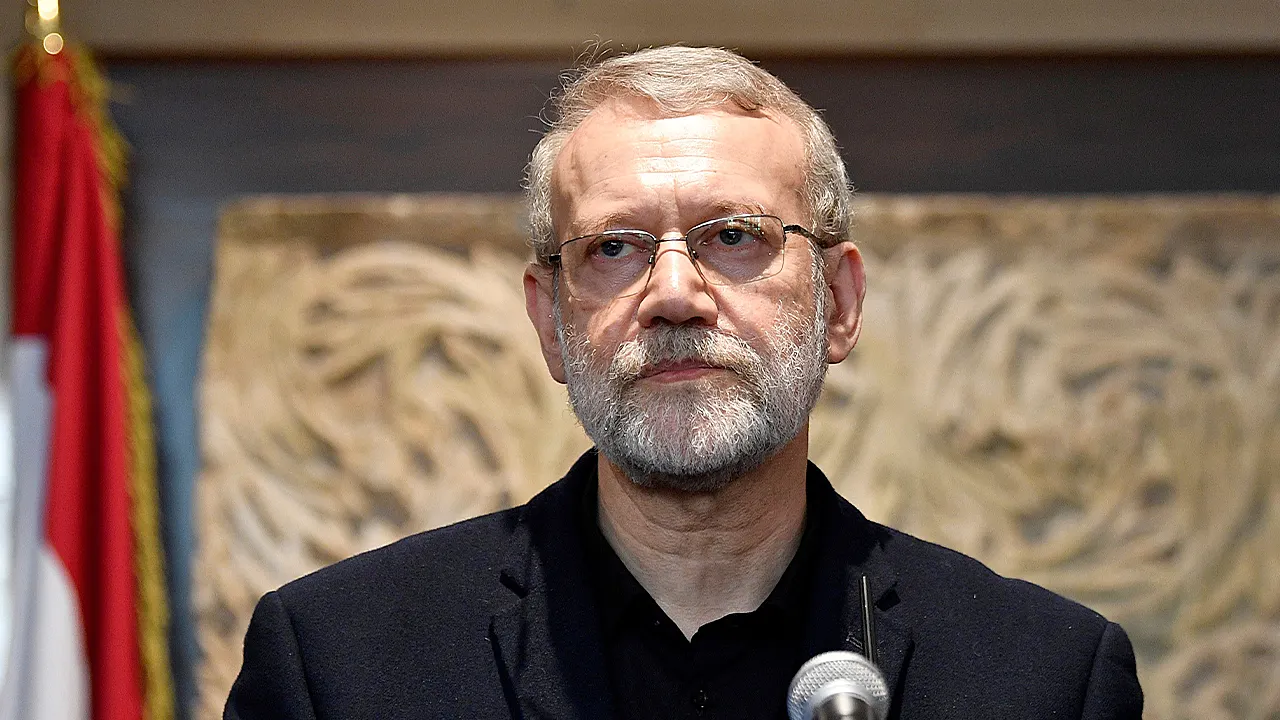
The carpets in the halls of the Baharestan are thick enough to swallow the sound of a thousand secrets. For decades, if you wanted to understand how power actually functioned in the Islamic Republic of Iran, you didn't look at the fiery rhetoric on the street or the televised sermons. You looked for the man with the silver-flecked beard and the rimless glasses, moving through those halls with the quiet precision of a master watchmaker.
Ali Larijani was not a man of the barricades. He was a man of the room.
He died at 67, an age that feels prematurely young for a man who seemed to have been present at the birth of every major Iranian policy since the 1980s. To the outside world, he was a name on a diplomat's briefing paper. To the people of Iran, he was the "Philosopher-General," a scion of a clerical dynasty who traded his uniform for a suit but never lost the tactical mind of a strategist.
His passing marks the end of an era of the "gray eminence."
The Dynasty of the Hidden Hand
Power in Iran is often a family business, but the Larijanis turned it into an art form. Imagine five brothers, each holding a different pillar of the state—the judiciary, the legislature, the executive advisors. They were the ultimate "insider" family. Ali was the crown jewel.
He grew up in the holy city of Qom, the son of a Grand Ayatollah. In that world, words are weighted. You learn early that what is said is rarely as important as what is understood. He studied Western philosophy, specifically Kant. It is a strange image to hold: a future commander of the Revolutionary Guard and Speaker of Parliament, poring over the Critique of Pure Reason while the fires of revolution were being stoked outside his door.
This intellectual grounding gave him a weapon his rivals lacked. He didn't just understand the dogma of the state; he understood the mechanics of thought. He knew how to frame a compromise so it looked like a victory, and how to execute a retreat so it looked like a strategic repositioning.
The Nuclear Tightrope
The most defining chapter of Larijani’s life was also his most frustrating. As the chief nuclear negotiator in the mid-2000s, he was the face of Iran’s atomic ambitions to the West.
Negotiating with Larijani was described by European diplomats as a marathon of polite exhaustion. He would sit across from his counterparts, offer tea, and engage in hours of philosophical discourse. He would quote Persian poetry and then, with a thin smile, reject every proposal on the table. He wasn't being difficult for the sake of it. He was buying time.
He understood that for Iran, the nuclear program wasn't just about energy or even weapons; it was about leverage. It was the only card they had that the Americans actually cared about.
But the tragedy of the pragmatic man is that he is often squeezed by the extremists on both sides. In Tehran, the hardliners thought he was too soft, too willing to talk to the "Great Satan." In Washington, he was seen as the deceptive architect of a shadow program.
When Mahmoud Ahmadinejad rose to the presidency with a populist, fire-breathing style, the friction became unbearable. Larijani, the man of nuance, could not coexist with a man of slogans. He resigned. It was a rare moment of public friction in a career defined by staying behind the curtain.
The Speaker’s Gavel
If the nuclear stage was where he became famous, the Parliament—the Majlis—was where he became powerful.
For twelve years, Larijani reigned as Speaker. In most democracies, the Speaker is a referee. In Iran, the Speaker is a gatekeeper. He controlled which laws reached the floor and which died in committee. He was the bridge between the elected government and the unelected Office of the Supreme Leader.
Consider the complexity of that job. You are managing a room full of clerics, former generals, provincial firebrands, and technocrats. Everyone has a grudge. Everyone has a price.
Larijani ran the Majlis like a private club. He used his three terms to stabilize a system that was constantly threatening to spin out of control. When the 2015 Nuclear Deal (the JCPOA) finally came to a vote in the Iranian parliament, it was Larijani who ensured its passage in a lightning-fast twenty minutes. He bypassed the screaming objections of the hardliners because he knew the state needed the sanctions relief.
He was the ultimate "system man." He believed in the survival of the Islamic Republic above all else, but he believed that survival required flexibility.
The Cost of Being the Middle Ground
There is a specific kind of loneliness that comes with being a centrist in a revolutionary state.
Larijani was too conservative for the young protesters who filled the streets in 2009, 2017, and 2022. To them, he was part of the old guard, the establishment that had stifled their futures. But he was also too "rational" for the new wave of ultra-hardliners who began to take over the Iranian state in the 2020s.
The system he helped build eventually turned on him.
In 2021, when Larijani attempted to run for the presidency, he was disqualified by the Guardian Council. It was a shock that reverberated through the political elite. If a man like Larijani—a former head of state media, a former general, a long-time Speaker, and a son of an Ayatollah—wasn't "revolutionary" enough to run for office, then who was?
It was a cold, public casting out.
He didn't scream. He didn't lead a protest. He wrote a letter. It was a characteristically measured, deeply researched, and subtly devastating critique of the decision. He went back to his books and his quiet consultations. He remained an advisor to the Supreme Leader, but the spark of his influence had moved to the periphery.
The Invisible Stakes
Why does the death of a backroom powerbroker matter to someone living thousands of miles away?
Because men like Larijani are the friction that prevents a machine from overheating. In international relations, we often focus on the "madmen" or the "heroes." We forget the "managers."
Larijani represented the possibility of a functional, if difficult, relationship between Iran and the world. He was someone you could sign a contract with. He was someone who understood that total war is a failure of imagination.
With his passing, the "gray zone" of Iranian politics shrinks further. The space for dialogue, for the slow-moving gears of diplomacy, feels smaller. The watchmaker is gone, and the clock is ticking differently now.
His legacy is not found in statues or grand monuments. It is found in the hundreds of laws he shepherded, the dozens of back-channel messages he delivered, and the fact that, for a few brief years, he helped hold together a deal that kept the world back from the brink of a regional conflagration.
He was a man who understood that in the desert of Middle Eastern politics, the most valuable thing you can have is not a sword, but a seat at the table and the patience to stay there until everyone else has left.
The halls of the Baharestan are silent tonight. The carpets are still thick. But the man who knew every secret hidden beneath them has finally stepped out into the light of history.
In the end, even the most meticulous philosopher cannot negotiate with time.
Would you like me to analyze how Larijani's disqualification in 2021 signaled the current shift in Iranian domestic policy?