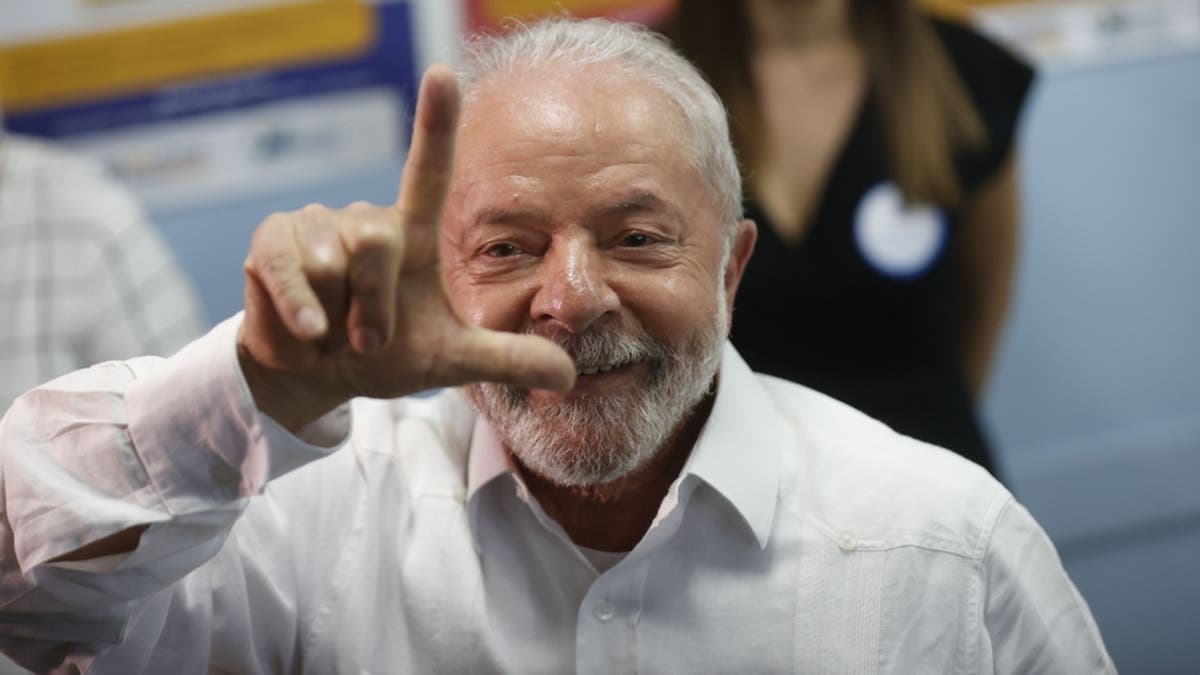
Brazilian President Luiz Inácio Lula da Silva is not merely suggesting a name for the next United Nations Secretary-General; he is attempting to orchestrate a geopolitical shift that would return the Global South to the center of international diplomacy. By repeatedly throwing his weight behind Michelle Bachelet, the former President of Chile and former UN Human Rights Chief, Lula is signaling that the era of Western-centric management at the UN must face a challenge from a unified Latin American front. This is not a casual endorsement made on the sidelines of a summit. It is a calculated move to install a leader who reflects the priorities of emerging economies at a time when the current international order is fracturing under the weight of conflict in Europe and the Middle East.
The strategy hinges on a simple reality. The United Nations has never been led by a woman, and the tradition of regional rotation suggests that after Antonio Guterres, the mantle should arguably return to Latin America or shift toward Eastern Europe. Lula knows that by backing a heavyweight like Bachelet, he bypasses the "safe" bureaucratic candidates often favored by the P5—the permanent members of the Security Council. He wants a politician, not a diplomat.
The Architecture of a Brazilian Power Play
Lula’s foreign policy has always been defined by "active and lofty" diplomacy. He views the UN not as a static administrative body, but as a theater where Brazil can project its influence as a leader of the developing world. Supporting Bachelet serves two distinct purposes. First, it strengthens the regional bond within South America, attempting to heal the ideological rifts that have plagued the continent for a decade. Second, it places a candidate in the field who is inherently skeptical of unilateral Western sanctions and more aligned with the "multipolar" world Lula frequently describes.
Bachelet carries a unique resume that appeals to this vision. As a two-time president of Chile, she managed one of the most stable economies in the region while navigating complex social demands. Her tenure as the United Nations High Commissioner for Human Rights provided her with the global visibility and "UN-speak" fluency required for the job, but it also showed her willingness to engage with Beijing and Moscow in ways that frustrated Washington. For Lula, that willingness to dialogue across the Great Power divide is a feature, not a bug.
Why the Human Rights Record Matters
The path to the 38th floor of the UN building in New York is never smooth. Critics of a Bachelet candidacy point specifically to her 2022 report on Xinjiang, China. For many Western human rights advocates, the report was seen as "too little, too late," issued just minutes before her term ended. They argued she was too soft on the Chinese government. However, from the perspective of Brasília and the BRICS nations, her approach represented a rejection of the "confrontational diplomacy" they believe the West uses to weaponize human rights.
Lula is betting that the General Assembly is tired of the polarization. He believes that a Secretary-General who prioritizes development and poverty reduction alongside human rights will garner more votes than one who focuses strictly on the civil liberties agenda favored by the Global North.
The Regional Rotation Chessboard
Technically, there is no written rule stating which region must provide the next Secretary-General. There is only a "gentleman’s agreement" regarding rotation. Since the UN's inception, the breakdown of leaders has been:
- Western Europe and Others: 4 (including Guterres)
- Asia-Pacific: 2
- Africa: 2
- Latin America and Caribbean: 1 (Javier Pérez de Cuéllar, 1982–1991)
- Eastern Europe: 0
Eastern Europe argues it is their turn. However, the ongoing war in Ukraine makes it almost impossible for the P5 to agree on a candidate from that region. Russia will veto anyone seen as too pro-NATO; the US and UK will veto anyone seen as a puppet of the Kremlin. This deadlock creates a massive opening for Latin America. Lula is moving early to ensure that when the stalemate becomes undeniable, Bachelet is the only viable alternative left standing.
The Internal Obstacles in Santiago and Brasília
While Lula is the primary cheerleader, the support within Chile is more nuanced. The current Chilean administration under Gabriel Boric has maintained a respectful but distinct distance from some of Lula’s more controversial foreign policy stances, particularly regarding Venezuela. For Bachelet to become a consensus candidate, she needs the full, unreserved backing of her own government, not just the endorsement of a neighboring giant.
Domestically, Lula faces a pragmatic challenge. If he spends all his diplomatic capital on a Chilean candidate, does he lose the ability to push for his long-held dream: a permanent seat for Brazil on the UN Security Council? Some analysts suggest that Lula has realized the permanent seat is a pipe dream in the current climate. Instead of banging on a locked door, he is trying to pick the lock by installing an ally in the Secretariat.
The Gender Factor as a Strategic Asset
The pressure to elect a woman is at an all-time high. Groups like "Forward" and various UN-affiliated NGOs have been campaigning for years to break the glass ceiling at the top of the organization. By backing Bachelet, Lula aligns Brazil with the progressive side of UN reform history. It makes his opposition more difficult; it is hard for Western nations to campaign against a highly qualified woman from the Global South without appearing to contradict their own stated values of diversity and inclusion.
However, the Secretary-General is often chosen because they are the "least objectionable" person, not the most powerful. Bachelet is a political titan. She has led a nation. She has a strong personality. Historically, the P5—especially the United States—prefer "more secretary and less general." They want a manager who will keep the lights on and the peacekeeping missions running, not a global leader who will use the bully pulpit to criticize the Great Powers.
The Counter-Candidates
Lula’s endorsement does not happen in a vacuum. Other names are circulating, and they represent the "technocratic" path Lula is trying to avoid:
- Mia Mottley: The Prime Minister of Barbados. She has become a rockstar in the climate change space.
- Maria Fernanda Espinosa: Former President of the UN General Assembly from Ecuador.
- Various Eastern European diplomats: Often former Foreign Ministers who lack the global "brand name" of Bachelet.
Bachelet’s advantage is her scale. She doesn't need an introduction in any world capital. The disadvantage is that she comes with "baggage"—every decision she made as President or as Human Rights Chief is a potential hook for a veto.
The Reform of the Financial Architecture
Lula is not just talking about a person; he is talking about a platform. In his speeches, he links the UN leadership to the reform of the Bretton Woods institutions—the IMF and the World Bank. He argues that the UN Secretary-General must be a voice for debt relief and a restructured global financial system that doesn't penalize developing nations for investing in green infrastructure.
He knows that Bachelet, during her presidency, was a proponent of social safety nets and state-led development. By placing her at the top of the UN, he hopes to merge the UN’s development goals with a more aggressive critique of global neoliberalism. This is where the "veteran journalist" sees the real story: this isn't a personality contest. It is an attempt to use the UN as a lever to shift global economic policy.
The Reality of the Veto
Despite Lula’s enthusiasm, the "veto" remains the ultimate gatekeeper. The United States rarely signals its preference early, but Washington’s relationship with Lula has been strained by his comments on the dollar's dominance and his stance on the Ukraine conflict. If the US perceives Bachelet as "Lula’s candidate," they may see her as a proxy for a Brazilian agenda that seeks to diminish American influence in the Western Hemisphere.
On the other hand, China and Russia may find her acceptable precisely because she is not a creature of the DC establishment. The negotiation will likely come down to a late-night trade-off in a secure room in Manhattan, far from the public declarations of support in Brasília.
The Logistics of the Campaign
A UN campaign is an expensive, grueling marathon of "air kissing" and bilateral meetings. Brazil’s diplomatic corps, the Itamaraty, is one of the most sophisticated in the world. If they are mobilized to campaign for Bachelet, it will involve a coordinated effort across African and Asian capitals to secure the necessary majority in the General Assembly, which then puts pressure on the Security Council to follow suit.
We should watch for whether Lula brings Bachelet to the next G20 meeting or uses the BRICS summit to solidify her status as the "candidate of the South." If he manages to get India and South Africa on board, the momentum might become unstoppable.
The United Nations is currently facing a crisis of relevance. With its inability to stop major wars or enforce climate targets, many see it as a relic of 1945. Lula’s push for Bachelet is a gamble that a strong, political leader from a region that hasn't held the post in thirty years can inject enough legitimacy to save the institution from becoming a historical footnote.
Lula is playing a long game. He is betting that the world is ready for a leader who speaks the language of the Global South with the authority of a former Head of State. Whether the established powers are ready to hand over the keys is another matter entirely. The campaign has started, and Brazil has already fired the first shot.
Identify the movement of other Latin American leaders in the coming months. If Colombia and Argentina—despite their current internal frictions—align with Brazil’s choice, the regional bloc will be formidable. Underestimate Lula’s ability to build a coalition at your own peril.


