The ground beneath Western Australia is ancient, iron-red, and incredibly wealthy. For decades, we have told ourselves a story about this dirt. We call it the "lucky country," a phrase we use with a wink and a beer in hand, as if the prosperity flowing from our shores was a natural law like gravity. But luck is a fickle thing to build a national budget on.
Imagine a family named the Walkers living in a modest suburb of Perth. They aren't poor, but the edges of their lives are fraying. The grocery bill climbs every Tuesday. The air conditioner stays off until the heat becomes a physical weight. They live atop a continent that exports more liquefied natural gas than almost anywhere else on Earth. Yet, as they watch the tankers disappear over the horizon, their own utility bills suggest they are living in a land of scarcity, not plenty.
This is the dissonance at the heart of the Australian resource boom. We are a nation of landlords who somehow forgot to collect the full rent.
The Shadow of the 25 Percent
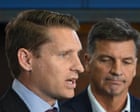
Recently, a voice emerged from an unexpected corner of the political woods. Andrew Hastie, a man known more for his "iron-clad" conservative credentials and military background than for radical tax reform, started talking about a number: 25 percent. Specifically, a 25 percent tax on the windfall profits of gas giants.
It wasn't a whisper. It was a roar.
Hastie’s argument isn't built on Marxist theory or a desire to dismantle capitalism. It is built on a very simple, very human observation: the multinationals have had a "really good run" on Australian wealth. For a long time, the deal was simple. These companies brought the capital and the technology to pull the gas from the deep. In exchange, they got to keep the lion's share. We got jobs and a bit of trickle-down.
But the world changed. War in Europe sent energy prices screaming into the stratosphere. While the Walkers in Perth were checking their bank balances twice before buying mince, the companies extracting Australian gas were seeing profits that defied logic. They weren't working harder. They hadn't invented a new way to drill. They were just sitting on a gold mine during a gold rush.
The Invisible Stakes
When we talk about "resource rent taxes," eyes glaze over. It sounds like a lecture in a basement classroom. But if we rename it, the stakes become visible. Call it the "Hospital Fund." Call it the "Submarine Down Payment." Call it the "Cost of Living Buffer."
Australia is currently staring down the barrel of massive future expenses. We want a sovereign defense capability. We want a healthcare system that doesn't collapse under the weight of an aging population. We want schools that actually prepare children for a world dominated by silicon and code. These things cost money. Real money.
If we don't get that money from the entities making billions off our collective inheritance—the minerals and gases that belong to the people—then where does it come from? It comes from the Walkers. It comes from income tax, from bracket creep, and from the slow erosion of public services.
Hastie is tapping into a growing realization that being "open" to a 25 percent tax isn't just about revenue. It’s about a sense of national self-respect. It’s the realization that a guest has been staying in the spare room for twenty years, eating the food, using the power, and paying the same "introductory rate" they negotiated in 2004.
A Journey Through the Ledger
To understand why this is happening now, we have to look at how we got here. For years, the prevailing wisdom was that if you taxed the giants, they would leave. They would pack up their rigs and go to Qatar or the Gulf of Mexico.
Fear. It’s a powerful motivator.
But the gas isn't in Qatar. It’s here. You can’t move a gas field. You can’t relocate the North West Shelf to a more tax-friendly jurisdiction. The leverage has always been ours, but we were too polite, or perhaps too frightened, to use it.
Consider the mechanics of a windfall. If a company expects to make a 10 percent profit and suddenly, due to a global catastrophe, they make a 40 percent profit, that extra 30 percent is "unearned." It is a gift of circumstance. Hastie’s pivot suggests that even the most business-friendly wings of the Australian government are starting to see that letting that gift flow entirely offshore is no longer a viable political or moral strategy.
The multinationals will tell you they pay plenty. They will point to payroll taxes and the thousands of people they employ. And they are right; they are massive contributors to the economy. But there is a difference between being a contributor and being a partner. A partner ensures that when the sun shines, everyone gets a bit of shade.
The Human Element of the Budget
Imagine a nurse named Sarah. She works double shifts at a public hospital in Brisbane. She is exhausted. The equipment is aging. The waiting room is a sea of frustrated faces. When she hears that a gas company made $10 billion in profit while paying a fraction of that in royalties, she doesn't think about "macroeconomic stability."
She thinks about the new MRI machine her ward needs. She thinks about the fact that her pay hasn't kept pace with the rent.
Sarah is the human element of the tax debate. When a politician like Hastie—someone who isn't a natural ally of "big government"—reaches for the tax lever, he is acknowledging Sarah. He is acknowledging that the social contract is fraying. If the people feel the system is rigged so that the wealth of the land only enriches a few boardrooms in Houston or London, they will eventually stop believing in the system entirely.
History is littered with the wreckage of nations that let their resource wealth become a curse rather than a blessing. We often look at Norway with a mix of envy and confusion. They have a trillion-dollar sovereign wealth fund. Their citizens are insulated from the shocks of the global market. They didn't do it by being geniuses; they did it by being firm. They decided early on that the oil belonged to the Norwegians, and if companies wanted to extract it, they would pay for the privilege.
We chose a different path. We chose the path of the "easy invite." We made it so attractive to invest here that we forgot to ensure we were getting a fair return on the investment.
The Pivot
Hastie’s openness to a 25 percent tax represents a massive shift in the Australian political landscape. It signals that the era of "tax competition at any cost" might be ending. Even the hawks are starting to realize that you can't buy a fleet of nuclear submarines with "good vibes" and corporate goodwill.
It is a moment of cold, hard pragmatism.
The pushback will be fierce. We will hear about "sovereign risk." We will be told that this tax will kill the golden goose. We will see advertisements featuring rugged workers in high-vis vests, warning us that their jobs are on the line. These are the standard plays in the corporate handbook.
But look closer at those workers. They are Australians too. They want their kids to go to good schools. They want their parents to have dignity in aged care. They are starting to see that the health of the company they work for and the health of the country they live in are not always the same thing.
The Invisible Stakes
The real stakes aren't just about a line item in a budget. They are about the kind of country we want to be. Are we a quarry with a flag? Or are we a society that uses its natural advantages to build a future that lasts longer than a commodity cycle?
There is a certain irony in a conservative like Hastie leading this charge. But perhaps it takes a conservative to remind us that "conserving" our national wealth is a fundamental duty.
The Walkers in Perth don't care about the intricacies of the Petroleum Resource Rent Tax. They care about whether the "luck" of this country is ever going to find its way to their kitchen table. They care about whether the massive, gleaming tankers they see off the coast are symbols of national pride or symbols of a missed opportunity.
The conversation has moved beyond "if" we should tax the giants more. The conversation is now about "how much" and "when."
The silence that used to surround this topic has been broken. It wasn't broken by a radical protest or a fringe movement. It was broken by the realization that in a world where everything is getting more expensive, letting billions of dollars in "lucky" profits slip through our fingers isn't just bad policy.
It's a betrayal of the very luck we claim to cherish.
As the sun sets over the Indian Ocean, painting the sky in shades of orange and violet that mimic the gas flares of the North West Shelf, the question remains. We have the gas. We have the demand. We have the dirt.
Now, we just need the courage to ask for what we're worth.