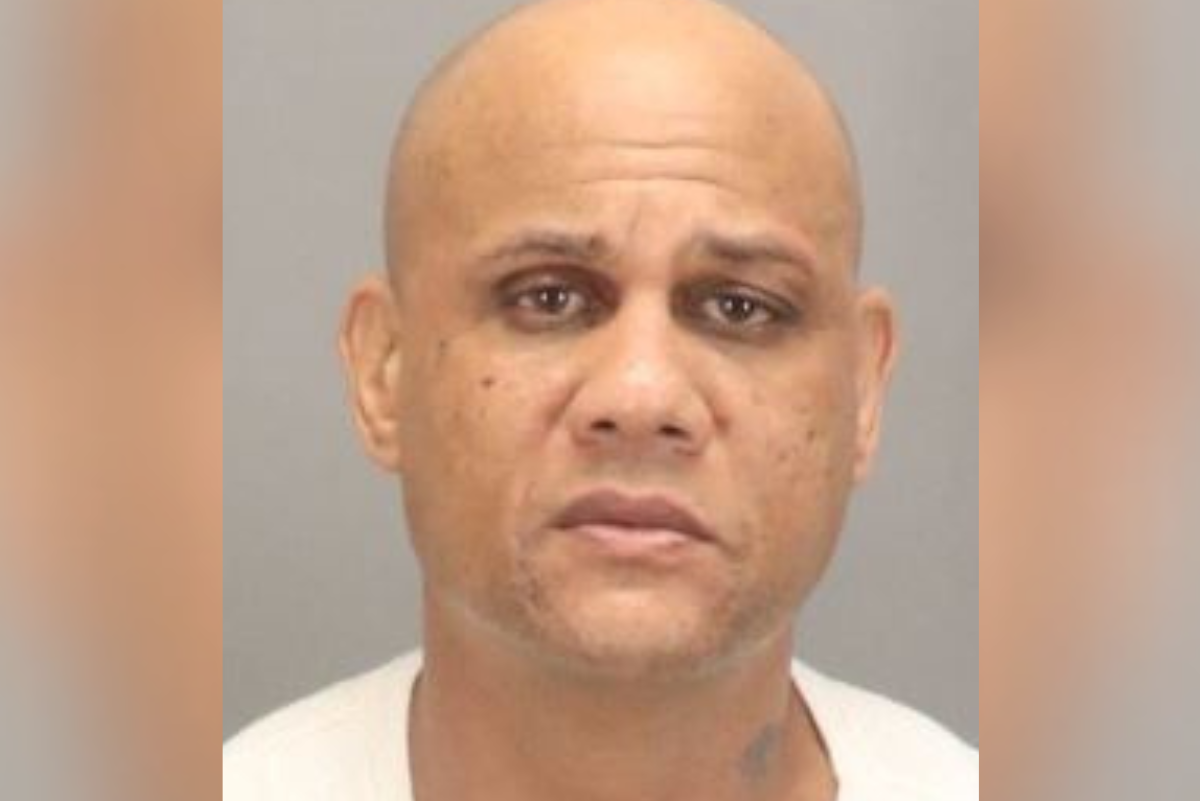
Twenty-one years is a lifetime in the world of criminal forensics. In 2004, the trail for the killer of David Hernandez went cold, leaving a family in a state of perpetual mourning and a case file gathering dust in the archives of the San Bernardino County Sheriff’s Department. Justice didn't just move slowly; it appeared to have stopped entirely. However, the recent arrest of 41-year-old Sergio Pantoja in connection with the June 2004 shooting serves as a stark reminder that time is no longer the absolute shield it once was for those fleeing their past.
The arrest was not the result of a sudden confession or a lucky break during a routine traffic stop. It was the culmination of a deliberate, multi-year effort by the Cold Case Homicide Team to re-examine evidence through a modern lens. When David Hernandez was found shot in the unincorporated area of San Bernardino, the technology required to link Pantoja to the crime was either in its infancy or entirely nonexistent. This case highlights a fundamental shift in how long-term investigations are managed. Law enforcement agencies are increasingly moving away from the "wait and see" approach, instead utilizing specialized units that treat decades-old evidence as a fresh puzzle waiting for the right tool.
The Mechanics of a Two Decade Delay
The primary obstacle in any investigation spanning twenty years is the degradation of human memory. Witnesses move away, their recollections blur, and some pass away. In the Hernandez case, investigators had to bridge the gap between 2004 and the present day by leaning heavily on physical evidence that had been preserved since the initial crime scene processing.
Cold case units rely on a process often referred to as "evidence auditing." This involves going back to the original property room, pulling every swab, every piece of clothing, and every shell casing, and asking a simple question: What can we do now that we couldn't do then? In 2004, DNA profiling was functional but required relatively large samples. Today, "touch DNA" allows technicians to pull genetic profiles from skin cells left behind on surfaces that were previously thought to be sterile or unusable.
While the San Bernardino County Sheriff’s Department has been tight-lipped about the specific forensic "hit" that led to Pantoja, the timing suggests a breakthrough in database matching. When a suspect’s DNA or fingerprints are entered into national systems like CODIS or AFIS for an unrelated matter, it can trigger a "cold hit" against an unsolved case from decades prior. It is a digital trap that stays set for years, waiting for the suspect to make a single mistake.
The Evolution of the Cold Case Unit
The success of the Hernandez investigation points to a broader trend in American policing: the professionalization of the cold case investigator. Historically, unsolved murders were handled by active-duty detectives in their "spare time" between fresh calls. This led to a cycle of neglect. A detective would get a lead, work it for a day, and then get pulled away by a new shooting.
Modern departments have realized that solving these cases requires a different temperament. It requires a "marathon" mindset rather than a "sprint" mindset. The San Bernardino Cold Case Homicide Team is part of a growing number of specialized squads that do nothing but breathe life into dead files. They operate with the understanding that the passage of time can actually work in their favor.
Relationships change over twenty years. People who were once afraid to speak because of gang affiliations or domestic ties often find themselves in different circumstances decades later. A jilted ex-spouse or a former criminal associate who has since "gone straight" is often more willing to talk to a detective in 2026 than they were in 2004. Investigative journalism into these units reveals that "the re-interview" is often more effective than the lab work itself.
Why Some Cases Stay Cold While Others Catch Fire
It is a bitter reality for families of victims that not every case receives the same level of renewed scrutiny. The decision to reopen the David Hernandez file likely rested on several factors. First, the original evidence had to be stored correctly. If a crime scene technician in 2004 failed to properly bag an item or if the storage facility suffered from moisture or temperature fluctuations, the case remains unsolvable regardless of modern tech.
Second, there is the "solvability factor." Investigators look for cases where there was a known person of interest who simply couldn't be linked to the crime at the time. In the Pantoja arrest, the suspect was 20 years old at the time of the murder. He was part of the community. He had a trail. When a suspect is a local resident rather than a transient "drifter," the chances of an eventual arrest skyrocket.
The Cost of Cold Case Justice
There is a significant financial and emotional cost to pursuing these cases. A single cold case prosecution can cost a county hundreds of thousands of dollars in forensic testing, travel for witnesses, and legal man-hours. Some critics argue that these resources should be poured into preventing future crimes.
However, the counter-argument is rooted in the "broken windows" theory of high-level crime. When a murder goes unsolved for twenty years, it sends a message of impunity to the community. It suggests that if you can stay hidden for a few years, you are home free. The arrest of Sergio Pantoja shatters that illusion. It reinforces the idea that the state’s memory is longer than the criminal’s patience.
The Impact on the San Bernardino Community
For the residents of San Bernardino, this arrest is about more than just one man. It addresses a long-standing grievance regarding safety and accountability in unincorporated areas. These regions often feel overlooked by major metropolitan police forces. By resolving a 2004 murder, the Sheriff’s Department is signaling a commitment to every corner of their jurisdiction, regardless of how much time has passed.
The legal process for Pantoja is just beginning. He is currently being held at the High Desert Detention Center, facing a murder charge that has been hanging over his head since he was a young man. The prosecution will now have to present evidence that is over two decades old to a modern jury. This presents its own set of challenges. Defense attorneys will likely attack the "chain of custody" of the evidence, questioning how it was handled and stored since the early 2000s. They will argue that the passage of time has made it impossible for the defendant to mount a fair defense or find his own witnesses.
Forensics vs. Memory in the Courtroom
The upcoming trial will be a battle between the certainty of science and the fallibility of human recollection. A jury will have to decide if a DNA match or a fingerprint found in 2004 is enough to convict a man who has lived twenty years of his life since that day.
In many cold case trials, the prosecution relies on "corroborative persistence." They don't just show the forensic link; they show the pattern of behavior. They track the suspect’s life from the moment of the crime onward. Did he flee the area? Did he change his name? Did he tell anyone? The narrative of the "fugitive in plain sight" is a powerful one for prosecutors.
The Reality of Forensic Limitations
Despite the celebratory tone that often follows these arrests, it is crucial to remain grounded about what forensic science can actually achieve. The public often suffers from what experts call the "CSI Effect," believing that DNA provides a 100% certain map of a crime. In reality, DNA can prove someone was at a location, but it cannot always prove when they were there or what they were doing.
In the Hernandez case, the prosecution must move beyond the "who" and establish the "why." A cold case arrest is only the first step in a very long, very expensive, and very uncertain legal journey. The arrest of Sergio Pantoja is a victory for the Cold Case Homicide Team, but the true test of their work will happen behind the closed doors of a courtroom.
If you are following a cold case or have information regarding an unsolved crime, the most effective step is to contact the specialized cold case tip lines rather than general police dispatch. These units are specifically trained to handle sensitive, aged information with the discretion required to build a sustainable legal case.