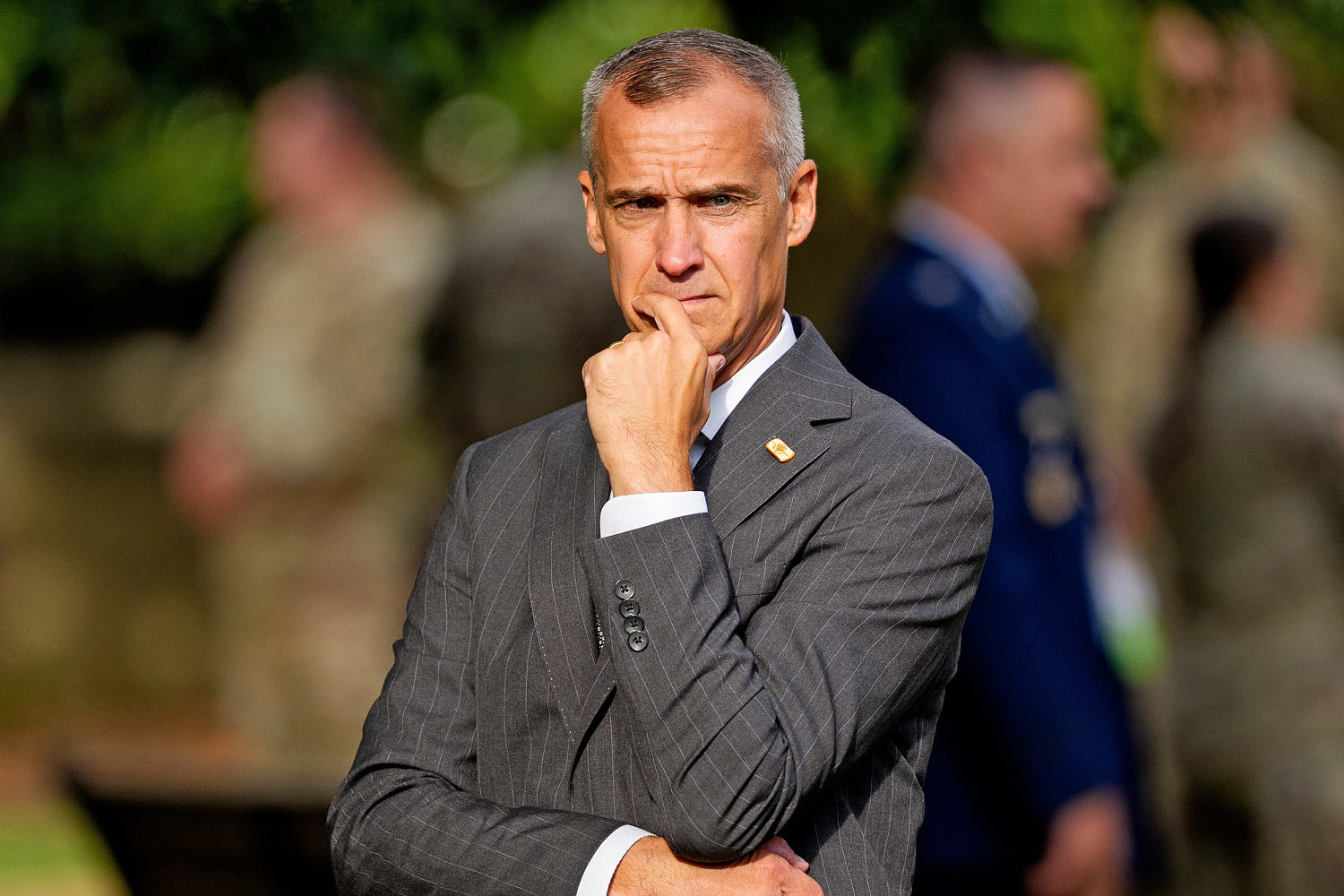
Democratic senators are tightening a legal noose around the intersection of private lobbying and presidential campaigns, specifically targeting the paper trail of Corey Lewandowski. The formal request for document preservation sent to T-Mobile and MillerCoors is more than a routine oversight maneuver; it is a tactical strike aimed at exposing whether high-stakes corporate policy was traded for political access. At the heart of this inquiry is the question of whether Lewandowski acted as an unregistered foreign agent or domestic lobbyist while simultaneously advising a presidential campaign, a duality that creates a massive legal liability for the companies involved.
The Preservation Order as a Precursor to Subpoenas
When United States Senators like Elizabeth Warren and Sheldon Whitehouse send a formal "preservation request," they are not asking for a favor. They are putting a legal marker in the sand. This specific demand requires T-Mobile and MillerCoors to freeze all communications, internal memos, and financial records involving Corey Lewandowski.
The strategy here is clear. By demanding preservation now, the senators prevent the "accidental" deletion of emails or the purging of Slack channels that often occurs when a scandal begins to simmer. For the corporations, this is a nightmare. They are now legally obligated to treat every text message and calendar invite involving Lewandowski as evidence in a potential federal investigation. If they fail to comply, they face charges of spoliation of evidence, which can be more damaging than the original underlying controversy.
The Gray Zone of Political Consulting
The American public often confuses "consulting" with "lobbying." In Washington, the distinction is the difference between a high-paying career and a prison sentence. Under the Lobbying Disclosure Act (LDA) and the Foreign Agents Registration Act (FARA), individuals who influence policy or represent foreign interests must register with the government.
Lewandowski has famously navigated the "consulting" loophole for years. By claiming he provides strategic advice rather than direct contact with lawmakers, he has avoided the transparency requirements that bind traditional lobbyists. However, the senators are betting that the communications held by T-Mobile and MillerCoors will prove he crossed the line. If he was calling executive branch officials on behalf of a merger or a tax break while being paid by these firms, the "consultant" shield evaporates.
Why T-Mobile and MillerCoors
The selection of these two specific companies is not random. It is a calculated move based on their specific needs during the periods Lewandowski was reportedly on their payroll.
- T-Mobile: During its massive merger with Sprint, the company needed every ounce of political capital it could find to clear antitrust hurdles. The senators want to know if Lewandowski was the "fixer" who whispered in the right ears at the Department of Justice or the FCC.
- MillerCoors: Facing significant headwinds regarding aluminum tariffs and trade policy, the beverage giant had a direct financial stake in the administration’s protectionist agenda.
If the records show that Lewandowski promised specific outcomes or used his campaign proximity to influence these files, the companies become co-conspirators in a scheme to bypass federal transparency laws.
The Compliance Failure Inside the C-Suite
Corporate boards are supposed to be the gatekeepers of risk. Yet, the hiring of high-profile political firebrands often bypasses standard vetting procedures. When a CEO decides they need a "line to the White House," they frequently ignore the warnings of their own legal counsel.
The documents being sought will likely reveal a lack of internal controls. It is highly improbable that T-Mobile or MillerCoors had a robust system to monitor whether their "consultant" was adhering to FARA or LDA guidelines. In most cases, these consultants are given wide latitude and "success fees" that incentivize aggressive, often illegal, influence peddling.
This creates a systemic risk for shareholders. If the Senate investigation reveals that corporate funds were used to subvert the democratic process or engage in unregistered lobbying, the resulting fines and reputational damage will be catastrophic. We are looking at a potential repeat of the Jack Abramoff era, where the fallout of one man's influence peddling brought down entire lobbying shops and sent executives to jail.
The FARA Shadow
While domestic lobbying violations are serious, the Foreign Agents Registration Act is the true "nuclear option" in this investigation. FARA carries heavy criminal penalties. If any of the work Lewandowski performed for these companies involved foreign subsidiaries or international trade interests, and he failed to register, the Department of Justice will have no choice but to intervene.
The senators are looking for "the ask." In every corporate-political relationship, there is a moment where the money meets the mission. They want to find the email where Lewandowski says, "I talked to the President, and we have a deal," or the memo where a corporate VP asks, "Can Corey get this tariff removed?"
The Political Reality of Oversight
We cannot ignore the timing. Oversight is a tool of political warfare, but that doesn't make the underlying evidence any less real. By focusing on Lewandowski, the senators are attempting to paint the entire administration's ecosystem as a "pay-to-play" machine.
For the companies involved, the best-case scenario is a quiet settlement and a public relations bruising. The worst-case scenario is a series of televised hearings where their top executives are forced to explain why they paid millions to a man who refused to register as a lobbyist.
The Paper Trail Never Lies
In the age of digital discovery, there is no such thing as a "private" conversation in the world of high-level consulting. Every "burner" phone has a log, and every encrypted message has a recipient who might be willing to flip. The senators are banking on the fact that somewhere in the terabytes of data held by T-Mobile and MillerCoors, there is a smoking gun.
Corporate America needs to take this as a final warning. The era of the "unregistered consultant" who operates in the shadows is coming to a violent end. If you are paying for access, you are buying a ticket to a congressional hearing.
Check your internal retention policies and audit your consulting contracts before the next letter arrives from the Hill.
Would you like me to draft a risk assessment framework that corporate legal teams can use to vet high-profile political consultants for FARA and LDA compliance?