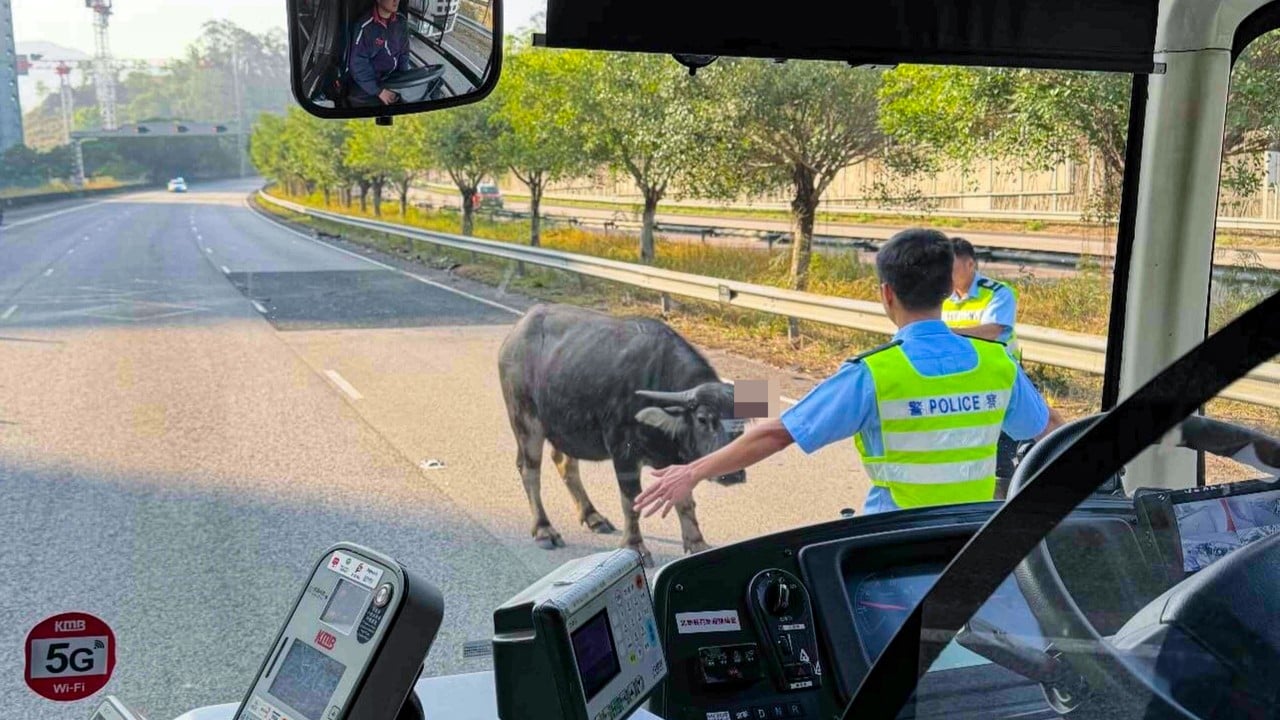
A single, bloodied bull standing defiant against a backdrop of idling Teslas and double-decker buses on a Hong Kong expressway is more than a morning commute delay. It is a visual indictment of a decades-long failure in land management. When a stray water buffalo wandered onto the South Lantau Road recently, bringing the pulse of the city to a grinding halt, the headlines focused on the traffic. They missed the anatomy of the collision. This was not a random act of nature, but the inevitable friction of a metropolis that has forgotten how to share its fringes.
The incident, which saw an injured buffalo causing a standstill for over an hour, highlights a deepening rift between Hong Kong’s rapid infrastructure expansion and its dwindling indigenous wildlife. While the "commuter chaos" narrative sells papers, the real story lies in the broken corridors and the administrative inertia that leaves these two-ton animals with nowhere to go.
The Shrinking Sanctuary
Lantau Island was once a rural stronghold where water buffalo and cattle were the backbone of the agricultural economy. As farming died out in the 1970s and 80s, these animals were abandoned, becoming a feral but culturally significant part of the ecosystem. Today, they are essentially refugees in their own home.
The math of the situation is simple and brutal. As the government pushes for the "Lantau Tomorrow" vision—massive reclamation projects and housing developments—the available grazing land is being chopped into isolated islands of green surrounded by asphalt. When an animal needs to find water or a new mate, it is forced to navigate a gauntlet of high-speed traffic. The buffalo on the road wasn't lost. It was migrating through a traditional path that we happened to pave over.
The Genetic Bottleneck
We are seeing more than just physical accidents. The fragmentation of the herds leads to a hidden crisis: genetic isolation.
- Restricted Movement: Fences and highways prevent different herds from intermingling.
- Inbreeding: Small, isolated pockets of buffalo face long-term health declines.
- Aggression: Lack of space increases territorial disputes between bulls, pushing the losers toward human settlements and roads.
This internal pressure within the herd is what often drives a "lone bull" onto the highway. An injured animal is usually one that has been ousted from its group, wandering in a daze of pain and confusion until it hits the hard reality of the city's transport network.
The Policy of Passive Neglect
The Agriculture, Fisheries and Conservation Department (AFCD) finds itself in a precarious position. Their current strategy involves a mix of sterilization and relocation, but critics argue this is merely managing a decline rather than preserving a population.
There is a glaring lack of physical infrastructure designed for coexistence. In Europe and parts of North America, wildlife overpasses and underpasses are standard requirements for highway projects cutting through sensitive habitats. In Hong Kong, we build world-class bridges for cars but nothing for the creatures that were here first. The cost of a wildlife tunnel is a rounding error in a multi-billion dollar infrastructure budget, yet the political will to implement one remains absent.
The Burden on Volunteers
The heavy lifting of buffalo management has shifted from the state to a handful of underfunded NGOs and exhausted volunteers. These individuals are the ones who track the herds, treat minor injuries, and—when a crisis hits the highway—arrive on the scene to steer a panicked animal away from the police line.
Relying on the goodwill of citizens to manage two-ton bovine residents is not a sustainable policy. It is a liability. When an animal is injured on the road, the response time is often dictated by how fast a volunteer can get through the very traffic the animal has caused.
The Economics of a Standstill
A highway shutdown in Hong Kong isn't just an inconvenience; it is a measurable economic hit. When the South Lantau Road or the North Lantau Highway freezes, the logistics chain for the airport and the shipping ports stutters.
If we quantify the man-hours lost in a single "buffalo jam," the argument for better fencing and dedicated wildlife crossings becomes a fiscal necessity rather than an environmental whim. We are paying for our neglect in lost productivity and emergency response costs.
Infrastructure Failures Include:
- Inadequate Barriers: Standard roadside railings are designed to keep cars on the road, not to keep heavy wildlife off it.
- Poor Lighting: Many rural-to-urban transition zones lack the illumination necessary for drivers to spot a dark-colored buffalo at night or in the early morning.
- Lack of Signage: "Cattle Crossing" signs are treated as suggestions rather than warnings, and they do nothing to address the root cause of why the animal is there.
Beyond the "Nuisance" Narrative
To solve this, we have to stop viewing the buffalo as a "nuisance" and start viewing them as a critical part of Lantau's natural heritage and its future as a "green" destination. If the government wants to promote Lantau as a hub for eco-tourism, it cannot do so while the main attractions are being hit by delivery vans.
The solution requires a three-pronged overhaul. First, we need mandated wildlife corridors in all future Lantau development plans. This isn't about being "nice" to animals; it's about keeping the roads clear. Second, there must be a permanent, well-funded animal management task force with the veterinary tools and transport vehicles necessary to handle large bovines quickly. Finally, we need a legal framework that recognizes these feral populations as protected heritage rather than stray pests.
We are currently stuck in a cycle of reactive management. A buffalo gets hit, the traffic stops, the public complains, and the animal is eventually hauled away. Then we wait for it to happen again.
The blood on the asphalt should be a wake-up call for the planners in their air-conditioned offices. You can't pave over a living ecosystem and expect the residents to simply vanish. The bull on the highway is a ghost of the island’s past, refusing to be ignored by the present.
Take a look at the maps of the planned developments for Lantau and ask where the green lines are. If they don't connect, the next standstill is already scheduled.