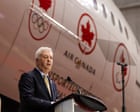
Air Canada CEO Michael Rousseau is being fed to the wolves of Canadian identity politics, and every executive in the room is missing the point. The outrage machine is currently dialed to eleven because Rousseau sent a message—in English—to the families of plane crash victims. Politicians are screaming for a resignation. The public is clutching its collective pearls over "official bilingualism."
They are wrong. They are dangerously, distractingly wrong.
Focusing on the linguistic "insult" of a monolingual message isn't just a distraction; it’s a symptom of a corporate culture that prioritizes optics over operational excellence. If you want a CEO who spends their time perfecting the inflection of a French greeting while the mechanics of crisis management crumble, you aren’t looking for a leader. You’re looking for a mascot.
The Virtue Signaling Trap
The "lazy consensus" here is that a bilingual country requires a bilingual face at the top, regardless of the context. This logic suggests that the feelings of the grieving are better served by a translated script than by the raw, unvarnished efficiency of a leader managing a catastrophe.
I have watched boards of directors burn through millions of dollars in "cultural sensitivity" training while their core product—whether it’s software or 70-ton tubes of aluminum—deteriorates. Air Canada isn't a social club. It is a logistics machine. When that machine fails, the only "language" that matters is the language of accountability and technical resolution.
Demanding a resignation over a linguistic oversight is the ultimate form of bikeshedding. For those unfamiliar with the term, it’s a phenomenon where people give disproportionate weight to trivial issues because they are easier to understand than complex ones. It is easier to be mad about a French translation than it is to interrogate the safety protocols, maintenance cycles, and pilot training hours that actually lead to a crash.
The Myth of the "Empathetic" Translation
Let’s dismantle the premise that a translated message is inherently more empathetic.
- Authenticity vs. Performance: A CEO who doesn't speak French natively, delivering a polished French speech written by a PR firm, is a performance. It’s a lie. It’s a corporate mask.
- Speed is the Only Metric: In a crisis, the lag time between an event and a response is the primary indicator of corporate health. Forcing a message through layers of translation and "cultural vetting" adds minutes or hours that families don't have.
- Clarity Over Comfort: In aviation, the international language of the cockpit is English. This is for a reason: $100%$ clarity. When we move that standard from the cockpit to the boardroom, suddenly everyone wants to prioritize "comfort."
If I am a victim’s family member, I want to know why the plane went down. I want to know what the airline is doing to ensure it never happens again. I do not care if the man delivering that information can conjugate être in the present subjunctive.
The Bilingualism Tax on Talent
Canada’s insistence on bilingualism at the executive level creates a shallow talent pool. By making "French proficiency" a prerequisite for the C-suite at national companies, you are effectively telling the best operational minds in the world—from Silicon Valley, London, or Singapore—that they need not apply unless they spent their youth in a Montreal immersion program.
This is a competitive disadvantage.
Imagine a scenario where the most brilliant safety engineer on the planet is passed over for a leadership role because his French is "rusty." You have just traded actual safety for the appearance of inclusivity. This is how organizations die. They rot from the top down because they start hiring for "fit" and "flair" rather than the brutal, cold-blooded competence required to run an airline.
The Regulatory Distraction
Lawmakers calling for Rousseau's head are doing so because it's politically cheap. It costs a Member of Parliament nothing to tweet about "defending our language." It costs them a great deal more to actually investigate the systemic failures of Transport Canada or the aging infrastructure of our national airports.
This is a classic redirection. By focusing on the CEO’s tongue, they avoid looking at the CEO’s balance sheet or the regulator’s oversight.
Why the Public is Asking the Wrong Question
People are asking: "How could he be so insensitive?"
The real question is: "Why do we allow a linguistic requirement to outweigh an operational one?"
If the airline is safe, the flights are on time, and the maintenance is world-class, the CEO could communicate via interpretive dance for all I care. The moment we start valuing the delivery of the message over the substance of the safety culture, we have lost the plot.
The Hard Truth About Corporate Crisis
I’ve been in the war rooms during corporate collapses and literal wreckage. I’ve seen what happens when the PR team takes over. They start worrying about "brand sentiment" and "regional sensitivities." They start editing the CEO's remarks to ensure no one in Quebec or the Maritimes feels slighted.
While they are editing, the narrative is being set by outside forces. While they are debating the nuances of a dialect, the stock is cratering and the families are getting their information from unverified social media leaks.
Effective leadership in a crisis requires the following:
- Directness: Say what happened.
- Ownership: Admit what you don't know.
- Focus: Ignore the noise.
Michael Rousseau’s "mistake" wasn't a lack of French; it was a lack of a backbone to tell the critics to stay in their lane. He should have stood his ground. He should have stated clearly that his priority was the investigation and the victims, not a grammar lesson.
The Real Risk of Resignation
If Rousseau resigns, the message to the next CEO is clear: Your most important job is to be a linguist.
The person who replaces him will be chosen for their ability to navigate a press conference in two languages. They will be a diplomat. They will be "safe." But will they be the person you want making a $5 billion decision on fleet renewal or labor negotiations? Probably not.
We are incentivizing the wrong traits. We are building a corporate Canada that is polite, bilingual, and utterly mediocre.
The Cost of Compliance
Every hour spent on linguistic compliance is an hour not spent on innovation. Every dollar spent on "correcting" the CEO's public image is a dollar that could have gone into better de-icing technology or pilot fatigue research.
This isn't just about Air Canada. It’s about the "National Identity Tax" that every major Canadian institution pays. We hamper our own growth because we are terrified of offending a vocal minority that prioritizes heritage over horsepower.
Stop Apologizing for Competence
The board of Air Canada needs to stop cowering. They need to realize that the mob is never satisfied. If Rousseau masters French by Tuesday, they will find a problem with his accent by Wednesday.
The move here isn't to apologize more. It’s to apologize less.
Rousseau should double down. He should state that he is an English speaker leading a global airline in a global industry where the primary language is English. He should state that his commitment to Quebec is shown through jobs and investment, not through a teleprompter.
We have a choice. We can have an airline that is a cultural museum, or we can have an airline that is a world-class carrier. You cannot have both when the board is more afraid of a headline in Le Devoir than they are of an engine failure.
The "outrage" over this message is a performative dance. It is a way for people to feel important without actually doing the hard work of holding a corporation accountable for its actual job.
If you want a CEO who speaks perfect French, hire a translator. If you want a CEO who runs a functional airline, shut up about the memo.
Stop demanding a head on a platter for the "crime" of being unilingual. Demand a head on a platter when the planes stop flying or the safety checks get skipped. Anything else is just noise.
Get out of the way and let the man work.
The victims' families don't need a French lesson; they need a functioning airline that takes responsibility for its failures. Everything else is just a distraction used by politicians to hide their own incompetence.
The next time a CEO is grilled for their language skills, ask yourself: would I rather have a pilot who speaks my language, or a pilot who knows how to land the plane?
Choose carefully. Your life depends on it.