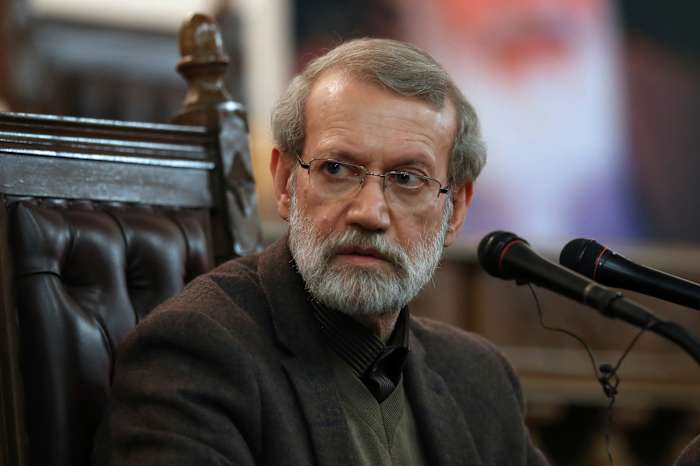
The targeted elimination of Iran’s high-level security apparatus, specifically the reported killing of a top security chief by Israeli forces, represents more than a tactical loss of personnel; it is a systemic disruption of the "Forward Defense" doctrine that has governed Iranian foreign policy for four decades. This kinetic action, occurring simultaneously with the Supreme Leader’s rejection of ceasefire proposals, signals a transition from managed escalation to a state of absolute attrition. When a command-and-control node is removed, the resulting "strategic vacuum" forces a choice between rapid decentralization—which risks loss of discipline—or a rigid, centralized hardening that invites further decapitation.
The Mechanics of Command Attrition
In asymmetric warfare, the value of a security chief is measured by their "institutional memory" and their "relational capital" with proxy networks. Israel’s strategy focuses on neutralizing these specific assets to trigger a cascade of operational failures.
- Relational Fragmentation: Iranian security chiefs act as the primary glue between the Islamic Revolutionary Guard Corps (IRGC) and disparate groups like Hezbollah, the Houthis, and various militias. Their removal severs the informal, trust-based networks required for complex, multi-front coordination.
- Intellectual Property Loss: High-level commanders carry unwritten protocols for evasion, logistics, and unconventional financing. Replacing this expertise requires years of "battle-hardening" that the current tempo of conflict does not allow.
- Signal Vulnerability: The successful targeting of a high-value individual (HVI) confirms a deep-seated intelligence breach within the target's inner circle. This forces the remaining leadership into a "security-induced paralysis," where the fear of internal leaks outweighs the necessity of external communication.
The Rejection of Ceasefire as a Survival Metric
The decision by the Iranian Supreme Leader to rebuff ceasefire proposals is often interpreted through the lens of ideology, but a structural analysis reveals it as a calculated survival mechanism. From Tehran’s perspective, a ceasefire under current conditions represents a "strategic deficit."
Accepting a pause while command structures are being actively dismantled would signal internal weakness, potentially inviting a domestic "cascade effect" where opposition groups view the regime as vulnerable. Furthermore, the Iranian leadership operates under the Logic of Total Resistance, which posits that any concession made during a period of kinetic disadvantage will lead to a permanent loss of deterrent power.
The rejection serves three primary functions:
- Deterrence Restoration: By maintaining a bellicose posture, Tehran attempts to signal that its capacity for retaliation remains intact despite the loss of key personnel.
- Internal Consolidation: External conflict provides a high-pressure environment that justifies the suppression of domestic dissent and the consolidation of power among the "ultra-hardline" factions.
- Proxy Assurance: It reassures the "Axis of Resistance" that the patron state will not abandon them for a diplomatic settlement that favors Israeli security requirements.
The Cost Function of Regional Escalation
The current trajectory creates a "Negative Sum Game" where the costs for all participants rise exponentially without a clear path to a stable equilibrium. Israel’s objective is the permanent degradation of the IRGC’s external reach, while Iran’s objective is the preservation of its regional influence through cost-imposition.
The primary bottleneck in this conflict is the Asymmetry of Replacement. Israel can replace munitions and tactical assets with high efficiency due to its industrial base and Western support. Iran, conversely, cannot easily replace the human capital required to manage its proxy architecture. This creates a "bottleneck of expertise" where the quality of proxy operations begins to decline even if the quantity of munitions remains high.
Structural Failures in Proxy Coordination
When the central coordination hub (the security chief) is removed, the "Proxy Feedback Loop" breaks down. This loop consists of intelligence gathering, resource allocation, and kinetic execution. Without a central arbiter, individual proxy groups often revert to "local optimization"—taking actions that benefit their immediate survival but undermine the broader regional strategy.
This leads to:
- De-synchronized Attacks: Instead of a coordinated multi-front assault, attacks become sporadic and easier to intercept.
- Information Siloing: Units stop sharing intelligence for fear that the other unit has been compromised, leading to massive blind spots in the regional theater.
- Resource Hoarding: Proxies begin to stockpile Iranian-supplied weapons for their own defense rather than using them for the offensive objectives dictated by Tehran.
The Pivot Toward Nuclear Hedging
As the conventional security architecture is dismantled, the Iranian regime is incentivized to accelerate its "Nuclear Hedging" strategy. When conventional deterrence (proxies and security chiefs) fails to prevent direct strikes on high-value targets, the "Ultimate Deterrent" becomes the only logical endgame for regime preservation.
The logic follows a predictable path:
- Conventional Degradation: Kinetic strikes reduce the efficacy of the IRGC and its proxies.
- Strategic Isolation: Diplomatic channels are closed, and ceasefire proposals are rejected to maintain face.
- Nuclear Acceleration: The regime reduces the "breakout time" to nuclear capability as a final insurance policy against total collapse or direct invasion.
This transition shifts the conflict from a regional shadow war to a global non-proliferation crisis. The removal of security chiefs may solve the immediate problem of proxy management, but it simultaneously pushes the adversary toward a more dangerous, existential threshold.
Operational Forecast and Tactical Realignment
The loss of a security chief forces an immediate "Security Audit" across the entire Iranian intelligence apparatus. Operations will likely enter a dormant phase as the IRGC hunts for "moles" and re-encrypts its communication channels. However, this dormancy is a tactical pause, not a strategic retreat.
We should anticipate:
- Horizontal Escalation: Seeking targets outside the immediate theater (e.g., cyberattacks on infrastructure or maritime disruption) to prove reach without requiring a high-level field commander.
- Decentralized Cell Activation: Giving lower-level commanders the authority to strike at their discretion, moving from a "Command-Directed" model to a "Mission-Type Tactics" model.
- Increased Reliance on Hard-Kill Systems: Utilizing more autonomous drones and long-range missiles that require less real-time human oversight than complex guerrilla operations.
The kinetic removal of top-tier Iranian leadership has effectively destroyed the "Management Layer" of the regional conflict. While this provides Israel with a significant tactical window, it simultaneously removes the "Rational Negotiators" from the Iranian side, leaving a vacuum filled by ideological rigidity and a drive toward nuclear escalation. The conflict is no longer about territory or specific proxy actions; it is an industrial-scale deconstruction of a state’s ability to project power, met with a desperate, all-or-nothing defense of regime legitimacy.
The strategic play is to monitor the internal IRGC promotion cycles. If the replacements are chosen for their technical proficiency, a return to "managed conflict" is possible. If they are chosen for ideological purity, the region must prepare for a period of uncoordinated, high-volatility violence as the "Axis of Resistance" fragments into autonomous, unpredictable cells.
Would you like me to map the potential "Succession Risk" within the IRGC to identify the most likely candidates for the vacated security roles?