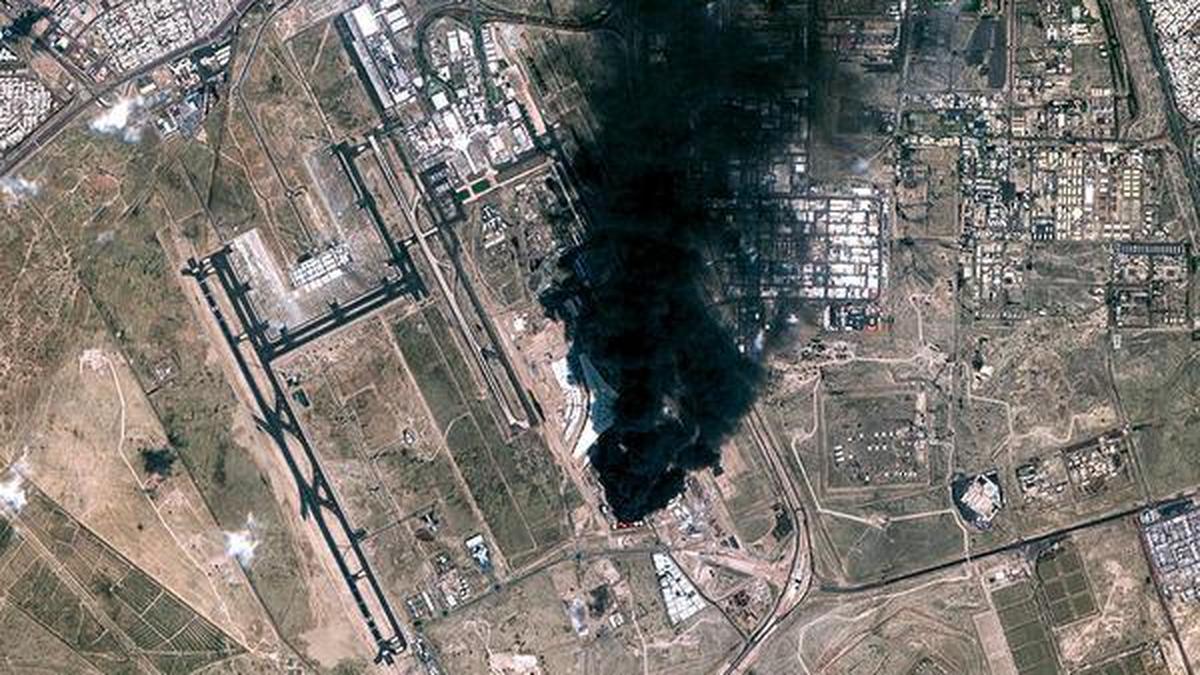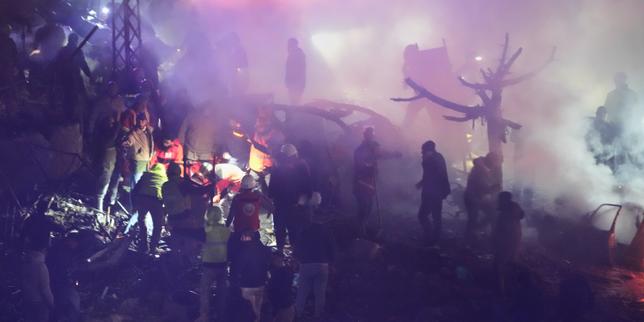
The Middle East shifted on its axis overnight. Israel confirmed a series of massive, coordinated aerial strikes targeting the Iranian capital of Tehran and a high-ranking Hezbollah commander in the Dahiyeh district of Beirut. This is no longer a shadow war. By piercing the sovereign airspace of Iran to hit targets in its capital while simultaneously decapitating leadership in Lebanon, the Israeli military has dismantled the long-standing "rules of engagement" that previously kept this regional friction from becoming an all-out conflagration. The immediate goal was clear: to degrade the "Axis of Resistance" and restore a shattered sense of deterrence. However, the sheer scale of these operations suggests a shift from tactical defense to a strategic offensive designed to force a decisive confrontation.
The Breach of Tehran
For decades, the direct targeting of Tehran was considered a "red line" that would trigger an immediate, catastrophic regional response. That line has been crossed. The Israeli Air Force (IAF) reportedly utilized advanced standoff munitions and electronic warfare suites to bypass Iranian air defenses, striking sites described by the IDF as military assets.
While official Iranian state media initially downplayed the damage, the psychological impact of sirens wailing in the capital cannot be overstated. This was a message intended for the Supreme Leader and the Islamic Revolutionary Guard Corps (IRGC). It says, quite clearly, that no one is out of reach. The vulnerability of Iranian infrastructure is now on full display, stripping away the layer of invincibility the IRGC has tried to project since the missile exchanges earlier this year.
The "vague de frappes" or wave of strikes highlights a sophisticated intelligence apparatus that can pinpoint specific coordinates within one of the most heavily guarded cities in the world. To pull this off, the IAF requires not just hardware, but real-time human intelligence on the ground. This suggests a deep penetration of the Iranian security state, a factor that will likely lead to internal purges and paranoia within Tehran’s halls of power.
The Decapitation in Beirut
Simultaneously, the strike in Beirut targeted a high-level Hezbollah commander, a figure instrumental in the group’s operational planning against northern Israel. The Dahiyeh district is a fortress within a city, yet the precision of the strike minimized collateral damage while ensuring the target was neutralized.
This is part of a broader Israeli strategy to systematically eliminate the veteran leadership of Hezbollah. By removing these "living libraries" of tactical knowledge, Israel is banking on the idea that the group's rank and file will be paralyzed by a lack of direction. It is a gamble. History shows that for every commander killed, another usually rises, often more radicalized than the last. But the current Israeli cabinet appears to believe that the sheer frequency and accuracy of these hits will eventually break Hezbollah’s operational spine.
The timing is critical. Hezbollah has been under immense pressure to retaliate for previous strikes, yet it remains wary of dragging Lebanon into a total war that would destroy the country’s remaining infrastructure. By hitting a senior figure now, Israel is forcing Hezbollah leader Hassan Nasrallah into a corner where he must either risk a full-scale war or lose credibility among his base.
The Myth of Limited Escalation
The international community continues to call for "restraint," a word that has become functionally meaningless in the current climate. There is no such thing as a limited escalation when capitals are being bombed. The reality is that we are witnessing the collapse of the proxy war model. For years, Iran fought through its affiliates—Hezbollah, the Houthis, and various militias in Iraq and Syria—to keep the violence away from its own borders. That buffer is gone.
Israel’s current military posture reflects a domestic political necessity. The government is under intense pressure to return displaced citizens to the north and to ensure that the events of October 7 are never repeated. This has led to a doctrine of "Total Responsibility," where Israel holds the sovereign states of Iran and Lebanon directly accountable for the actions of the groups they host and fund.
The Technological Edge
The success of these strikes relies heavily on a few key pillars of Israeli military technology:
- F-35 Adir Integration: The ability to fly undetected into hostile airspace and coordinate with other assets.
- AI-Driven Target Banks: The use of massive data processing to identify and verify targets faster than human analysts could alone.
- Electronic Suppression: Neutralizing S-300 or similar air defense systems before they can lock on.
However, technology is not a silver bullet. The "how" of these strikes is impressive, but the "why" remains the more troubling question. If the goal is to stop the rockets, the strikes on Tehran might actually do the opposite in the short term. Iran may feel it has no choice but to authorize a massive, coordinated response from all its proxies simultaneously to save face.
The Regional Domino Effect
Jordan, Iraq, and Syria now find themselves in the middle of a high-speed transit corridor for missiles and jets. Jordan, in particular, faces an impossible balancing act. It must defend its sovereignty while maintaining its security relationship with the West and managing a deeply sympathetic population toward the Palestinian cause.
The strikes also complicate the diplomatic efforts of the United States. While Washington maintains its ironclad support for Israel's defense, the White House is reportedly frustrated by the lack of prior notification regarding the Tehran operation. This lack of communication isn't an accident; it is a calculated move by Jerusalem to avoid being told "no" by an American administration desperate to avoid a regional war before an election cycle.
The "Axis of Resistance" is now forced to recalibrate. If they do nothing, their deterrent power is zero. If they respond with a massive barrage, they risk a retaliatory strike that could target Iran's nuclear or oil infrastructure. This is the "escalation ladder" that analysts have warned about for decades, and we are currently on the top rungs.
Internal Iranian Pressures
Within Iran, the government is facing a dual crisis. Economically, the country is reeling from sanctions and mismanagement. Socially, there is a significant portion of the population that has no interest in a war for the sake of regional proxies. However, the hardliners in the IRGC view any sign of weakness as an existential threat to the Islamic Republic itself.
The strikes in Tehran might actually embolden the most radical elements of the Iranian regime. They will argue that the "wait and see" approach has failed and that the only way to protect the country is to accelerate its nuclear program to achieve a "balance of terror." If the world thought the situation was volatile before, the prospect of a nuclear-armed Iran responding to conventional strikes on its capital is the ultimate nightmare scenario.
The High Cost of Silence
The lack of a unified global response has allowed this cycle to accelerate. Russia, distracted by its own war in Ukraine, has limited influence but remains a wild card, especially given its deepening military ties with Tehran. China, while a major buyer of Iranian oil, has shown little interest in mediating a conflict that doesn't directly threaten its shipping lanes—though a wider war would certainly do that.
We are entering a phase where the "unthinkable" becomes the "operational." Striking a capital city used to be a declaration of total war. Today, it is framed as a "vague de frappes." This linguistic softening doesn't change the kinetic reality. People are dying, and the architecture of the modern Middle East is being dismantled in real-time.
The Israeli military's confidence is high. They have proven they can hit anyone, anywhere, with near-total impunity. But tactical brilliance is not the same as a strategic victory. You can win every battle and still lose the war if the end goal isn't clearly defined. If the goal is to simply kill the enemy faster than they can be replaced, then this conflict has no end.
The focus now shifts to the response. Will Tehran's retaliation be symbolic, designed to satisfy a domestic audience, or will it be a genuine attempt to overwhelm Israel's Iron Dome and Arrow systems? The answer to that question will determine whether the events of the last twenty-four hours are remembered as a bold masterstroke or the opening notes of a regional catastrophe.
There is no path back to the status quo of yesterday. The decision to strike Tehran has permanently altered the geography of the conflict. Israel has bet that it can exert enough pressure to break the cycle of proxy harassment. Iran has bet that its "strategic patience" will eventually outlast the political will of the West. One of these bets is about to be called.
The high-pitched hum of drones and the sonic booms of fighter jets over Beirut and Tehran are the new soundtrack of the region. Diplomacy is currently an afterthought, a tool used only to manage the optics of an escalating war. The real decisions are being made in bunkers and command centers, where the logic of the strike is the only logic that matters. We are no longer waiting for the big war. We are watching its first act unfold.