Israel isn't "skipping" the Iran peace talks. It’s making them irrelevant.
The standard diplomatic narrative—the one you’ll read in every beige op-ed from D.C. to Brussels—is that Israel is sulking on the sidelines, waiting for a green light from the White House. This is a fundamental misunderstanding of how Middle Eastern power dynamics actually function. When the Israeli Consul General signals that the state will "abide" by a U.S. decision while staying out of the room, he isn't describing a passive follower. He is describing a predator that refuses to be caged by a treaty it never signed.
The "lazy consensus" suggests that diplomacy is the only path to stability. History suggests that for Israel, diplomacy is often the path to a tactical disadvantage. By staying away from the table, Israel retains the one thing a negotiator loses the moment they sit down: unpredictable agency.
The Illusion of the Empty Chair
Diplomacy is a game of constraints. The moment you join a summit, you accept the legitimacy of the process. You agree, implicitly, that the outcome—however watered down—is something you are bound to respect.
Israel’s absence isn't a vacuum; it’s a shadow.
By refusing to join Iran peace talks, Israel effectively tells the world: “Whatever you lot agree upon in a Swiss hotel room has zero impact on our kinetic operations.” This isn't posturing. It’s a calculated strategic bypass. While diplomats argue over enrichment percentages and sunset clauses, the Israel Defense Forces (IDF) and Mossad maintain a "gray zone" operations manual that functions entirely outside the jurisdiction of international law or bilateral agreements.
If you are in the room, you are a stakeholder. If you are outside the room, you are a wild card. In the brutal logic of regional hegemony, the wild card always carries more weight than the stakeholder.
Why "Abiding" by Trump is a Tactical Feint
The headlines love the idea of Israel "abiding" by the U.S. administration’s decision. It sounds like a junior partner following the boss.
It’s actually a brilliant piece of buck-passing.
When Israel says it will follow the lead of the U.S. Executive, it creates a massive political buffer. If a deal is struck and fails, the blame rests on Washington’s shoulders. If the U.S. takes a hardline stance that leads to escalation, Jerusalem can claim they were simply supporting their primary ally.
But look closer at the mechanics. "Abiding" by a decision does not mean pausing intelligence gathering, cyber-sabotage, or the "War Between Wars" (MABAM). I have watched regional actors play this game for decades. They give the "Big Power" the spotlight and the paper-pushing duties, while they handle the ground-level reality.
The U.S. provides the umbrella; Israel provides the rain.
The Math of Deterrence
Let’s look at the actual physics of the threat. Proponents of these talks often cite the Joint Comprehensive Plan of Action (JCPOA) or its successors as the "only way" to stop a nuclear breakout. They use $t$ to represent time-to-breakout as if it’s a linear progression.
It isn't. Nuclear capability is a multivariable equation where:
$$P = (K \cdot R) / (I + S)$$
Where:
- $P$ is the probability of a successful weaponization.
- $K$ is technical knowledge.
- $R$ is raw material (Uranium/Plutonium).
- $I$ is international oversight.
- $S$ is physical sabotage.
Diplomacy only attempts to increase $I$. Israel focuses exclusively on $S$ and $R$. If you can zero out the physical infrastructure through "accidental" fires at Natanz or the "disappearance" of key scientists, the value of $I$ becomes a moot point. Israel knows that a signed document is a lagging indicator of reality. They prefer to shape the reality first and let the diplomats catch up later.
Dismantling the "Peace" Premise
The most dangerous word in the competitor’s headline is "peace."
There is no "peace" talk happening. There are "containment" talks and "appeasement" talks, but peace requires a fundamental shift in the ideological DNA of the Iranian regime regarding the existence of the "Zionist Entity." Since that shift isn't on the menu, any talk of peace is a sophisticated fiction designed to calm global oil markets.
People often ask: "Wouldn't it be better if everyone just talked?"
No. Talking gives an exhausted regime breathing room. Economic sanctions are a blunt instrument, but they are the only instrument that forces internal friction within the Islamic Revolutionary Guard Corps (IRGC). When you invite Iran to the table, you give them the "Sanctions Relief" card. You trade tangible economic pressure for intangible promises of future behavior.
Israel’s refusal to participate is a rejection of this lopsided trade. They aren't being "difficult." They are being the only realist in a room full of regional tourists.
The Trump Factor: Loyalty or Leverage?
The competitor’s piece leans heavily on the idea that Israel is tethered to Trump’s specific whims. This ignores the fact that the Israeli security establishment often moves ahead of U.S. policy.
During the previous Trump administration, the "Maximum Pressure" campaign wasn't just a Washington brainchild. It was fueled by the "Nuclear Archive" heist—a Mossad operation that provided the physical evidence needed to blow up the previous consensus.
Israel doesn't follow Trump; Israel provides the ammunition that makes a hardline U.S. policy possible. They aren't waiting for a decision. They are narrowing the options until the only logical decision for the U.S. is the one Jerusalem already made.
The High Cost of the Outsider Strategy
I won't pretend this strategy is without risk. Being the "International Pariah" that refuses to negotiate carries a heavy price in the halls of the UN. It strains relationships with European allies who are desperate for Iranian energy. It places a massive burden on the Israeli taxpayer to fund a perpetual state of high-alert readiness.
But the alternative—the "Peace Talk" trap—is a slow-motion suicide.
In the Middle East, a "deal" is often just a ceasefire used to reload. Israel has recognized that the only way to win a game rigged by diplomats is to refuse to sit at the table. By staying out, they maintain the "Begin Doctrine": the explicit policy that Israel will not allow any enemy in the Middle East to acquire weapons of mass destruction. That doctrine doesn't require a seat at a summit. It requires a functional air force and a relentless intelligence apparatus.
Stop Asking if Israel Will Join
The question itself is flawed. It assumes that Israel’s presence would add value to the talks. It wouldn't. It would turn a diplomatic session into a shouting match, ending the process before the first coffee break.
Jerusalem knows this. Washington knows this. Even Tehran knows this.
The "absence" is a coordinated piece of theater. It allows the U.S. to play the "Good Cop" who is trying to hold back the "Bad Cop" in the Middle East. If Israel joined the talks, the "Bad Cop" threat vanishes, and the U.S. loses its primary leverage.
Israel's refusal to join is the greatest gift the U.S. negotiators have. It is the ticking clock in the background of every meeting. It is the silent reminder that if the diplomats fail, the soldiers won't wait for a second round of minutes.
Stop looking at the empty chair as a sign of weakness or isolation. It is the most powerful seat in the house because it is the only one that isn't bolted to the floor.
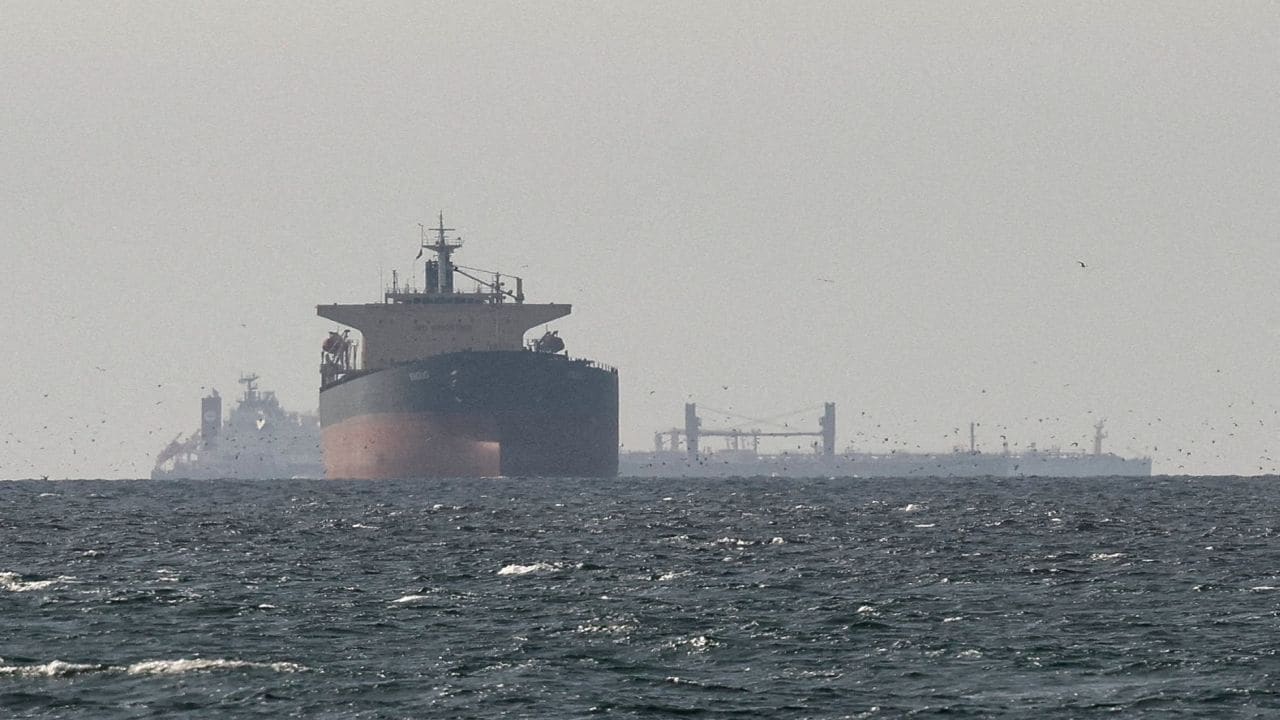
Verify the movements of the tankers in the Persian Gulf. Watch the satellite imagery of the Parchin military complex. Ignore the press releases from Geneva. The real negotiations aren't happening in words; they are happening in the silence between explosions.
Go check the flight patterns of the F-35 "Adir" squadrons over the Eastern Mediterranean tonight. That will tell you more about the "peace talks" than any Consul General ever could.