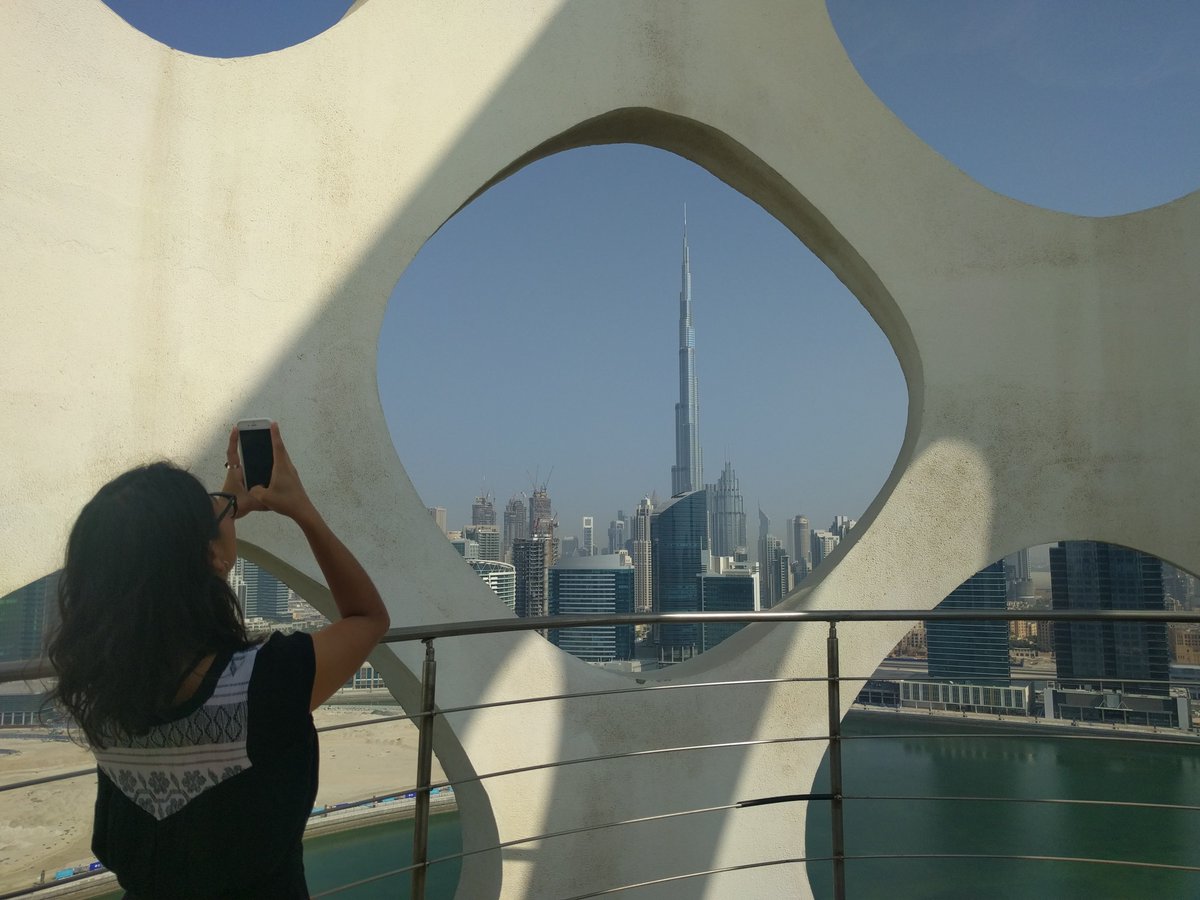
The gleaming skyline of Dubai, a forest of steel and glass rising from the Arabian sands, is often marketed as a sanctuary of stability in a volatile Middle East. Yet, this image of a safe haven relies entirely on a massive, low-wage migrant workforce that currently finds itself caught in a terrifying geographic trap. While the billionaire class and expatriate executives hold gold-plated exit strategies, the millions of laborers from India, Pakistan, Bangladesh, and the Philippines who physically maintain the city have no way out as regional tensions between Iran and Israel reach a breaking point.
This is not a matter of logistics. It is a matter of economics and systemic confinement. In the event of a sustained military escalation or direct strikes on the United Arab Emirates (UAE) mainland, the people who bake the bread, clean the luxury suites, and keep the desalination plants running are effectively stuck. They lack the liquid capital for last-minute flights, their travel documents are frequently tied up in administrative limbo, and their legal status offers no provisions for emergency evacuation. The infrastructure of the city is designed for rapid movement, but the social contract of the Gulf is built on keeping labor stationary.
The Economic Mirage of the Safe Haven
For decades, the UAE has positioned itself as the "Switzerland of the Middle East." This neutrality has attracted trillions in capital. However, neutrality is a political stance, not a physical shield. The geography is unforgiving. Dubai sits less than 200 kilometers across the water from the Iranian coast. In the high-stakes chess match of regional warfare, the logistics hubs and energy infrastructure of the UAE represent "soft" targets that could be used to pressure Western allies.
The risk isn’t theoretical. We have seen drone and missile strikes on Abu Dhabi in the recent past, claimed by Houthi rebels linked to the broader regional axis. When those sirens wail, the divide between the residents becomes a chasm. An executive at a multinational firm pulls up an app and buys a $4,000 one-way ticket to London or Singapore. A construction worker in Sonapur, earning roughly $300 a month, watches the sky.
This disparity creates a massive, unaddressed liability for the UAE’s "growth at all costs" model. If the workforce is paralyzed by fear or physically incapacitated by conflict, the city’s operational capacity vanishes within 48 hours. The Burj Khalifa is a marvel of engineering, but without the staff to manage its complex water and cooling systems, it becomes an uninhabitable glass oven.
The Passport Problem and the Kafala Shadow
While the UAE has made public strides in reforming the Kafala system, the reality on the ground for many low-wage migrants remains one of extreme dependency. The law might say an employer cannot confiscate a passport, but "safekeeping" remains a common practice in labor camps. Even when a worker holds their own documents, they are often burdened by recruitment debts that make leaving a financial impossibility.
If a strike were to hit, the exit routes are already narrow. Dubai International Airport is one of the busiest in the world, but its capacity is finite. During a crisis, prices for outbound flights skyrocket instantly. A worker who has spent three years saving $2,000 cannot spend it all on a sixty-minute flight to Mumbai. They are priced out of survival.
Furthermore, many of these workers originate from countries that lack the diplomatic or logistical muscle to execute a mass sea-lift or air-lift. During the early days of the pandemic, we saw how slowly repatriation flights moved. In a kinetic war scenario, where the airspace might be contested or closed entirely, the "wait and see" approach becomes a death trap.
The Strategic Vulnerability of Desalination and Power
The UAE is an artificial environment maintained by extreme technology. It is a desert that pretends it isn't. This requires a constant, massive input of energy and desalinated water. Most of the critical infrastructure—the Jebel Ali Power and Desalination Complex, for instance—is located along the coast.
Why Infrastructure Density Increases Human Risk
In modern warfare, "dual-use" infrastructure is the primary target. These are facilities that serve both the military and the civilian population. If a regional actor wanted to cripple the UAE's resolve without a full-scale invasion, they would target the water supply.
- Water Security: The UAE has limited natural groundwater. A hit to a major desalination plant would trigger a water crisis within days.
- Power Grid: Without electricity, the air conditioning fails. In a climate where summer temperatures regularly exceed 45°C, A/C is not a luxury; it is life support.
- Labor Camps: Most migrant housing is located on the outskirts, often near industrial zones or logistics hubs that would be high-priority targets in a conflict.
The people living in these camps have no bunkers. There are no civil defense drills for the men in the blue jumpsuits. They are the human buffer zone for the city's industrial heart.
The Myth of Professional Mobility
It is a mistake to think this only affects those in manual labor. The "mid-tier" of the migrant workforce—teachers, nurses, mid-level accountants—is also vulnerable. They live paycheck to paycheck in a city with one of the highest costs of living globally. They may have their passports, but they have no "exit fund."
If the insurance premiums for tankers in the Persian Gulf spike due to Iranian strikes, the cost of goods in Dubai will follow. This is a city that imports nearly 90% of its food. A blockade or a period of sustained strikes would lead to immediate, aggressive inflation. For a family living in a rented apartment in Deira, the choice between buying food and buying a way out is no choice at all. They will stay until the situation is terminal.
Government Silence and the Fragility of Trust
The UAE government is masters of narrative control. They prioritize the "business as usual" image above all else. This means that admitting the need for large-scale civilian defense or evacuation plans for migrants is seen as a sign of weakness—one that might spook the very investors they are desperate to keep.
By refusing to publicly address the safety of the migrant population in a war scenario, the state is gambling with millions of lives. The assumption is that the threat will remain "controlled" or that the US security umbrella will catch every incoming projectile. But as we have seen in modern conflicts, even the best defense systems have a saturation point. When the Iron Dome or its local equivalents are overwhelmed, the debris falls on those who have nowhere to run.
The Corporate Responsibility Gap
Multi-billion dollar construction firms and hospitality conglomerates profit immensely from the low cost of migrant labor. Yet, these companies have virtually no contingency plans for their employees' safety in the event of a regional strike. Their "Business Continuity Plans" usually focus on data servers, financial assets, and senior leadership.
The human capital is treated as a replaceable commodity. If a thousand workers are stranded or injured, the company views it as a tragic externality rather than a failure of corporate duty. This lack of accountability is the silent engine of the Dubai miracle. The city is built on the premise that labor is infinite and disposable.
A City Without a Hinterland
Unlike European or North American cities, Dubai has no "countryside" to flee to. If the city becomes a target, the only way out is by air or sea. To the east is the Gulf, to the west is a vast, inhospitable desert. There are no trains to neighboring neutral states. The borders with Saudi Arabia and Oman are strictly controlled and would likely be locked down in a major conflict to prevent a refugee crisis.
This geographic isolation turns the city into a gilded cage. For the wealthy, the cage has a door. For the migrant, the bars are invisible but unbreakable.
The Failure of International Oversight
The United Nations and the home governments of these workers—primarily India and Pakistan—have been largely silent on this specific vulnerability. They are happy to receive the billions in remittances sent home every year, but they are hesitant to pressure the UAE for better security guarantees for their citizens. They fear losing the "export" market for their labor.
This creates a cycle of complicity. The host nation provides no shelter, the employer provides no exit, and the home nation provides no protection. The migrant worker is the ultimate "stateless" entity in a moment of crisis, belonging to everyone for work and to no one for survival.
The Real Cost of the Dubai Dream
We often measure the success of Dubai in GDP growth, hotel occupancy rates, and the height of its towers. We should start measuring it in the thickness of the blast walls around labor camps—of which there are none.
If the "unthinkable" happens and the regional cold war turns hot, the tragedy will not be the loss of real estate value or the dip in the stock market. The tragedy will be the millions of people who spent their lives building a city that offered them no protection when the sky fell. They are the backbone of the region, yet they are the most exposed to its fires.
The stability of the Gulf is a thin veneer. Underneath lies a massive population of people who are legally, financially, and geographically tethered to a potential battlefield. As long as the exit strategy remains a luxury item, the human cost of any future conflict in the Emirates will be borne by those who can least afford it.
The lights of Dubai stay on tonight because someone is working in a basement or a plant near the shore. If the missiles fly, those lights will be the first to go out, and the people tending them will be the last to leave.