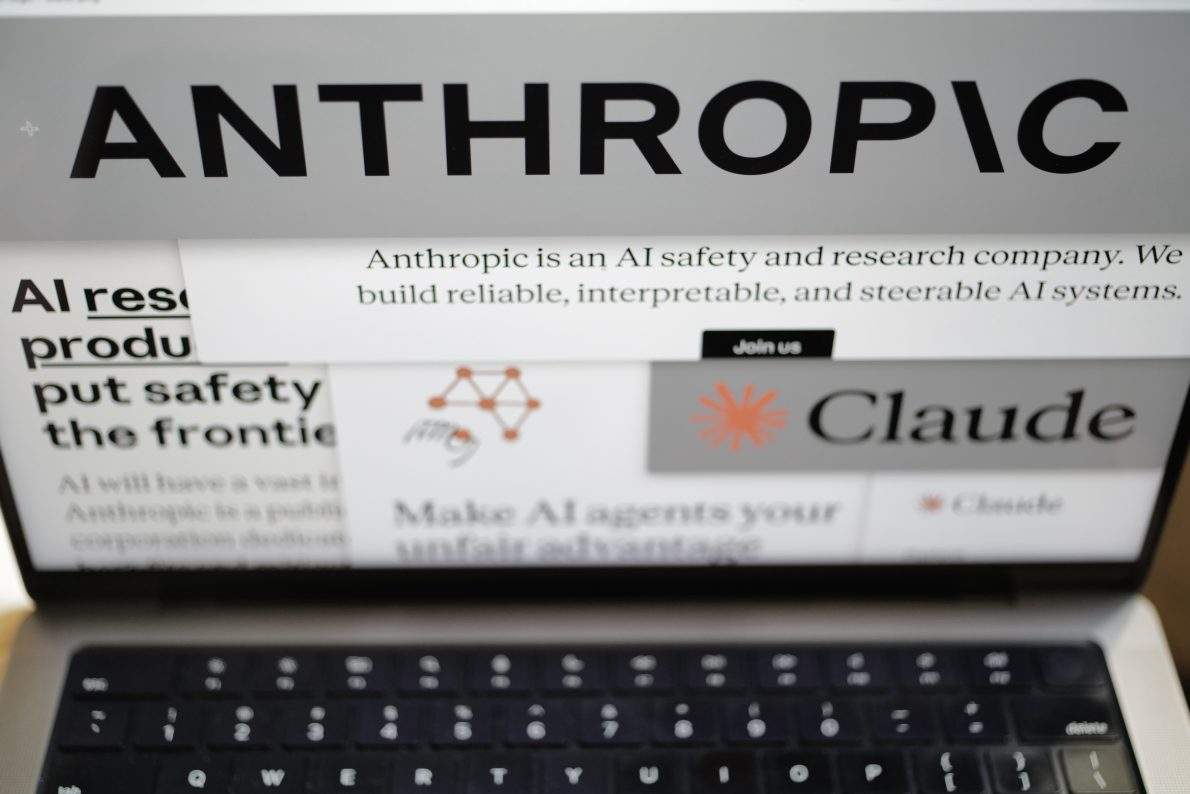
Dario Amodei didn’t build Anthropic to win a popularity contest at the Pentagon. He built it because he was terrified. When he and his sister Daniela walked away from OpenAI years ago, they weren't chasing a bigger paycheck or a flashier office. They were chasing a conscience. They wanted to build "Constitutional AI"—a machine governed by a literal set of rules, a digital soul that would refuse to cause harm even if a human operator begged it to.
But in the cold, windowless rooms where government contracts are signed, a conscience can look a lot like a liability.
Recently, a federal judge pulled back the curtain on a drama that has been simmering in the shadows of Washington D.C. It wasn’t just a dispute over a contract. It was a glimpse into how the gears of the American military machine grind against the moral friction of Silicon Valley’s most cautious engineers. The Pentagon, it seems, put Anthropic on a blacklist. They didn't just pass on their tech; they effectively blocked them from the table.
To a casual observer, this is a story about procurement. To anyone paying attention, it is a story about what happens when you try to put a leash on a god.
The Cost of Saying No
Imagine a young engineer at a startup. Let’s call her Sarah. Sarah spends her nights fine-tuning a model to ensure it won't provide instructions on how to weaponize a biological agent. She is proud of this. It is her life’s work. Then, she finds out her company has been barred from a massive government project because that very safety filter makes the software "non-compliant" with the aggressive needs of national defense.
This isn't a hypothetical tension. It is the core of the Anthropic blacklisting saga.
The judge’s observation was biting. The exclusion of Anthropic felt less like a technical evaluation and more like a punishment. A slap on the wrist for the audacity of prioritizing safety over speed. In the race to achieve Artificial General Intelligence (AGI), the U.S. government is in a dead sprint against global rivals. In a sprint, the person asking to stop and check the map is often seen as the enemy.
The Pentagon's logic is usually simple: we need the most powerful tool, and we need it yesterday. If your AI has a "constitution" that prevents it from being used in certain tactical scenarios, the generals might see that as a bug, not a feature.
The Judge and the Blacklist
When the case reached the courtroom, the air was thick with the kind of bureaucratic jargon that usually puts people to sleep. But Judge Richard Hertling saw through the fog. He noted that the criteria used to sideline Anthropic appeared arbitrary. It looked like the deck was stacked.
When a government agency creates a "blacklist," they don't usually call it that. They call it a "competitive range determination" or a "technical disqualification." They bury the intent in 400-page PDF files. But the effect is a chilling silence. It sends a message to every other lab in the Valley: If you want the billions, leave the ethics at the door.
This creates a dangerous incentive structure. If the companies that care the most about safety are the ones pushed out of the room, who is left to build the brains of our defense systems? The ones who don't care. The ones who move fast and break things—except when the thing you're breaking is the global security landscape, there is no "undo" button.
The Secret Language of Power
The struggle here is rooted in a fundamental misunderstanding of what AI actually is. The Pentagon often treats AI like a new kind of jet engine—something you bolt onto an existing frame to make it go faster. But AI is more like a new kind of pilot. It is an entity that makes decisions.
Anthropic’s Claude isn’t just a chatbot; it’s a reflection of a specific philosophy. By blacklisting them, the government wasn't just rejecting a product. They were rejecting a philosophy of restraint.
Consider the "Black Box" problem. Most AI models are inscrutable. Even their creators don't fully understand why they make certain leaps in logic. Anthropic has pioneered "Interpretability," the grueling process of trying to see inside the machine's mind. It is slow work. It is expensive. It makes the model slightly less "performant" in raw benchmarks.
But in a world where an AI might be responsible for identifying a threat on a crowded border, do we want the fastest model, or the one we can actually audit?
The legal battle highlighted a terrifying reality of the modern era: the most important decisions about the future of our species are being made by procurement officers who might not understand the difference between a large language model and a spreadsheet.
A Mirror of the Past
We have been here before. In the 1940s, the best minds in physics were recruited for the Manhattan Project. Men like Robert Oppenheimer felt the weight of what they were doing. They tried to advocate for international controls, for transparency, for a world where the power of the atom wasn't just a bigger stick for the strongest kid on the playground.
They were often met with suspicion. Some were stripped of their security clearances. Their warnings were treated as political interference.
The Anthropic blacklist is the digital version of the Oppenheimer hearing. It is the moment where the state tells the scientist, "Give us the power, and keep your opinions to yourself."
The judge’s intervention is a rare moment of friction in a process that usually slides toward the path of least resistance. By questioning the Pentagon’s motives, the court forced a public conversation about who gets to decide what "safe" AI looks like. Is it the people building it, or the people weaponizing it?
The Ghost in the Procurement Office
There is a quiet desperation in the way our institutions are trying to catch up to the AI revolution. They are scared. They see the capabilities of these models doubling every few months, and they feel the ground shifting beneath their feet. In that state of fear, nuance is the first casualty.
If Anthropic is "punished" for its safety-first stance, the ripple effect will be felt in every venture capital office in San Francisco. A founder pitching a new AI startup will be asked by their investors: "Is your safety protocol going to get us blacklisted by the DoD?"
If the answer is yes, the funding dries up. The research shifts. The guardrails are dismantled.
We are building a future where the machines will eventually be smarter than us. That is no longer science fiction; it is a mathematical inevitability. The only thing we have left to control is the value system we bake into those machines during these final, formative years.
The courtroom drama over a blacklisted contract might seem like a dry headline. It isn't. It's a battle for the soul of the next intelligence. If we sideline the voices of caution today, we shouldn't be surprised when the systems of tomorrow have no room for mercy.
The judge’s ruling doesn't fix the problem. It just points to the hole in the hull of the ship. The water is still coming in. The Pentagon wants its edge, and Anthropic wants its ethics. In the middle sits the rest of us, waiting to see if the people in charge can understand that a machine that always says "yes" is eventually the one that destroys you.
The lights in the Pentagon stay on late into the night, casting long, sharp shadows over the blueprints of a world governed by algorithms. Somewhere in those halls, a line was drawn. Not with ink, but with intent. And as the gavel fell in that courtroom, the message remained clear: the hardest thing to sell to a hungry empire is a limit.