The air inside a tactical operations center doesn’t smell like glory. It smells like stale coffee, ozone from overworked servers, and the sharp, metallic tang of recycled air. There is a specific kind of silence that settles over a room when the digital map of the world starts blinking red. It isn't the silence of peace. It is the silence of high-stakes gambling where the currency is human life.
In the political arenas of Washington, we often hear the word "imminent" tossed around as if it were a simple dictionary definition. We treat it like a legal checkbox. But for the men and women standing watch, "imminent" isn't a word. It is a heartbeat. It is the moment a drone operator sees a shutter open on a missile silo three thousand miles away.
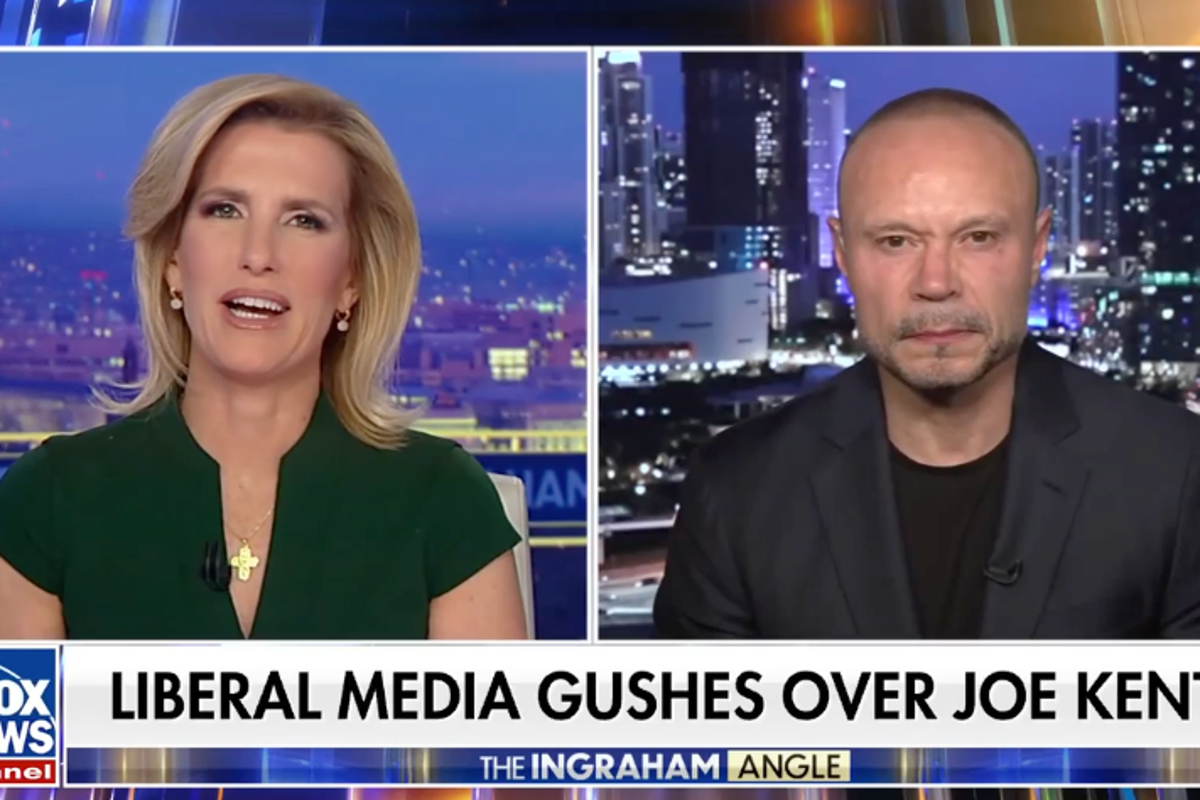
Recently, a rift opened in the national conversation. On one side stands Joe Kent, suggesting that the threats posed by the Iranian regime were not "imminent" enough to justify the heavy hand of American preemptive action. On the other side, Dan Bongino—a man whose career was built on the front lines of protection—reacted with a visceral, white-hot rejection of that premise.
This isn't just a spat between two men with microphones. It is a fundamental disagreement about the nature of evil and the speed of modern death.
The Mechanics of a Looming Shadow
To understand why this debate matters, we have to look past the talking points and into the actual machinery of global conflict. Imagine a hypothetical scenario: a small-town father, let’s call him Elias, is stationed at a regional hub in the Middle East. He isn't a policy maker. He's a technician. He writes letters home about the heat and the dust.
When a regime like Iran’s moves its chess pieces, Elias is the one in the square. If the threat isn't "imminent," Elias goes to sleep. If the threat is real, Elias never wakes up.
The argument Kent puts forward suggests a world where we have the luxury of time. It assumes that a threat only becomes "imminent" when the fuse is already lit and burning. But in the 21st century, the fuse is digital. It moves at the speed of light. By the time a missile is in the air, the window for "imminence" has already slammed shut.
Bongino’s fury stems from a different reality. Having stood in the shadows of presidents and navigated the dark alleys of criminal investigation, he understands that waiting for the "perfect" moment to act is often just another way of choosing to lose. He sees the Iranian regime not as a rational actor waiting for a seat at a diplomatic table, but as a predator that considers every moment of American hesitation as an invitation.
The Fiction of the Frozen Clock
We often fall into the trap of thinking that international relations are like a courtroom drama where evidence must be presented, debated, and verified before any action is taken. We want the "smoking gun."
But what if the gun is already aimed, the finger is on the trigger, and the shooter has already declared his intent to fire? Does the threat only become "imminent" the millisecond the firing pin strikes?
Consider the sheer scale of the Iranian proxy network. These aren't just names on a map like Hezbollah or the Houthis. These are funded, trained, and highly motivated cells designed for one purpose: to bleed the West until it tires of the cost. When these groups receive advanced weaponry and intelligence, the threat is constant. It is a low-grade fever that can turn into a lethal infection overnight.
The data bears this out. Over the last decade, the number of incidents involving Iranian-backed militias against U.S. interests has not moved in a straight line. It is a jagged, upward trend. To argue that there is no "imminent" threat is to look at a house filled with gas and argue that because no one has struck a match yet, the family inside is perfectly safe.
It is a dangerous kind of intellectualism. It prioritizes the definition of the word over the lives of the people it's meant to protect.
The Weight of the "What If"
Every leader faces a haunting binary choice. If you act and you’re wrong, you are a warmonger. If you don't act and you’re wrong, the body bags are your fault.
Bongino's perspective is rooted in the "lived experience" of the protector. When you are tasked with the safety of another human being, you don't wait for 100% certainty. You act on the "left of bang"—the moments before the explosion. You look for the twitch in the hand, the shift in the eyes, the subtle change in the environment that signals a coming storm.
Joe Kent’s skepticism, while framed as a cautious foreign policy, ignores the reality of the adversary. Iran has spent forty years chanting for the destruction of the "Great Satan." They have kidnapped, they have bombed, and they have subverted. At what point does a forty-year history of aggression become "imminent"?
Maybe we’ve been looking at the clock all wrong.
The Cost of Being "Right" and Dead
There is a psychological toll to this kind of debate. For the families of those serving abroad, these arguments aren't academic. They are terrifying. When they hear a political figure downplay a threat, they don't feel relieved. They feel abandoned. They feel as though their loved ones are being used as pawns in a game of semantic chicken.
The reality of modern warfare is that "imminence" is a ghost. It's a phantom that appears and disappears in the blink of an eye. To capture it, you need more than just satellite photos; you need the courage to believe what the enemy is telling you they are going to do.
Bongino isn't just slamming a colleague's opinion. He is sounding an alarm. He is trying to bridge the gap between the comfortable studios of American media and the harsh, unforgiving sunlight of the Persian Gulf.
The tragedy of the "imminent threat" debate is that we only truly know the answer when it's too late to matter. We find the "imminence" in the wreckage. We find it in the memorial services. We find it in the lists of names carved into black granite.
The true stakes are found in the quiet moments between the headlines. They are found in the eyes of a young sergeant looking at a radar screen, wondering if the blip he sees is a bird or the end of his world. He doesn't have the luxury of debating the nuance of a word. He only has the duty to survive.
When we strip away the politics, the podcasts, and the campaign speeches, we are left with a single, chilling truth. The line between a "no threat" and a "national tragedy" is thinner than a razor's edge. And once you cross it, there is no going back.
The map is still blinking. The coffee is still cold. And somewhere, someone is still waiting to see if we believe them when they say they want us gone.
The silence is getting louder.