A single container ship, the Ever Given, once wedged itself into the silt of the Suez Canal. For six days, the world watched a stationary wall of steel hold $9 billion of daily trade hostage. It was a meme. It was a news cycle. It was, most importantly, a warning. We live in a world defined not by the vastness of our oceans, but by the narrowness of our hallways.
Geoeconomics is often discussed in the sterile language of boardrooms and diplomatic summits. Experts talk about "trade flows" and "maritime security" as if they are observing a plumbing diagram. But for a captain standing on the bridge of a VLCC (Very Large Crude Carrier) approaching the Strait of Hormuz, the reality is visceral. It is the smell of salt air mixing with the metallic tang of anxiety. It is the knowledge that 20% of the world’s liquid shadow—petroleum—passes through a gap so narrow that a few well-placed naval mines could turn the global economy into a flickering candle.
If we were to play a game of "Top Trumps" with the world’s chokepoints, we would realize that not all bottlenecks are created equal. Some can be bypassed with a long, expensive detour around a continent. Others are absolute.
The Arteries of the Old World
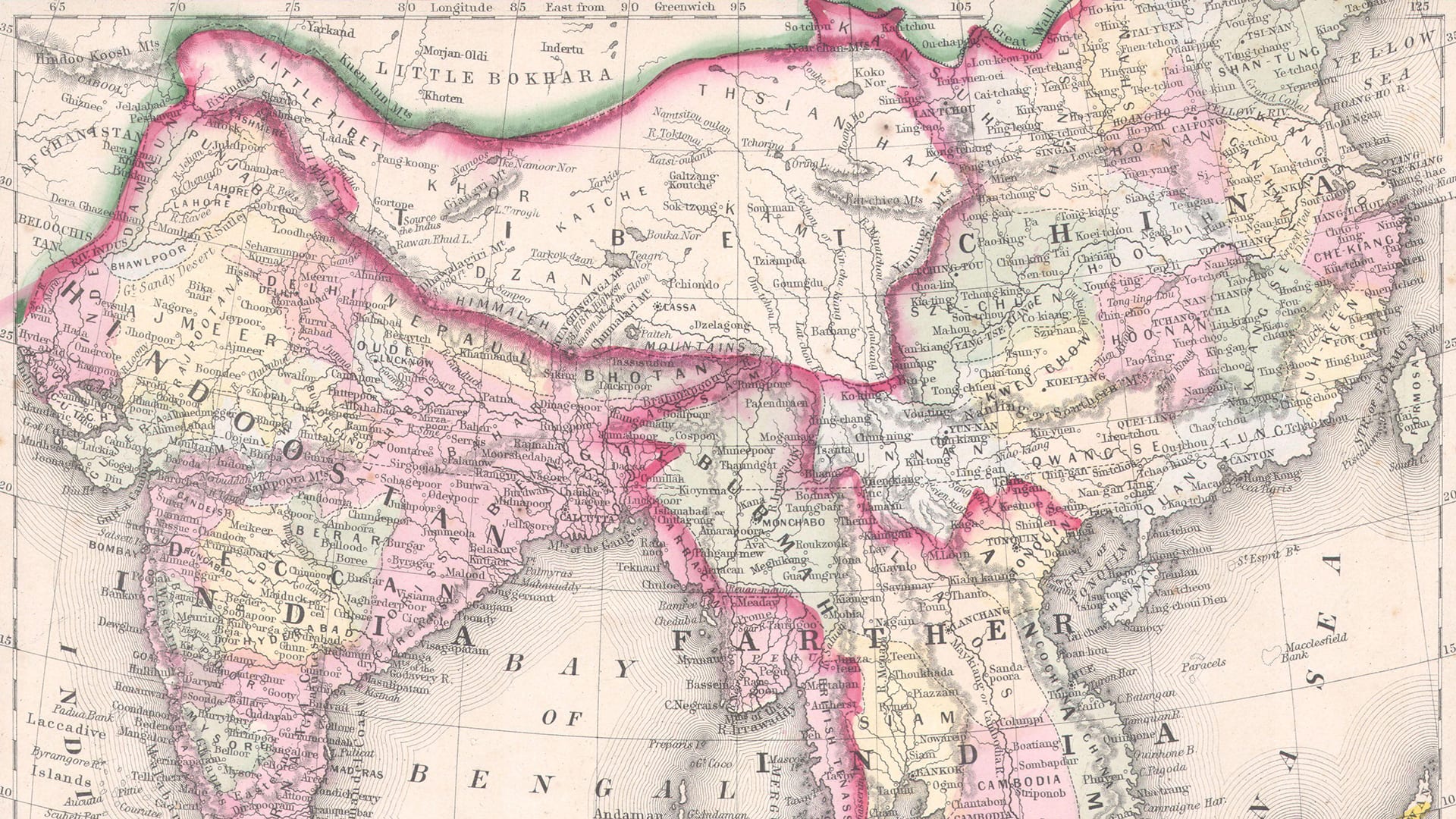
Consider the Strait of Malacca. To the casual observer, it is a picturesque stretch of water between the Malay Peninsula and Sumatra. To a strategist in Beijing, it is a noose.
Imagine a logistics manager in Shanghai named Chen. Chen doesn't care about geopolitics; he cares about the cost of iron ore and the arrival time of crude oil. Every day, he looks at a digital map of dots—thousands of vessels funnelling into a passage that narrows to just 1.5 nautical miles at its tightest point. If that passage closes, the dots stop. The lights in his office eventually go out. The factories that form the spine of the Chinese economy begin to starve.
Malacca is the ultimate volume play. It carries one-quarter of all traded goods and one-third of all seaborne oil. If Malacca is the artery, the Suez Canal is the valve. The Suez is a man-made miracle of ego and engineering, cutting through the Egyptian desert to shave 4,000 miles off the trip from Asia to Europe. When it fails, the "Cape of Good Hope" becomes more than a historical name on a map; it becomes a multi-million dollar penalty for every single vessel forced to take the long way around Africa.
But even these physical gaps in the earth are starting to feel like yesterday's problems.
The Digital Choke
The most dangerous chokepoints are no longer made of rock and water. They are made of silicon and light.
While we fret over ships in the South China Sea, the real geoeconomic "Top Trump" card is being played in a few square miles of cleanrooms in Hsinchu, Taiwan. This is the "Silicon Shield." If a tremor—geological or political—hits the fabrication plants of TSMC, the world doesn't just lose a trade route. It loses its brain.
We often think of technology as something ethereal, living in "the cloud." In reality, the cloud is anchored to the ground by a handful of companies that control the lithography machines required to etch circuits onto wafers. ASML, a Dutch company, holds a near-monopoly on the Extreme Ultraviolet (EUV) lithography machines needed for the most advanced chips.
This is a chokepoint of expertise. You cannot bypass it by sailing around the Cape of Good Hope. You cannot dig a new canal to fix it. If the supply of these machines or the chips they produce is severed, the "just-in-time" manufacturing heart of the West stops beating. A car is not a car without its microcontrollers; it is two tons of useless glass and steel.
The Energy Trap
Then there is the Strait of Hormuz. If Malacca is a noose, Hormuz is a trigger.
It is the most volatile strip of water on the planet. Unlike the Suez, which is governed by international treaty, or the Panama Canal, which is a marvel of managed locks, Hormuz is a raw geographic reality. On one side, the jagged coast of Oman; on the other, the shoreline of Iran.
When tensions rise in the Middle East, the insurance premiums for tankers skyrocket before a single shot is fired. This is the "psychological chokepoint." The mere threat of closure acts as a global tax. A father in a suburb in Ohio feels the Strait of Hormuz when he taps his credit card at a gas station. He doesn't know where the Musandam Peninsula is, but his bank account does.
We are moving into an era where the definition of a chokepoint is expanding. It’s no longer just about where the water is thin. It’s about where the dependencies are thick.
The New Map of Power
We are currently witnessing the weaponization of "points of failure." In the past, empires fought for territory. Today, they fight for the right to deny others access to the flow.
The Panama Canal is struggling with a foe that no navy can fight: thirst. A severe drought has lowered the water levels of Gatun Lake, the freshwater reservoir that feeds the canal's locks. Ships are being forced to carry lighter loads or wait in line for weeks. Here, the chokepoint is environmental. It reminds us that our mastery over the planet’s geography is a fragile illusion.
If we look at the board, who wins the game?
The Suez has the history. Malacca has the volume. Hormuz has the volatility. But the ultimate chokepoint—the one that trumps them all—is the one we cannot see. It is the financial messaging system (SWIFT) that allows money to move, or the submarine cables that lie on the ocean floor, carrying 99% of intercontinental data.
Imagine a cable repair ship. It’s small, unassuming. But if it "accidentally" drops an anchor in the wrong place in the Luzon Strait, the digital economy of an entire region could go dark. No emails. No banking. No coordinated defense.
We have built a civilization that is magnificent in its complexity but terrifying in its fragility. We have optimized everything for efficiency, removing the "waste" of redundancy. We forgot that redundancy is another word for insurance.
The sailor on the deck of a container ship looks at the horizon and sees a vast, open sea. But he is moving through a series of invisible gates. One by one, those gates are being fitted with locks. The keys to those locks are the new currency of power.
We are all passengers on these ships, whether we know it or not. We rely on the grace of geography and the stability of distant shores. We hope the silt stays out of the canal, the rain falls in Panama, and the peace holds in the straits. Because when the world’s throat is squeezed, everyone finds it hard to breathe.
The next time you hold a smartphone or fill a tank, remember the narrow places. Remember that the distance between "plenty" and "none" is often just a few miles of water or a single layer of silicon.