The air in Budapest carries a weight that doesn't exist in Silicon Valley. It is a thick, humid history, pressing down on the cobblestones of District V, where the ghosts of empires still seem to whisper from the bullet holes left in neo-Renaissance facades. In California, power is measured in lines of code and market caps. In Hungary, power is measured in the sovereignty of the soil.
When Elon Musk sat at his keyboard to declare that George Soros had effectively "taken over" Hungary, he wasn't just firing another digital salvo in a long-running feud. He was touching a nerve that has been raw for thirty years. To understand why this matters, you have to look past the billionaire name-calling and see the two competing visions of how a human being should live in the twenty-first century. If you found value in this post, you should read: this related article.
One vision sees a world without borders, where capital and ideas flow like water. The other sees a fortress, where identity is the only thing worth protecting.
The Man Who Would Be Everywhere
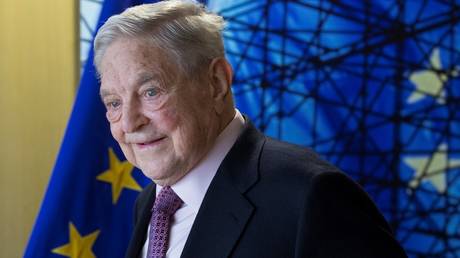
George Soros did not start as a bogeyman. In the late 1980s, he was the primary financier of the democratic transition in his native Hungary. He provided Xerox machines to dissidents so they could print underground newspapers. He gave scholarships to bright, hungry young students who wanted to see the West. For another angle on this development, refer to the recent coverage from Reuters.
Viktor Orbán, the current Prime Minister and Musk’s ideological ally, was one of those students.
This is the central irony that defines the modern Hungarian psyche. The very man who helped fund the birth of a new democracy is now characterized by the state as its greatest existential threat. To Musk, Soros represents a "shadow government," an unelected force using massive wealth to bypass the ballot box.
Musk looks at Soros and sees a social engineer. He sees a man who views the world as a series of problems to be solved through philanthropy, regardless of whether the people in those countries asked for his help. When Musk claims Soros has "taken over," he is describing a ghost in the machine—a web of NGOs, legal funds, and media outlets that operate outside the traditional levers of power.
The Algorithm Meets the Altar
Step into a small cafe in rural Hungary, far from the craft beer and tech hubs of the capital. Here, the "Soros Plan" isn't a conspiracy theory; it’s a daily topic of conversation. The people here feel the world changing too fast. They see their traditional values—family, nation, faith—being digitized and discarded by a global elite.
Elon Musk understands this feeling perfectly.
Musk has transformed X into a megaphone for the populist right because he recognizes that the greatest battle of our time isn't over resources, but over the narrative. If Soros uses the Open Society Foundations to influence policy, Musk uses the algorithm to influence the soul.
The clash over Hungary is a proxy war for the future of the West. On one side, you have the "open society," which advocates for multiculturalism and global cooperation. On the other, you have "illiberal democracy," a term Orbán coined to describe a system that protects the majority's heritage at all costs.
Musk’s intervention is a signal. He is telling the world that the digital giants are no longer neutral observers. They are choosing sides. By siding with the Hungarian government’s narrative, Musk is positioning himself as the protector of the "traditional" world against the "progressive" experiment.
The Cost of Being a Battlefield
What happens to the actual people caught in this crossfire?
Consider a hypothetical teacher in Debrecen. Let’s call her Anna. Anna grew up believing that the fall of the Iron Curtain meant freedom. But now, she finds her classroom at the center of a cultural tug-of-war. If she accepts a grant from an international foundation to update her curriculum, she risks being labeled a foreign agent. If she follows the state-mandated narrative to the letter, she feels she is failing her students’ need for a global perspective.
The stakes aren't academic. They are visceral.
When Musk claims a takeover has occurred, he ignores the fact that Soros-affiliated institutions have been largely dismantled or driven out of Hungary over the last decade. The Central European University, founded by Soros, was forced to move most of its operations to Vienna. The NGOs are under constant legal pressure.
In reality, the "takeover" Musk describes is more of a haunting. Soros has become a convenient symbol of everything the modern populist fears: the globalist, the financier, the outsider. By keeping the image of Soros alive as a looming threat, the Hungarian government—and now Musk—can justify a constant state of emergency.
The Architecture of Influence
We often think of power as something that happens in high-ceilinged rooms with mahogany tables. But today, power is the ability to define what is true.
Soros spent decades building an infrastructure of influence through education and law. He played the long game. Musk is playing the fast game. He is using the speed of the internet to bypass decades of institutional building. He can reach millions of Hungarians directly, over the heads of their own media, over the heads of Brussels, and directly into their pockets.
The "takeover" isn't just about Soros anymore. It’s about who owns the digital town square.
If Musk believes Soros has taken over Hungary, it is perhaps because Musk knows how easy it is to do. He has seen how a single tweet can move markets or spark a protest. He understands that in the 2020s, you don't need to occupy a territory with tanks if you can occupy its attention.
A World Divided by Two Men
There is a profound loneliness in this struggle. Both men, in their own way, are outliers. One is a survivor of the Holocaust and a student of Karl Popper, obsessed with preventing the return of totalitarianism. The other is a self-made titan of industry, obsessed with the survival of the human species through technology and free speech.
Both claim to be saving us.
Yet, as they argue over the fate of a small nation in Central Europe, the gap between the rulers and the ruled grows wider. The "human element" is often lost in the data points of their grand designs. We become the foot soldiers in a war between two visions of the future that few of us actually had a hand in drafting.
The tension in Budapest remains. It is the tension of a country that wants to be part of the future without losing its past, stuck between a financier who wants to change it and a billionaire who claims it’s already been stolen.
The sun sets over the Danube, casting long, jagged shadows across the Parliament building. The lights of the city flicker on, powered by a grid that doesn't care about ideology. On the screens of a million smartphones, the battle continues. A notification pings. A headline flashes. Another grain of sand is added to the mountain of a narrative that is slowly burying the reality of the people living beneath it.
We are left watching two giants throw stones across an ocean, while the ground beneath our own feet begins to shift.