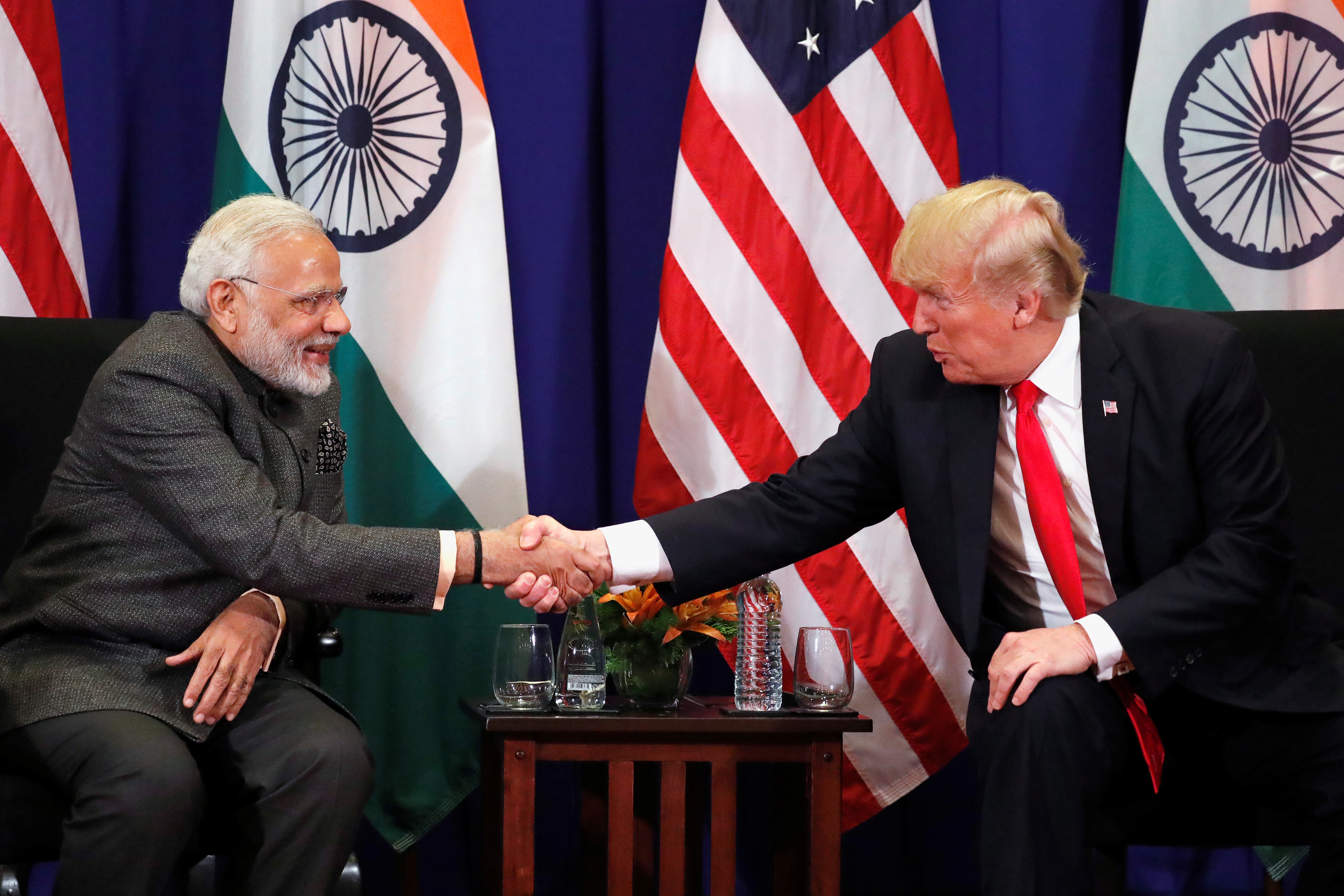
Diplomacy is the art of saying "nice doggy" until you can find a rock. For decades, the US and India have been playing a high-stakes game of "nice doggy," exchanging floral press releases while clutching stones behind their backs. The recent fanfare surrounding J.D. Vance’s comments—echoed by the US Embassy—suggests a partnership of mutual offering. It’s a comforting narrative. It’s also largely a lie.
The "lazy consensus" among DC beltway insiders and New Delhi’s Lutyens elite is that shared democratic values and a common adversary in Beijing make this the "defining partnership of the 21st century." This is a fundamental misreading of both nations' internal pressures and external cold-bloodedness.
The reality? We aren't looking at a "partnership." We are looking at a transactional, high-friction convenience store where both parties are trying to shoplift while the cashier isn't looking.
The Myth of Shared Values
Stop talking about democracy. It’s a PR mask.
If shared democratic values were the glue, the US wouldn't have spent the last half-century cozying up to every petro-monarchy and military junta that promised cheap oil or a landing strip. Conversely, India wouldn't be the world’s largest buyer of Russian S-400 missile systems while simultaneously claiming to be the "premier partner" of the Pentagon.
India is not a Western ally in the mold of Japan or the UK. It is a civilizational state. It plays by its own rules. To New Delhi, "Strategic Autonomy" isn't a buzzword; it’s a religion. They will take American jet engine technology today and vote against American interests at the UN tomorrow. They aren't being "difficult." They are being India.
The US, meanwhile, views India as a massive, low-cost manufacturing hedge against China—a "China Plus One" strategy that treats a sovereign nation like a backup hard drive. This isn't a marriage of minds. It’s a marriage of desperation.
The Tech Transfer Trap
The current hype cycle focuses on iCET (Initiative on Critical and Emerging Technology). The promise is that the US will hand over the keys to the kingdom—semiconductors, AI, and jet engines—to build a fortress in the Indo-Pacific.
I’ve watched these tech transfer negotiations for fifteen years. They are where dreams go to die in a sea of ITAR (International Traffic in Arms Regulations) red tape.
The US treats its technology like the One Ring. It doesn't share; it leases with strings attached. India, burned by decades of sanctions and "technology denial" regimes, refuses to be a mere assembly line. They want the blueprints. The US wants to sell the finished product. This is an irreconcilable conflict of interest.
While the embassy posts quotes about "much to offer," the actual engineers on the ground are fighting over source codes that the US will never, ever release. We are building a house on a foundation of proprietary secrets that neither side is willing to open-source.
The Talent Drain is an Economic Subsidy
Everyone loves to point to Satya Nadella and Sundar Pichai as evidence of the Indo-US success story. This is actually a tragedy for Indian domestic industry.
For thirty years, India’s "export" hasn't been software or hardware—it has been its highest-IQ citizens. The US has effectively outsourced its graduate-level education requirements to the Indian taxpayer. India trains the engineers at the IITs for pennies, and the US harvests the brainpower to build trillion-dollar companies in Santa Clara.
This is a massive, ongoing wealth transfer from the developing world to the developed world, disguised as "opportunity." If India actually wanted to compete, it would stop celebrating the fact that its best minds are building American AI and start worrying why they can't build it in Bengaluru.
The Russia-Ukraine Stress Test
If you want to see the cracks in the "defining partnership," look at the oil tankers.
The US expected India to fall in line with sanctions on Moscow. Instead, India became Russia’s biggest customer, refining Russian crude and selling it back to... Europe and the US.
This is brilliant maneuvering by New Delhi, but it exposes the central fallacy of the alliance: India will never prioritize US global hegemony over its own energy security and fiscal health. Nor should it. But don't tell me we are on the same page when one side is funding the adversary of the other to keep its gas prices down.
Stop Asking if India is the "New China"
The most common question in business circles today is: "Is India ready to replace China as the world's factory?"
It’s the wrong question.
India cannot be the new China because India is a litigious, messy, chaotic democracy with a thousand internal veto points. China built cities in weeks by fiat. In India, a single land-acquisition dispute can stall a multi-billion dollar factory for a decade.
Western CEOs who think they can just "lift and shift" their supply chains from Shenzhen to Chennai are in for a brutal awakening. The infrastructure isn't just behind; the legal and bureaucratic DNA is fundamentally different.
The Real Cost of "Derisking"
The US is pushing "friend-shoring." It sounds cozy. It’s actually expensive and inefficient.
By forcing supply chains into India for political reasons rather than economic ones, the US is baked-in higher costs for its own consumers. We are sacrificing the efficiency of global markets for the perceived security of an alliance that is, at best, fickle.
India, for its part, is using this US anxiety to extract concessions. It’s a classic squeeze play. They know the US needs them more than they need the US right now—or at least, that’s the perception they are projecting.
The Defense Delusion
The US wants India to be its "Major Defense Partner."
But the Indian military is a Soviet-era museum. Roughly 60-70% of their hardware is of Russian origin. You don't "interoperate" a Russian-made T-90 tank with an American network-centric warfare system overnight. It takes generations and trillions of dollars to switch platforms.
The US thinks it can sell India F-16s (rebranded as F-21s) and solve the problem. India knows those planes are old tech. This isn't a defense partnership; it’s a clearance sale meeting a stubborn buyer who prefers the competitor’s older, cheaper model because they already have the spare parts.
The Talent Counter-Revolution
If I were an Indian policymaker, I’d stop chasing H-1B quotas.
I’ve seen the damage the H-1B system does to both countries. It creates a class of "indentured tech workers" in the US who can't change jobs, suppressing wages for Americans, while starving India of the very entrepreneurs who should be building the next Google in Hyderabad.
The real "offering" between these two countries shouldn't be more visas. It should be a total decoupling of the talent pipeline. India needs to make it harder to leave, and the US needs to stop relying on a foreign labor tap to mask its own failing STEM education system.
The Friction is the Point
We need to stop pretending the friction between DC and Delhi is a "bug." It’s the main feature.
Both nations are massive, arrogant, and convinced of their own exceptionalism. They are destined to collide on trade, climate change, and human rights.
The "much to offer" rhetoric is a sedative. It lulls investors into a false sense of security. When the next inevitable trade spat happens—whether it’s over pharmaceutical patents or data localization—the shock will be greater because the expectations were set by embassy-filtered sunshine.
The Strategic Pivot
If you want to actually win in this corridor, stop listening to the ambassadors.
- Accept the Transactional Nature: Don't look for a "partner." Look for a counterparty. Every deal with an Indian entity is a standalone negotiation, not a step toward a grand union.
- Hedge Your Hedges: If you are moving out of China, don't put everything in India. Spread it across Vietnam, Mexico, and Poland. India is too volatile to be your only lifeboat.
- Price in the "Democracy Tax": Everything in India takes three times longer and costs twice as much in legal fees as the pitch deck says.
The Indo-US relationship isn't a budding romance. It's an uneasy truce between two giants who are currently forced to share a very small room.
Stop waiting for the "alignment." It isn't coming. Start navigating the mess.