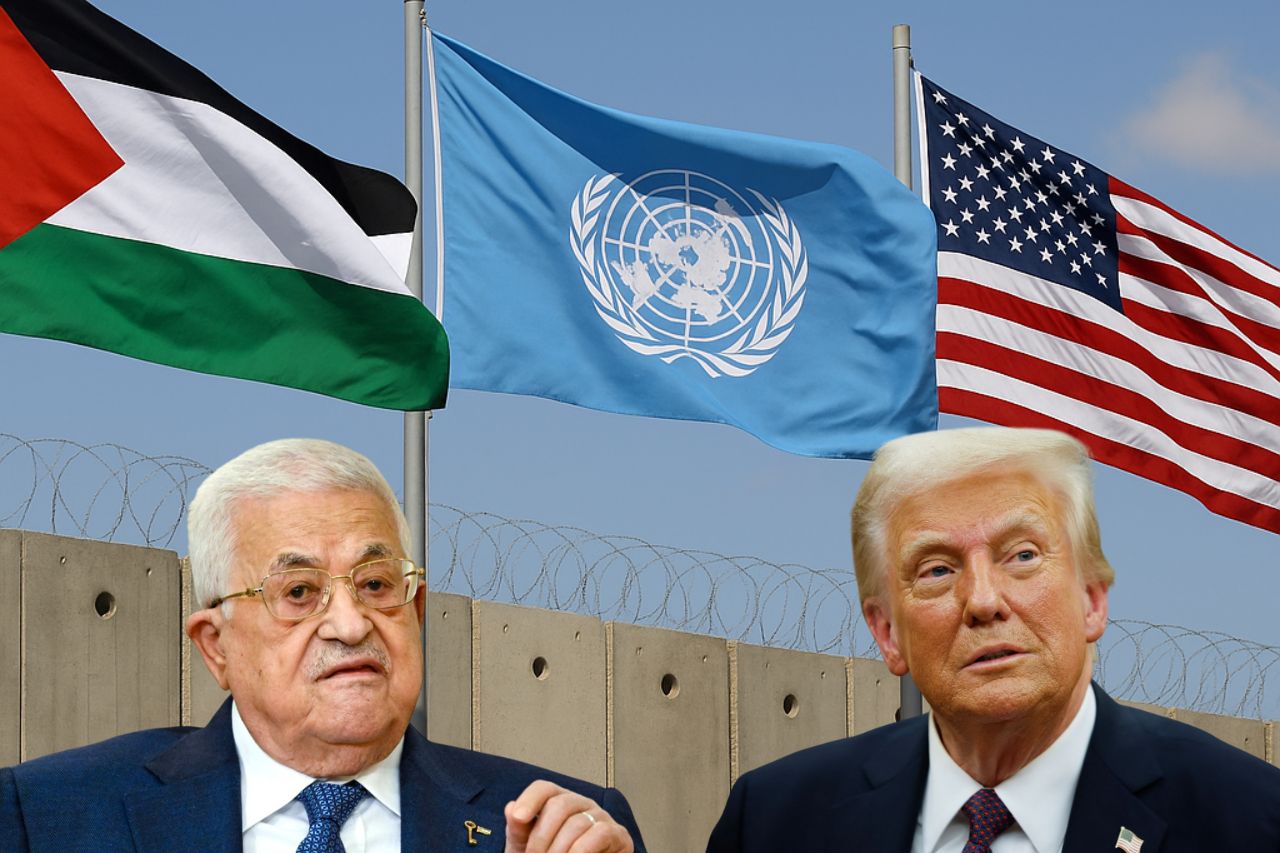
On Thursday, March 19, 2026, President Donald Trump stood before reporters and delivered a message that seemed to defy the smoke plumes currently rising over West Asia. "I’m not putting troops anywhere," Trump declared, responding to a barrage of questions regarding the four-week-old conflict with Iran. It was a classic performance—a mix of isolationist rhetoric and tactical ambiguity—designed to reassure a domestic base weary of "forever wars" while his administration simultaneously oversees the most significant U.S. military buildup in the region since the 2003 invasion of Iraq.
The discrepancy between the President’s words and the Pentagon’s movements has created a dangerous fog of war. While Trump claims he has no plans for "boots on the ground," U.S. Central Command (CENTCOM) is currently managing a massive concentration of air and naval power, including two carrier strike groups and F-22 Raptors stationed in Israel. The war, which began on February 28, has already claimed the lives of 13 U.S. service members. To suggest the U.S. is not "putting troops" in the region is a semantic game; the troops are already there, they are under fire, and they are digging in.
The Excursion That Became a War
Trump has described the current military campaign against Iran as a "little excursion," a term that belies the intensity of the violence. Since the initial joint strikes with Israel, the conflict has spiraled into a multi-front struggle. Iranian-backed militias in Iraq and Syria have launched over 450 attacks on U.S. facilities in the last three weeks alone. Bases like Al-Udeid in Qatar and Al-Dhafra in the UAE—long considered safe hubs for American power—have been targeted by Iranian drones and missiles.
The "excursion" began with a clear objective: dismantle Iran’s nuclear infrastructure and respond to what the administration described as an imminent threat of drone attacks on the U.S. homeland. However, the mission has expanded. The U.S. is now weighing the deployment of ground forces to secure Iran’s Kharg Island, a hub that handles 90% of the country’s oil exports. Controlling the island is seen by some military planners as a more "surgical" option than destroying it, but such a move would require exactly what Trump says he won't provide: a sustained ground presence.
Maximum Pressure Meets Maximum Friction
The administration’s strategy is a radical evolution of the "Maximum Pressure" campaign from Trump’s first term. In February 2025, a National Security Presidential Memorandum restored heavy sanctions, but the 2026 iteration has added a kinetic layer that the previous era lacked. The goal is no longer just economic strangulation; it is the physical neutralization of the Islamic Revolutionary Guard Corps (IRGC) and its ability to project power.
This shift has alienated traditional European allies. Most NATO countries have refused to participate in the "excursion," leaving the U.S. and Israel to bear the brunt of the costs. This refusal has prompted sharp criticism from Washington, with Trump calling the lack of support a "very stupid mistake." The result is a fractured Western front, where the U.S. provides the muscle, Israel provides the intelligence and regional strike capability, and Europe watches from the sidelines, terrified of a total energy collapse.
The Strait of Hormuz Chokepoint
The most immediate threat to global stability isn't a land invasion of Tehran, but the closure of the Strait of Hormuz. Iran has responded to U.S. strikes by mining the waterway and using "shadow fleet" tankers to disrupt shipping. The Trump administration is currently considering sending naval and air reinforcements to ensure "safe passage" for oil tankers.
Logistically, this is a nightmare. Securing the shoreline of the Strait to prevent mobile missile launchers from targeting tankers would almost certainly necessitate small-scale ground operations. Pentagon sources have indicated that thousands of reinforcements are being discussed to bolster existing positions in Kuwait, Jordan, and the UAE. When Trump says he isn't "putting" troops there, he ignores the fact that the logistical tail required to maintain a two-carrier presence and conduct daily sorties is growing by the hour.
- Carrier Strike Group 3 and 12: Currently providing the primary strike platform for cruise missiles and F-35C fighters.
- Muwaffaq Salti Air Base (Jordan): Acting as a forward hub for F-15E Strike Eagles.
- Ovda Airbase (Israel): Hosting F-22 Raptors in hardened shelters—the first time offensive U.S. weaponry of this caliber has been stationed on Israeli soil.
The Domestic Political Tightrope
Trump’s reluctance to admit to a troop surge is rooted in the 2025 National Security Strategy, which emphasized "America First" and a move away from Middle Eastern entanglements to focus on the Western Hemisphere and the southern border. Admitting to a new, large-scale ground war in the Middle East would be a direct contradiction of his campaign promises.
Yet, the reality of "Restoring Peace Through Strength"—the DoW's current mantra—requires a footprint that is hard to hide. The administration is essentially attempting to conduct a "virtual" ground war, relying on elite special forces, naval assets, and air superiority to achieve regime-change goals without the political baggage of a 2003-style occupation. It is a high-stakes gamble that assumes Iran will collapse under the weight of air strikes before the U.S. is forced to commit a full division of infantry.
The Mirage of an Early Exit
"The Iran matter will essentially be largely over in another two or three days," Trump claimed earlier this week. This optimism ignores the asymmetric nature of the conflict. While the Iranian Navy was neutralized quickly, the IRGC’s "thousand-drone" strategy and its network of regional proxies remain functional. The Islamic Resistance in Iraq has even offered bounties for information on the relocation of U.S. forces, showing that the "excursion" has only deepened the local insurgency.
There is a widening gap between Washington’s timeline and the reality in the field. Israel has prepared a "target bank" for Iran covering at least the next six weeks, focusing on dismantling the IRGC’s command structure. If the U.S. plans to be "out soon," as Trump suggests, it would leave its primary ally in the region to finish a war that the U.S. helped start.
The U.S. has already shuttered its embassy in Jerusalem to routine services and ordered government employees to shelter in place. This is not the behavior of a power that is winning a "two-day" skirmish. It is the posture of a nation braced for a long, grinding endurance test.
The American public is being told one story: a quick, decisive action with no new deployments. The satellite imagery of the Persian Gulf tells another: a massive, expensive, and lethal military machine that is only getting larger. Whether Trump calls it an excursion or a war, the outcome will be determined by the facts on the ground, not the rhetoric from the Oval Office.