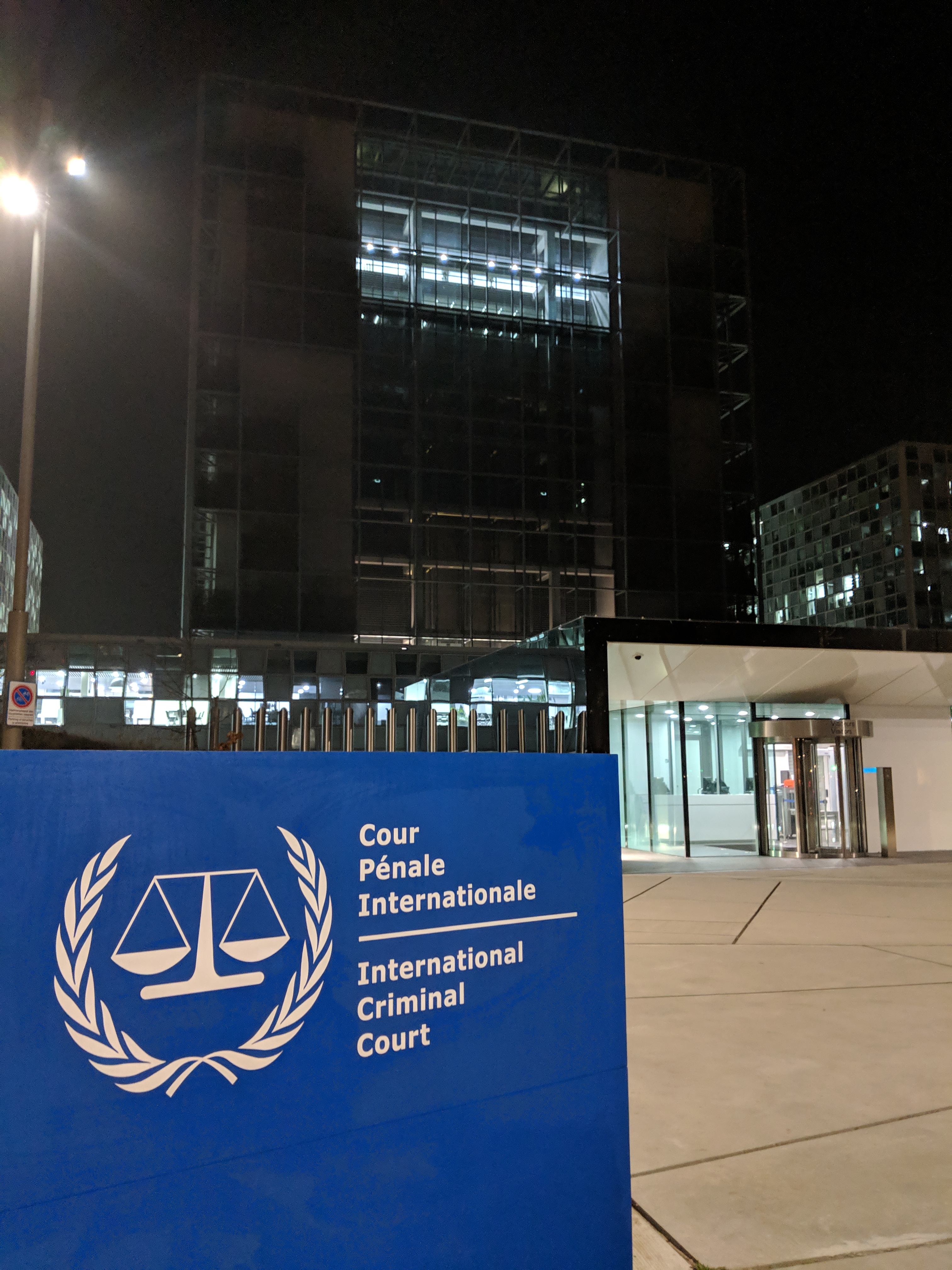
The headlines are obsessed with a "clearance" that wasn't. They are chasing the ghost of an internal report about Karim Khan, the Chief Prosecutor of the International Criminal Court, like it’s a high-stakes spy novel. The mainstream narrative is predictably lazy: it frames the ongoing review of misconduct allegations as a binary struggle between personal integrity and political sabotage.
They are asking the wrong question. They want to know if the man is "guilty" or "cleared."
The real crisis isn't whether a specific document exists or if a specific handshake was inappropriate. The crisis is that the ICC has allowed its internal bureaucracy to become a weapon of mass distraction. While the world's most powerful legal office navigates the "procedural nuances" of its own HR manual, the actual mechanism of international justice is grinding to a halt.
We are watching the "legalization" of stagnation.
The Myth of the Independent Review
The media keeps harping on the fact that the Independent Oversight Mechanism (IOM) didn't find enough evidence to launch a full investigation initially. They treat this like a legal exoneration. It isn't. It’s a resource failure.
In the world of international high-stakes litigation, an "initial review" is often code for "we don't have the budget or the political clearance to dig deeper." I’ve seen this play out in corporate boardrooms and international NGOs alike: when the cost of knowing the truth exceeds the PR budget for managing the lie, the truth gets labeled as "inconclusive."
The competitor’s angle focuses on the "mystery" of why the review continues despite the supposed clearance. There is no mystery. There is only the frantic attempt to maintain the appearance of purity in a system that is inherently political. The ICC is trying to prove it can police itself while it’s simultaneously trying to police the world’s most violent actors. You cannot do both with the same set of tools.
Why the "Standard Procedure" is a Trap
The "lazy consensus" suggests that following the rules will eventually lead to a clean outcome. That is a fantasy.
- Weaponized Compliance: Every day spent "reviewing the review" is a day the Prosecutor’s office spends looking inward rather than outward. For the warlords and state actors currently in the ICC’s crosshairs, this isn't a scandal; it’s a reprieve.
- The Transparency Paradox: By attempting to be perfectly transparent about internal allegations, the ICC invites external bad actors to flood the zone with more noise. If a simple internal complaint can trigger a months-long existential crisis for the Chief Prosecutor, why would an adversary bother with complex legal defenses when they can just trigger a series of HR complaints?
- Institutional Fragility: A robust institution shouldn't be paralyzed by an investigation into one individual. The fact that the ICC’s credibility is currently tied to a single "clearance" report proves that the architecture of the court is dangerously thin.
The Data of Disappointment
Let’s look at the numbers the pundits ignore. Since its inception, the ICC has spent billions of dollars. The result? A handful of convictions, mostly against low-level militia leaders.
When you factor in the cost per conviction, the ICC is the most expensive and least efficient "factory of justice" in human history.
$$Efficiency = \frac{Convictions}{Total Budget}$$
If we applied this simple formula to the Khan era, the numerator is essentially stagnant while the denominator—the cost of bureaucratic survival—is skyrocketing. The current focus on his personal conduct is a convenient screen. It allows the public to focus on a "person" rather than the systemic failure of the "process."
Imagine a scenario where a hospital is being sued for medical malpractice on a global scale. Instead of fixing the surgical wing, the board of directors spends three years investigating whether the Chief of Medicine used the wrong font on a memo. That is the current state of the ICC.
The "Controversial" Truth: We Don't Need an Immaculate Prosecutor
Here is the take that makes the human rights wing of LinkedIn shiver: The moral character of the Prosecutor is secondary to the functional output of the Court.
The international community has become obsessed with the "purity" of its figureheads. We demand they be secular saints. But international law isn't a monastery; it’s a battlefield. We need a Prosecutor who can navigate the filth of geopolitics and come out with a warrant that actually sticks.
If we wait for a human being who is beyond the reach of a disgruntled staffer or a politically motivated leak, the Prosecutor’s chair will remain empty forever. The "review" of Khan isn't about finding the truth; it’s about satisfying a performative standard of excellence that no human being can meet under the microscope of 2026 surveillance.
Stop Asking "Is He Cleared?" and Start Asking "Is He Working?"
The People Also Ask section of Google is filled with queries like:
- "Is Karim Khan still the ICC Prosecutor?"
- "What were the allegations against the ICC Prosecutor?"
These questions are distractions. They are the equivalent of asking about the color of the paint on a sinking ship. The question should be: "How many warrants have been executed in the last six months?"
If the answer is zero, the "clearance" of the Prosecutor is irrelevant. A clean Prosecutor who does nothing is far more dangerous to the concept of global justice than a flawed Prosecutor who actually arrests a genocidaire.
The Technology of Accountability
We are entering an era where AI and blockchain could theoretically handle the evidentiary chain of custody in war zones, removing the "human element" that leads to these messy internal dramas. Yet, the ICC remains a 19th-century institution dressed in 21st-century robes.
They are using manual reviews, internal memos, and "independent mechanisms" that move at the speed of a glacier. If the ICC actually wanted to be beyond reproach, it would automate its oversight. It would make its evidentiary standards so transparent and data-driven that the personality of the Prosecutor wouldn't matter.
Instead, they’ve chosen the path of maximum drama and minimum output.
The Hard Choice
The ICC needs to stop behaving like a university faculty committee.
You cannot maintain a "neutral" stance while investigating the world’s most polarizing figures. You are either a threat to them, or you are an irrelevance. Currently, by being bogged down in "reviews" and "clarifications," the ICC is choosing irrelevance.
They are terrified that a "cloud of doubt" will undermine their warrants. They are wrong. A warrant is undermined by lack of enforcement, not by the personal reputation of the man who signed it. The world didn't care about the personal lives of the Nuremberg prosecutors; they cared about the gallows.
The legal community’s obsession with the "integrity of the process" has become a suicide pact. Every minute spent debating the "review" of Karim Khan is a victory for every criminal who thinks the international community is too busy checking its own pulse to ever throw a punch.
Stop waiting for the report to be "finalized." It will never be finalized to everyone's satisfaction. Justice isn't a HR department exercise. It’s a power move. Either use the power or close the doors.


