The math of modern warfare usually focuses on missile ranges and barrel prices. We talk about how much a barrel of Brent crude will spike or whether the Strait of Hormuz will stay open. But the United Nations just dropped a report that shifts the focus to something much more visceral. If a full-scale conflict breaks out involving Iran, the economic fallout won't just hit the stock market. It's going to push 32 million people into extreme poverty across the region. That’s not a rounding error. That’s nearly the entire population of Saudi Arabia or Malaysia suddenly unable to afford bread.
This isn't just about the people living within Iran's borders. We're looking at a massive, regional shockwave. War in the Middle East has a way of leaking across frontiers. It moves through refugee flows, broken supply chains, and the sudden evaporation of foreign investment. When the UN speaks about 32 million people, they’re looking at a "worst-case" escalation. This means a sustained conflict that destroys infrastructure and halts trade for months. It's a terrifying prospect that the world seems to be sleepwalking toward.
Why the Poverty Numbers Are So High
You might wonder how one war can ruin the lives of 32 million people so quickly. It's because the Middle East is already on a knife's edge. Many countries in the neighborhood are struggling with massive debt and high food prices. They don't have a safety net. If Iran enters a high-intensity conflict, the immediate result is a spike in logistics costs.
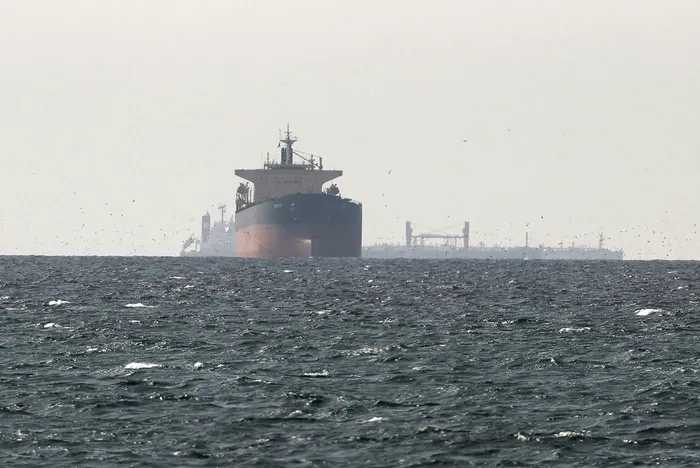
Ships won't sail. Insurance premiums for tankers will go through the roof. For a country like Egypt or Jordan, which relies heavily on imported grain and fuel, a 20% or 30% price hike is a death sentence for the lower class. These people spend more than half their income on food. They don't have "disposable income" to trim. They just stop eating.
The UN Development Programme (UNDP) and the Economic and Social Commission for Western Asia (ESCWA) highlighted that the impact is cumulative. It’s not just the first month of bombing. It's the years of "lost development" that follow. We saw this in Syria. We saw it in Yemen. Once the schools close and the power plants are leveled, you're not just fighting a war. You're deleting two decades of progress.
The Regional Spillover Effect
Think about the neighboring economies. Iraq, Turkey, and Pakistan all share borders or deep economic ties with Iran. If Iran’s economy collapses under the weight of war, those borders become transit points for millions of displaced people. Host countries often can't handle that kind of influx. Their own systems break.
- Trade Deadlocks: Iran is a hub for regional trade. When that stops, the neighboring "bazaar" economies starve.
- Energy Shocks: Even if you don't buy Iranian oil, the global price is set by the perceived risk in the region.
- Currency Crashes: Panic is contagious. If investors see the Middle East as a war zone, they pull their money out of the entire region, not just the combatants.
I’ve seen how this plays out in real-time. When a region becomes "uninvestable," the local currency loses value. Suddenly, that 32 million number starts to look conservative. Inflation eats through savings like a forest fire. People who were "middle class" yesterday are standing in bread lines tomorrow.
The Infrastructure Trap
War doesn't just kill people; it kills the future. The UN report emphasizes that infrastructure damage is a primary driver of poverty. If a power grid goes down, businesses can't run. Without refrigeration, food rots. Without water treatment, disease spreads.
In a modern conflict, "precision strikes" are rarely that precise for the civilian population. Even if the target is military, the secondary effects are broad. If the internet goes dark, the digital economy—which has been a lifeline for youth in the region—simply ceases to exist. You can't code for a Silicon Valley startup if your city has four hours of electricity a day.
What the UN Is Actually Warning About
It's easy to dismiss UN reports as bureaucratic alarmism. But look at the data. They use complex econometric models to project these figures. They aren't just guessing. They look at "Human Development Index" (HDI) scores. Their projection suggests that some countries could see their HDI scores set back by 20 or 30 years.
Imagine waking up and finding out your country has the same quality of life it had in 1995. That’s the reality for millions if this escalates. It means higher infant mortality. It means lower literacy rates. It means a generation of children whose only education is surviving a conflict.
The Global Apathy Problem
The world is tired. We have the war in Ukraine. We have tensions in the South China Sea. There's a sense of "conflict fatigue" in the West. But ignoring the potential for 32 million people to fall into poverty is a massive strategic mistake. Poverty breeds instability. Instability breeds extremism. It’s a cycle we’ve seen play out for a century.
If the global community doesn't prioritize de-escalation, the bill won't just be paid in Iranian rials or US dollars. It’ll be paid in human lives. We're talking about a humanitarian catastrophe that would dwarf anything we've seen this decade.
The Immediate Economic Reality
Let’s get real about the numbers. We aren't just talking about a bit of inflation. We're talking about hyperinflation. In a war scenario, the Iranian Rial—which is already struggling—would likely become worthless. People would lose their life savings in weeks. When that happens, people flee. They don't have a choice.
The 32 million people at risk aren't just a statistic in a PDF. They are teachers, shopkeepers, and students. Most of them have nothing to do with the geopolitics of their leaders. They're just caught in the middle of a giant, high-stakes game of chicken.
Stop Looking at Maps and Start Looking at People
Geopolitical analysts love to look at maps and draw arrows. They talk about "strategic depth" and "proxy networks." Honestly, it’s a cold way to view the world. If you want to understand the true cost of a war with Iran, look at the poverty line.
Every time a diplomat fails to reach an agreement, that line moves. It moves up, swallowing more families. The UN is trying to tell us that the cost of war is no longer something we can manage. It’s too high. The global economy is too interconnected. A shock in Tehran is a tremor in Cairo and a quake in Karachi.
How to Track This Situation
If you're watching this unfold, don't just look at military movements. Watch the commodity markets. Watch the refugee tracking data from the UNHCR. Those are the early warning signs.
The next time you hear a politician talk about "limited strikes" or "containment," remember the number 32 million. That’s the human price tag. It’s a price the world isn't prepared to pay, and it’s one that will haunt the region for decades if the worst happens.
Pressure your representatives to support diplomatic channels. Support organizations that provide regional aid. Stay informed through primary sources like the UNDP or the International Crisis Group. The window to prevent this kind of mass poverty is closing, and it won't stay open forever. The cost of peace is always lower than the cost of reconstruction.