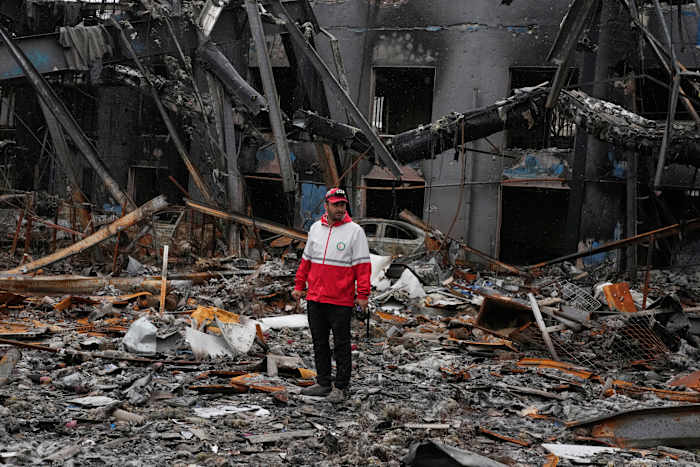
The media is obsessed with the "who" and the "where." They scream about Iranian-backed Houthi rebels and point at smoking craters in Israel. They treat a single missile launch as a freak occurrence or a desperate cry for attention. They are looking at the finger pointing at the moon rather than the moon itself.
The real story isn't the explosion. It’s the math.
When a group operating out of one of the poorest, most bombarded regions on earth can force a nuclear-armed state to burn millions of dollars in interceptors, the "rebel" label becomes a lazy slur. This isn't a ragtag militia hitting a lucky shot. This is the debut of a high-efficiency, low-cost siege model that the West is currently failing to solve.
The Interception Trap
The standard narrative treats every successful interception as a victory for the state. If the Arrow-3 or David's Sling knocks a Houthi missile out of the sky, the news cycles treat it as a technical win.
I’ve spent years analyzing defense procurement and logistics. Let me tell you: that "win" is a financial disaster in slow motion.
- The Math of Attrition: A single Houthi long-range ballistic missile—likely a variant of the Toofun or Qader—costs somewhere in the low six figures to produce.
- The Defense Tax: An Arrow-3 interceptor costs roughly $3.5 million per unit.
When you factor in the necessity of firing multiple interceptors to ensure a high kill probability ($P_k$), the ratio is often 10-to-1 or higher in favor of the attacker. You aren't "winning" because you stopped the impact; you are being bled dry by a competitor who is happy to trade cheap steel for your limited, high-tech inventory.
The Houthis aren't trying to win a conventional war. They are running a stress test on the global supply chain of sophisticated munitions. If they fire 100 missiles and 99 are intercepted, the 100th one hits, but all 100 have successfully depleted a stockpile that takes years, not weeks, to replenish.
Stop Calling Them Proxies
The term "Iranian-backed" is used by analysts as a shield to avoid admitting that the Houthis have built an organic, indigenous technical capability.
Yes, the blueprints and components often originate in Tehran. But the assembly, the tactical deployment, and the modification of these systems happen in caves and mobile workshops under the constant threat of drone strikes. Labeling them as mere proxies ignores the terrifying reality of distributed manufacturing.
The Houthis have mastered the art of the "Lego-kit" missile. They don't need a sprawling industrial complex like Raytheon or Lockheed Martin. They need a garage, a few trained engineers, and a smuggling route. By framing them as simple puppets, we ignore the fact that they have achieved a level of long-range precision that most mid-tier European nations would envy.
The Misconception of "Rebel" Technology
People hear "rebel" and think of technical incompetence. They assume these missiles are "dumb" rockets. They aren't. We are seeing the use of:
- Liquid-fueled stages that require sophisticated handling.
- Re-entry vehicles designed to survive the heat of atmospheric friction.
- Guidance packages that utilize commercial-off-the-shelf (COTS) GPS and inertial sensors.
This is the democratization of high-end destruction. The barrier to entry for hitting a target 2,000 kilometers away has collapsed.
The Red Sea Chokepoint is a Distraction
While the world watches the missiles flying toward Tel Aviv or Eilat, the Houthi movement is actually conducting a masterclass in economic denial.
The missile attacks on Israel are the marketing department. The real "product" is the closure of the Bab el-Mandeb Strait. By proving they can hit a target as small and well-defended as a city in Israel, they have effectively told every shipping company on the planet: "We can hit your tanker whenever we want."
The "People Also Ask" sections of the internet want to know if Israel can stop the missiles. That is the wrong question. The right question is: Can the global economy afford the insurance premiums?
When a "rebel" group can force the world's largest shipping conglomerates to reroute around the Cape of Good Hope—adding 10 days and millions in fuel costs to every trip—the Houthi movement has already won the strategic engagement. The missile strike on Israel is just the proof of concept. It says, "If we can reach them, we can definitely reach you."
The Failure of "Proportional Response"
Western military doctrine is obsessed with proportionality. We see a missile launch, we find the launcher, and we blow it up.
This is like trying to cure a viral infection by slapping the individual skin cells where a rash appears. The Houthi military infrastructure is non-linear. There are no "factories" in the traditional sense. There are no massive silos. Everything is mobile. Everything is hidden.
The "insider" truth that nobody wants to admit is that there is no conventional military solution to this. You can't "bomb them back to the Stone Age" because, in terms of infrastructure, they are already operating with a Stone Age footprint but using Space Age teeth.
Why Sanctions are a Joke
The idea that we can "choke off" the Houthi missile program through sanctions is a fantasy. Most of the components required for these missiles—fibreglass, small motors, GPS chips, and basic wiring—are dual-use items found in everything from washing machines to hobbyist drones. Unless you plan on banning the import of all electronics into the Middle East, the "supply chain" will remain intact.
The Psychological Front
There is a specific kind of arrogance in Western intelligence circles that assumes an adversary will stop if the "cost" becomes too high. This assumes the adversary values the same things we do.
The Houthis have survived a decade of one of the most intense aerial bombardment campaigns in modern history. They have dealt with famine, cholera, and total economic isolation. A few more cruise missiles hitting their launch sites isn't a "deterrent"; it’s Tuesday.
By launching missiles at Israel, the Houthis are cementing their status in the "Axis of Resistance." This isn't just about the physical damage. It’s about the narrative of defiance. Every time an Israeli siren goes off, the Houthi brand grows. They are the only group in the region currently willing to directly engage a superior power with long-range strategic weapons, regardless of the consequences.
That brand value is worth more than the missiles themselves. It brings in recruits, it secures clandestine funding, and it keeps the population mobilized.
The Engineering Reality Check
Let’s look at the actual hardware. To hit central Israel from Yemen, a missile has to travel roughly 1,600 to 2,000 kilometers.
To achieve this, you need a high mass-fraction—meaning the missile needs to be mostly fuel and very little "dead weight."
$$v_e \cdot \ln\left(\frac{m_0}{m_f}\right) = \Delta v$$
Even a slight error in the burn time or the pitch angle results in a miss by dozens of kilometers at that range. The fact that these missiles are landing anywhere near their intended targets proves that the Houthi technicians have mastered the Tsiolkovsky rocket equation in a combat environment. This isn't "luck." This is engineering.
If you are a defense contractor, you should be terrified. Not of the explosion, but of the fact that your $100 billion R&D program is being challenged by guys using encrypted Telegram channels and smuggled CNC machines.
The Strategic Pivot No One is Talking About
Israel’s defense strategy has always relied on the "Iron Dome" or "Arrow" umbrella to maintain a sense of normalcy for its citizens. The Houthi intervention shatters that. It introduces a permanent "threat from the south" that cannot be easily neutralized by a ground invasion (like Gaza) or a border buffer (like Lebanon).
Yemen is too far away for a sustained ground operation and too rugged for a purely aerial victory.
This creates a permanent state of high-alert.
- Economic Strain: Constant call-ups of reservists for air defense units.
- Psychological Attrition: A population that can be sent to shelters by a group 2,000km away.
- Resource Diversion: Forcing Israel to keep its most expensive interceptors pointed south, away from the more immediate threats of Hezbollah or Iran.
The Houthis have effectively forced a multi-front war without moving a single soldier across a border.
The Brutal Truth
Stop looking for a "return to the status quo." The status quo died the moment a Houthi-branded missile entered Israeli-controlled airspace.
The Western world is currently bringing a legalistic, bureaucratic knife to a street fight. We talk about "international law" and "maritime norms" while the adversary is talking about "cost-per-kill" and "asymmetric disruption."
If you want to understand the future of warfare, stop reading the sanitized reports about "Iranian proxies." Start looking at how the weakest players on the board are using the tools of the digital age to hold the strongest players hostage.
The Houthis aren't a localized problem. They are the blueprint for every insurgent group for the next fifty years. They have proven that if you are patient enough, cheap enough, and technical enough, you don't need to win the war. You just need to make the price of peace higher than the enemy is willing to pay.
Burn the old textbooks. The math of war just changed, and the "rebels" are the ones doing the teaching.
Go check your shipping stocks and see how many of them are bleeding. That's the real Houthi missile impact.
Would you like me to analyze the specific electronic warfare signatures being used to bypass the latest iterations of the Aegis Combat System?