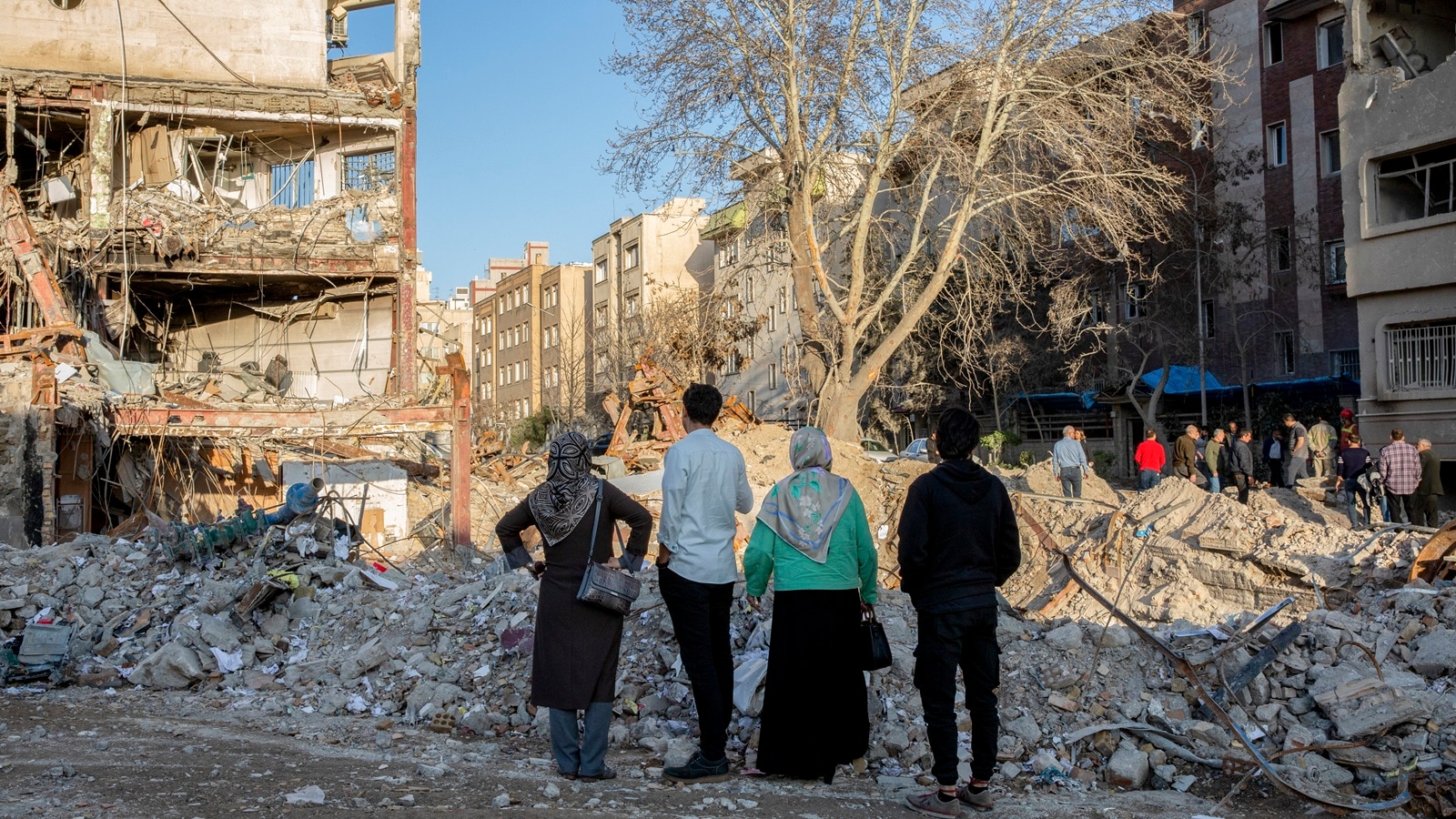
Winning a war used to mean something concrete. You marched into the capital, the other side signed a paper, and the fighting stopped. Today, the United States spends trillions of dollars and years of blood only to end up in a gray zone where "victory" looks suspiciously like a slow-motion defeat. We're seeing the birth of a new era. It's the age of the Pyrrhic War, named after King Pyrrhus of Epirus, who famously defeated the Romans but lost so many men that he couldn't actually sustain his empire.
If you look at the last twenty-five years of American intervention, the pattern is impossible to ignore. We have the most advanced hardware on the planet. Our logistical tail is a marvel of modern engineering. Yet, we keep finding ourselves in conflicts where the cost of winning actually destroys our long-term interests. It isn't just about the money, though $8 trillion since 2001 is a staggering figure. It’s about the erosion of domestic trust and the depletion of the very military readiness we claim to be protecting.
The math simply doesn't add up anymore. When a $2 million Patriot missile is used to intercept a $20,000 "lawnmower" drone in the Middle East, the tactical win is a strategic disaster. You can do that ten times. You can do it fifty times. But you can't do it forever without going broke or running out of interceptors. That’s the definition of a Pyrrhic victory. You won the engagement, but you're losing the capacity to fight the next one.
Why the Pentagon Struggles with Asymmetric Math
Military planners love to talk about "overmatch." The idea is simple. You want to have better sensors, longer range, and more firepower than the guy across the field. In a traditional state-on-state conflict, this works. But in the modern landscape, our adversaries have figured out how to turn our sophistication against us. They use "cheap lethality" to bleed the giant.
Take the Red Sea shipping crisis. The U.S. Navy is performing heroically, knocking down Houthi drones and missiles daily. It’s a tactical masterclass. But look closer at the economics. We're burning through finite stocks of sophisticated munitions to stop weapons that can be manufactured in a garage. Every time we fire an SM-2, we’re trading a piece of our future capability against a near-infinite supply of cheap threats. This isn't just a budget problem. It's a fundamental flaw in how we conceive of power.
Adversaries don't need to sink a carrier to win. They just need to make it too expensive for us to keep that carrier in the neighborhood. They’re playing a game of attrition where the goal isn't to hold ground, but to exhaust the American taxpayer and the American spirit. We’ve entered a phase where our strength has become our greatest vulnerability. Our reliance on high-tech, high-cost solutions makes us easy to "out-spend" even by much poorer actors.
The Domestic Toll of Constant Intervention
We can't talk about Pyrrhic wars without looking at what happens back home. A country's foreign policy is only as strong as its domestic foundation. After two decades in the Middle East, the American public is exhausted. There's a growing sense that the resources sent abroad are being stripped from communities that need them. Whether that’s objectively true in a budgetary sense doesn't matter as much as the perception of it.
The social contract relies on the idea that the government protects and improves the lives of its citizens. When billions flow to "nation-building" projects in countries that eventually collapse anyway, people stop believing in the mission. You see this in recruiting numbers. The U.S. Army has missed its recruiting goals by thousands of soldiers for several years running. Young people look at the outcomes of recent wars and they don't see a cause worth the risk. That is a cost of war that you can't fix with a bigger defense budget. It’s a hollowed-out center.
The Myth of Surgical Precision
For years, the promise was that technology would make war "cleaner." We’d have smart bombs and surgical strikes. No more messy occupations. But that’s a fantasy. Precision weapons haven't shortened wars; they’ve just made them more politically palatable to start. Because we think we can fight with "minimal" risk, we engage in more places, for longer periods, with less oversight.
This creates a "forever war" loop. We stay because we can afford the daily cost, but we never achieve the decisive end-state because the political goals are too vague. We’re essentially idling the engine of the state in a parking lot, burning fuel while going nowhere. Eventually, the tank runs dry.
Strategic Overstretch and the Two Front Problem
The most dangerous part of the Pyrrhic model is what it does to our ability to deter major powers. While we were focused on counter-insurgency and protecting shipping lanes from low-cost threats, nations like China and Russia were watching. They've spent decades studying our "way of war" and finding the seams.
If a major conflict breaks out in the Pacific, the U.S. will need every single missile, every ship, and every trained sailor it has. But a Pyrrhic war strategy eats those resources in advance. We’re using the "good stuff" on "small problems." This leaves us with a choice: do we stay out of smaller conflicts and watch our global influence wane, or do we intervene and risk being too weak to stop a real catastrophe?
It’s a trap. We’ve built a military designed for a world that doesn't exist anymore. We’re still thinking in terms of 1945 or 1991, where we have overwhelming industrial capacity. But our industrial base has shriveled. We can't replace ships or missiles fast enough to keep up with the burn rate of a modern high-intensity conflict. We’re living off the "capital" built up during the Cold War, and the account is getting low.
Realities of the Modern Defense Industrial Base
The numbers are grim. A recent report from the Center for Strategic and International Studies (CSIS) noted that in a conflict over Taiwan, the U.S. would likely run out of long-range precision-guided munitions in less than a week. A week. That's what happens when you prioritize "just-in-time" logistics for complex weapons systems.
We’ve optimized for efficiency in peace rather than resiliency in war. In a Pyrrhic war, the first thing you lose is your depth. You might win the first few battles, but you don't have the "second string" to carry you through the season.
Reversing the Trend Before the Bill Comes Due
Stopping the slide toward Pyrrhic victory requires a brutal reassessment of what "national interest" actually means. It means saying "no" more often. It means realizing that not every regional instability is an American problem to solve. If we keep trying to be everywhere, we'll eventually be nowhere.
We also need to rethink our procurement. Instead of only building $100 million aircraft, we need to lean into the same "cheap lethality" our enemies use. We need thousands of low-cost drones and autonomous systems that we can afford to lose. We have to change the math so that the cost-exchange ratio favors us, not the guy with the $500 drone.
The final step is reconnecting the military to the public. War shouldn't be something that happens in the background while everyone else goes to the mall. If a conflict isn't worth a tax hike or a national conversation about service, it’s probably not worth the blood of the people we send to fight it.
Start by demanding clearer objectives from leadership. If the goal isn't "victory" in a sense that actually improves American security, it’s just expensive noise. We have to stop treating the U.S. military as a global "easy button" for every diplomatic failure. Real power is knowing when to hold your fire so you have enough left when it actually matters. Stop supporting vague "interventions" that lack a defined exit strategy and a clear explanation of how the cost justifies the result. That's how you avoid the Pyrrhic trap.