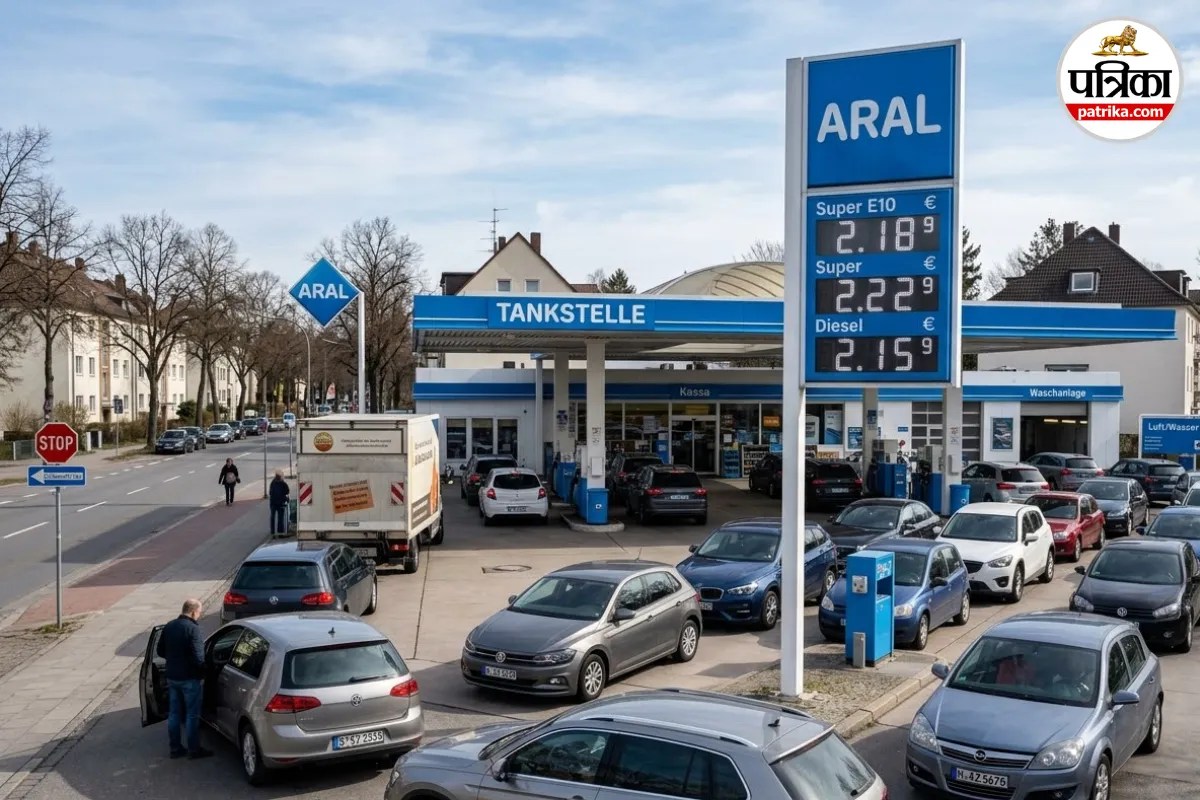
The internet is currently obsessed with a viral myth about German fuel pricing. You’ve seen the headlines: "Germany’s Strange Law: Petrol Prices Can Only Increase at Noon" or "100,000 Euro Fines for Raising Gas Prices." It sounds like a socialist dream—a world where the big oil companies are handcuffed by the state, unable to squeeze the little guy during the morning commute.
It’s a lie. Not because the law doesn't exist, but because the "lazy consensus" completely misses why it exists and how it actually punishes the person holding the pump.
The Market Transparency Unit for Fuels (Markttransparenzstelle für Kraftstoffe) doesn't stop prices from rising. It forces them into a predictable, algorithmic dance that turns every driver into a data point for a cartel. If you think a government-mandated price schedule is "protecting" your wallet, you’re the perfect mark for a system that has traded genuine competition for bureaucratic theater.
The Myth of the Noon Lockdown
Let’s dismantle the premise immediately. Most viral reports suggest that German gas stations are legally barred from raising prices except for one specific window at 12:00 PM. This is a fundamental misunderstanding of the Price Reporting Act.
In reality, German gas stations can change their prices whenever they want. The catch? They must report every single change to the Federal Cartel Office (Bundeskartellamt) in real-time. This data is then fed to apps like Bertha or Mehr-Tanken.
The "Noon Rule" is not a law; it is a pattern. Because the market is so hyper-monitored, gas stations have converged on a "high-low" pricing strategy. They aren't restricted by a 100,000 Euro fine for changing the price; they are fined for failing to report the change within five minutes.
We have created a system where the government has essentially built the ultimate price-fixing tool for the oil companies. When every competitor knows exactly what everyone else is charging within seconds, the incentive to lower prices vanishes. Why undercut your neighbor when you can see they’ve already matched your morning hike?
Why Transparency is a Double-Edged Sword
We are taught that transparency is always good. "If I know the prices, I can choose the cheapest one."
Wrong. I’ve seen industries where radical transparency actually kills the consumer. When prices are opaque, companies have to take risks to grab market share. They might drop prices significantly to lure you in, hoping the competitor won't notice for a few days.
In the German model, the "risk" is gone. The moment Shell drops a cent, Aral knows. TotalEnergies knows. Jet knows. Within five minutes, the entire neighborhood has corrected. This isn't competition; it's an automated stalemate.
The Algorithmic Tax
Modern fuel pricing in Europe isn't handled by a guy in a booth; it’s handled by dynamic pricing algorithms. These algorithms are fed by the very transparency data the government mandates.
- The Morning Spike: Prices are highest between 7:00 AM and 9:00 AM. This is the "Inertia Tax." You’re late for work. You aren't checking an app. You pay.
- The Evening Dip: Prices bottom out between 6:00 PM and 8:00 PM.
- The Midnight Reset: Prices climb again as the supply-demand curve flattens.
The "100,000 Euro Fine" people keep citing is the stick used to ensure the data stays "clean" for the algorithms. The government isn't protecting your 50 euros; they are protecting the integrity of a data stream that allows companies to extract maximum value from every hour of the day.
Dismantling the "People Also Ask" Delusions
"Does this law stop price gouging?"
No. It legalizes it by making it predictable. If gouging is scheduled, it’s just called "market rates."
"Is the 100,000 Euro fine real?"
Yes, but it’s a compliance fine, not a price cap. If a station owner’s internet goes down and they can't sync their price board with the Federal Cartel Office's server, they are technically liable. It’s a tax on technical glitches that favors massive corporate chains over independent station owners who can't afford high-end API integrations.
"Should other countries copy Germany?"
Only if you want your gas prices to fluctuate 15 to 20 cents per liter within a single 24-hour period. In the US or India, prices might stay stable for days. In Germany, the price you see at breakfast is a different animal than the price you see at dinner. It forces the consumer to become a day-trader just to fill a tank.
The Cost of "Fairness"
The German system assumes the consumer has infinite time. It assumes you can wait until 7:14 PM on a Tuesday to get the "optimal" price.
But time has a dollar value. If you spend twenty minutes analyzing price charts on an app to save 4 euros, you’ve valued your time at 12 euros an hour. Congratulations, you’ve survived the system by becoming its slave.
True market disruption would be removing the reporting requirement entirely and letting stations "surprise" the market with lower rates. By forcing everyone to show their hand, the government has ensured that nobody ever plays a bold card.
The Illusion of Control
We love these "weird law" stories because they make it seem like the state is finally sticking it to "Big Oil." It feels good to imagine a CEO sweating over a noon deadline.
The reality is much colder. The oil companies love the Transparency Unit. It saves them millions in market research. They don't have to send "scouts" to check the competitor's sign anymore; the government provides a free, high-speed data feed of exactly what the competition is doing.
This is "regulatory capture" masquerading as "consumer rights."
The next time you see a post about Germany’s "strict" gas rules, realize you are looking at a blueprint for how to kill a free market with "sunlight." When you shine a light on everything, you don't just see the dirt—you give the predators a clearer view of the prey.
Stop looking for the "noon" loophole. It doesn't exist. You aren't beating the system; you're just paying the price the algorithm decided you were willing to tolerate three minutes ago.
If you want to actually save money, stop using the apps. The apps are the reason the prices are synchronized. The moment we stop reacting to the data, the data becomes useless to the people selling the fuel.
Fill up when you need to. Ignore the "noon" hype. The house always wins when you play by their schedule.