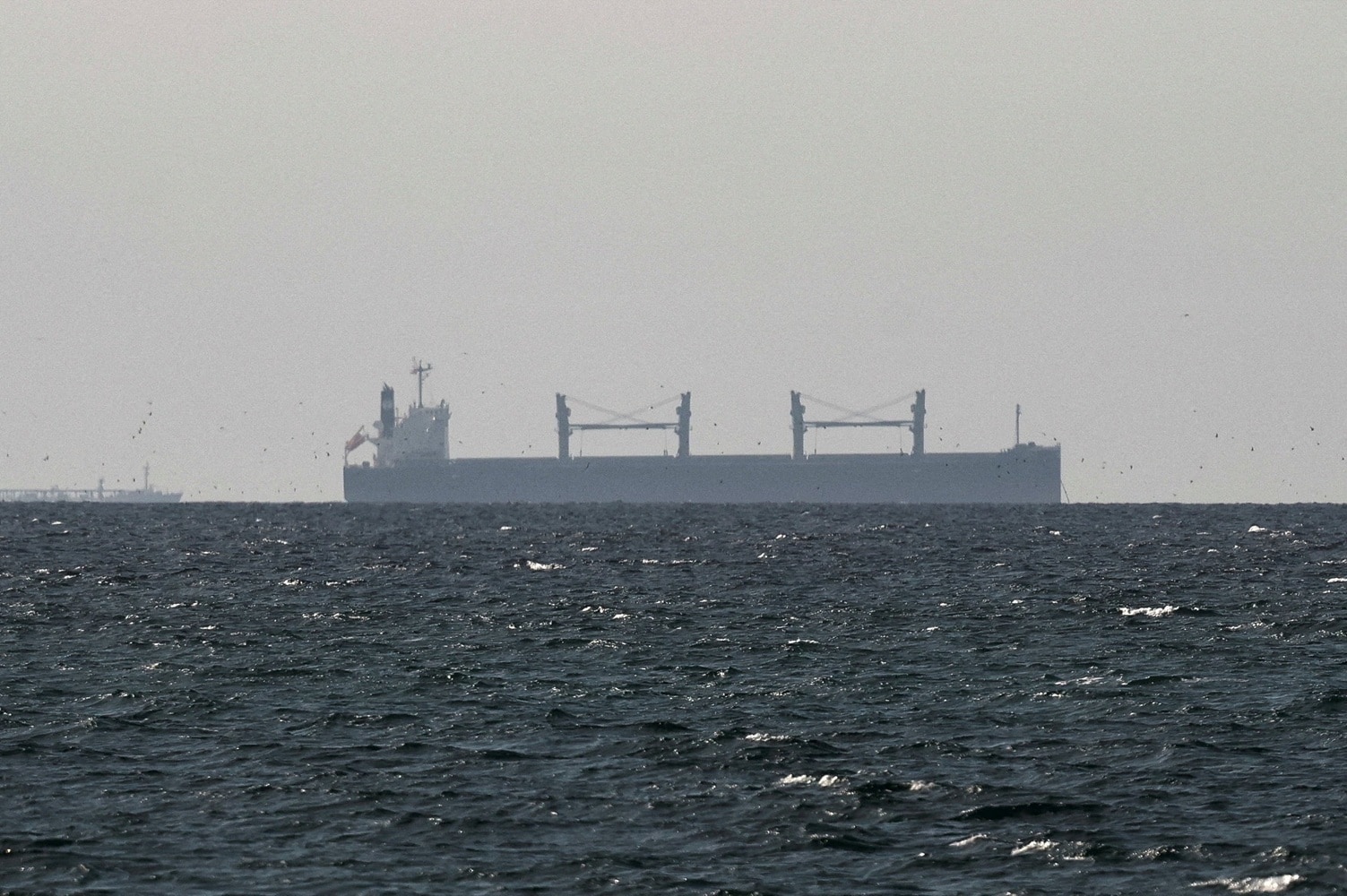
The maritime world is currently obsessed with a fairy tale. It’s a story of "daring" navigation, "unprecedented" diplomatic maneuvering, and the supposed triumph of a single Indian LPG tanker—the Vishwa Prerna—slipping through the Strait of Hormuz via an Iran-controlled channel. The breathless reporting suggests we’ve witnessed a masterclass in tactical evasion.
It's nonsense.
What the industry calls a "strategic breakthrough" is actually a glaring symptom of a decaying global order. If you believe this transit was a victory for Indian maritime independence or a template for future energy security, you aren’t paying attention to the physics of power. You’re reading a press release disguised as analysis.
The Myth of the Secret Channel
Let’s dismantle the primary delusion: the idea that there is some "hidden" or "alternative" route through the Strait of Hormuz that changes the math of regional risk.
Geographically, the Strait is a choke point defined by the Traffic Separation Scheme (TSS). In the narrowest section, the shipping lanes are only two miles wide, separated by a two-mile buffer zone. Most of these lanes sit within Omani territorial waters, but the entire approach is under the shadow of the Iranian Revolutionary Guard Corps Navy (IRGCN).
When a vessel like an LPG carrier "hugs" the Iranian coast or uses the northern channels, it isn't "exiting through an Iran-controlled channel" to escape notice. It is entering the lion’s den to ask for permission. There is no "stealth" for a 200-meter steel beast carrying thousands of tons of pressurized gas. Every transponder ping, every radar return, and every thermal signature is logged by the batteries on Qeshm and Hormuz islands.
The "breakthrough" wasn't a feat of navigation; it was a submissive handshake.
The India-Iran "Special Relationship" is a Liability, Not an Asset
Commentators love to point to India’s historical ties with Iran—specifically the development of the Chabahar Port—as the "secret sauce" that allowed this transit. They argue that India’s strategic autonomy gives its fleet a "green card" in the Persian Gulf.
I’ve spent two decades watching commodities move through high-risk zones. Here is the reality: "Special relationships" in the Middle East last exactly as long as the next regional flare-up. By relying on back-channel "understandings" with Tehran to move energy, New Delhi isn't exercising power. It is accepting a role as a tributary state.
If your energy security depends on the benevolence of a sanctioned regime that uses the Strait as a geopolitical windpipe, you don't have security. You have a temporary reprieve. The moment Indian interests clash with Iranian regional ambitions—or the moment Tehran needs to squeeze a partner to signal the West—that "controlled channel" will snap shut.
The False Security of the LPG Buffer
The industry consensus is that LPG (Liquefied Petroleum Gas) is somehow "safer" to transport than crude oil because it doesn't carry the same "political baggage."
This is a fundamental misunderstanding of the energy transition.
As the world shifts toward cleaner-burning fuels, LPG and LNG become more critical, not less. Therefore, they become higher-value targets for asymmetric warfare. A single incident involving a gas carrier in the Strait of Hormuz doesn't just create an oil slick; it creates a thermal event that can be seen from orbit.
The Vishwa Prerna didn't get through because it was clever. It got through because, at that specific moment, it didn't suit Iran’s interests to cause a catastrophic explosion in its own front yard. To mistake "lack of interference" for "strategic capability" is the kind of error that sinks shipping companies.
Stop Asking if the Ship Got Through; Ask Who Paid the Toll
In shipping, the "toll" isn't always paid in currency.
When a vessel deviates from the standard international shipping lanes to use Iranian-controlled waters, it effectively exits the protection of international maritime law. You are no longer under the umbrella of "innocent passage" as defined by UNCLOS (United Nations Convention on the Law of the Sea).
The Real Cost of "Alternative" Routes:
- Insurance Blacklisting: Lloyd’s and the London market don't look kindly on "creative" navigation. If you voluntarily enter contested waters to bypass international lanes, your P&I (Protection and Indemnity) club starts looking for the exit door.
- Sanctions Contamination: Even if the cargo is "clean," the act of coordinating transit with sanctioned entities (like the IRGCN) creates a paper trail that can haunt a vessel's "vessel vetting" score for years.
- Command Precedent: You are teaching your captains that the rules of the sea are negotiable. Once a crew believes that safety and protocol can be swapped for "expediency," you’ve lost the ship.
The Failure of the "Blue Economy" Narrative
We are told that the future of trade is the "Blue Economy"—a seamless, tech-driven maritime network. But the Hormuz situation proves we are moving backward.
We are returning to a 17th-century model of "privateer diplomacy," where individual nations cut side deals to ensure their ships aren't plundered. This balkanization of the ocean is the death knell for global trade efficiency.
If every nation—India, China, Japan, Korea—has to negotiate its own "channel" through every choke point (Hormuz, Malacca, Bab-el-Mandeb), the cost of freight will skyrocket. The "just-in-time" supply chain cannot survive a "just-if-they-let-us" maritime reality.
The Technological Delusion: AIS is Not a Shield
There is a naive belief among tech-optimists that better tracking and AI-driven "risk assessment" software will solve the Hormuz problem.
I’ve sat in the ops rooms where this software is running. It’s impressive. It can predict vessel behavior and flag anomalies in real-time. But a dashboard cannot stop a fast-attack craft.
The Vishwa Prerna supposedly used "advanced situational awareness" to time its transit. In reality, it used a radio. It talked to the people who hold the guns. No amount of "cutting-edge" (excuse me, high-fidelity) data can override the physical reality of a coastal missile battery.
People ask: "How can we use technology to secure the Strait?"
The honest, brutal answer: You can’t. You either control the geography, or you pay the guy who does.
The Harsh Truth About Indian Maritime Ambition
India wants to be a global maritime power. It has the Sagarmala project, the deep-sea ports, and the growing fleet. But a true maritime power doesn't celebrate "exiting through a controlled channel." A maritime power controls the channel.
Until India can provide its own carrier-led escort service for its energy assets—similar to the U.S. Navy’s Operation Earnest Will in the 1980s—it is merely a spectator in its own supply chain. Relying on "strategic patience" or "diplomatic nuance" is just a fancy way of saying "we hope they don't hit us."
The Scenario Nobody Wants to Imagine
Imagine a scenario where the "controlled channel" isn't offered as an escape route, but as a trap.
A vessel is encouraged to deviate from international lanes into Iranian waters under the guise of "safe passage." Once inside, the vessel is detained for "environmental violations" or "navigational errors." Because the ship chose to leave the international TSS, the legal recourse for the flag state is virtually zero.
This isn't a theory; it’s a playbook. And the more we celebrate these "unofficial" transits, the more we incentivize this behavior.
Why the Industry is Wrong About "Resilience"
The competitor article calls this "maritime resilience." It’s actually maritime fragility.
True resilience is a diverse supply chain that doesn't require transiting Hormuz at all. It’s pipelines that bypass the Strait. It’s a massive strategic petroleum reserve (SPR) that allows a nation to sit out a six-month blockade. It’s a transition to modular nuclear or domestic renewables that kills the need for the tanker in the first place.
Celebrating a ship that barely managed to squeeze through a hostile corridor is like celebrating a person who successfully walked across a highway blindfolded. They didn't "beat the system." They got lucky.
The Actionable Reality
If you are an investor, a ship owner, or a policy maker, stop looking for "loopholes" in the Strait of Hormuz.
- Diversify or Die: Any business model that relies on 100% successful transit of the Strait is a gambling operation, not a business.
- Hard Power is the Only Currency: Diplomacy in the Persian Gulf is backed by the range of your missiles, not the history of your culture.
- Acknowledge the Toll: Factor the "sovereignty tax" into your energy costs. The "Iran-controlled channel" isn't free. You pay for it in lost leverage, increased insurance, and the erosion of international law.
The Vishwa Prerna didn't show us a new way forward. It showed us exactly how trapped we still are.
Stop cheering for the mouse that found a new hole in the cat’s house. Buy a dog.