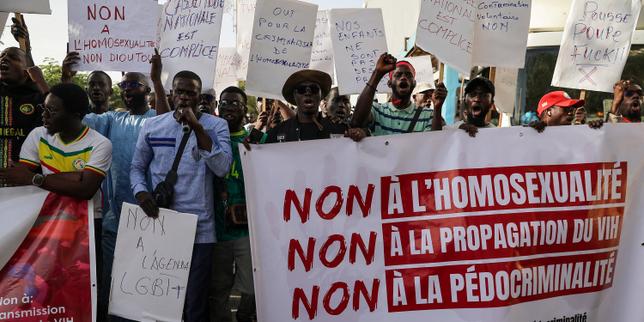
The rapid proliferation of aggressive anti-LGBTQ+ legislation across Africa is not a series of isolated cultural outbursts but a structured realignment of legal frameworks designed to consolidate domestic political power and signal sovereignty against Western influence. Since 2023, countries including Uganda, Ghana, and Kenya have moved beyond colonial-era "unnatural offenses" laws toward comprehensive statutes that criminalize identification, advocacy, and the provision of services to LGBTQ+ individuals. This legislative shift functions as a tool for "sovereignty signaling," where leaders utilize the suppression of a minority group to construct a populist mandate that transcends ethnic or economic divisions.
The Triple-Tiered Framework of Legislative Escalation
The transition from passive non-recognition to active criminalization follows a specific three-stage architectural pattern. Understanding these stages is essential to mapping the trajectory of human rights and geopolitical risk in the region.
Stage One: Codification of Identity Criminalization.
Traditional colonial statutes—often inherited from the British penal code—focused on specific acts. Modern legislation, such as Uganda’s Anti-Homosexuality Act (2023), shifts the focus to identity. By criminalizing the "intent" or the "claim" of being LGBTQ+, the law moves from policing behavior to policing existence. This creates a permanent legal category of "non-citizen," stripping individuals of protections under the pretext of preserving public morality.Stage Two: The Expansion of Vicarious Liability.
The most potent mechanism in recent laws is the criminalization of "promotion" or "abetting." This converts the entire social ecosystem—landlords, medical professionals, and digital platforms—into state informants. If a landlord fails to report a tenant they suspect of being gay, they face imprisonment. This creates a horizontal surveillance network that effectively offshores the cost of state policing to the private sector and civil society.Stage Three: The Judicial Fortress.
To insulate these laws from international pressure or constitutional challenges, legislative bodies are increasingly embedding these restrictions within broader "protection of family values" bills. By framing the legislation as a defense of the nuclear family and traditional culture, proponents create a rhetorical trap where opposition to the law is equated with an attack on the nation’s foundational identity.
The Economic Cost Function of Moral Legislation
While proponents argue that these laws protect cultural integrity, the quantifiable economic impact suggests a significant "sovereignty tax." The logic of these bills creates a friction point with global capital and multilateral institutions.
The primary economic bottleneck occurs through the withdrawal or redirection of Foreign Direct Investment (FDI) and development aid. When the World Bank suspended new public financing to Uganda in 2023, it signaled a shift in how social governance is priced into sovereign risk assessments. The cost of these laws can be modeled through three variables:
- Brain Drain and Human Capital Loss: Highly educated professionals within the LGBTQ+ community and their allies seek asylum or relocation, leading to a net loss in domestic productivity and innovation.
- Compliance and Sanction Risks: Multinational corporations (MNCs) face a "compliance paradox." They must choose between adhering to local laws that violate their global diversity mandates or exiting the market. Exit often wins when the reputational risk in larger Western markets outweighs the marginal revenue from a specific African territory.
- Tourism Deterrence: Countries like Ghana, which have historically marketed themselves as "the gateway to Africa," face a direct hit to tourism revenue as travel advisories and boycotts discourage high-spending international visitors.
The Digital Panopticon and Algorithmic Surveillance
A critical differentiator in the current wave of legislation is the role of technology. Unlike 20th-century crackdowns, modern repression leverages the digital footprint of the target population.
The "promotion" clauses in these bills specifically target digital content. This forces Internet Service Providers (ISPs) and social media platforms into a state of involuntary censorship. When a law mandates the removal of "pro-gay" content, it triggers a cascade of algorithmic suppression. To avoid legal liability, platforms may over-filter keywords, effectively erasing the digital presence of human rights organizations.
Furthermore, the use of metadata and social mapping allows state security apparatuses to identify networks of activists. The intersection of biometric identification systems (now common in many African nations for SIM card registration) and anti-LGBTQ+ laws provides the state with a granular toolset for targeted persecution that was technologically impossible a decade ago.
Geopolitical Realignment and the "Eastward Pivot"
The timing of these laws coincides with a broader shift in African foreign policy. As Western nations tie aid and trade to human rights metrics, African governments are increasingly looking toward "non-interference" partners, specifically China and Russia.
The adoption of harsh anti-LGBTQ+ laws serves as a litmus test for a country's willingness to break with the "liberal international order." Russia, in particular, has exported its "traditional values" narrative through various soft-power channels, providing a philosophical justification for African leaders to reject Western human rights standards as "cultural imperialism." This creates a feedback loop: the more the West threatens sanctions, the more African leaders double down on these laws to prove their independence, thereby drawing closer to geopolitical rivals of the West.
The Myth of Cultural Homogeneity
A common logical fallacy in the analysis of these laws is the assumption that they reflect a monolithic public opinion. In reality, these bills are often introduced during periods of economic instability or ahead of contested elections.
By manufacturing a moral crisis, political actors can distract from high inflation, corruption scandals, or failing infrastructure. The "LGBTQ+ threat" is a low-cost, high-emotion variable that can be used to consolidate a base. The legislative process itself—often televised and highly performative—serves as a populist distraction. The "moral" victory of passing the bill offsets the material failure of the administration to provide basic services.
Structural Vulnerabilities in Global Advocacy
The standard international response—threats of aid withdrawal and public condemnation—often exacerbates the problem. This "boomerang effect" occurs when external pressure validates the local narrative that LGBTQ+ rights are a foreign imposition.
Effective counter-strategies must shift from high-profile diplomatic threats to granular, ground-level support for local legal defenses. The most successful interventions have not come from Western capitals, but from domestic judiciaries where constitutional protections for privacy and dignity still hold weight. In Botswana and Mauritius, the decriminalization of same-sex acts was achieved not through international pressure, but through a rigorous application of domestic constitutional law.
The Strategic Trajectory of Regional Blocs
The African Union (AU) and regional blocs like ECOWAS (Economic Community of West African States) find themselves in a structural deadlock. While the African Charter on Human and Peoples' Rights ostensibly protects all citizens, the principle of non-interference prevents regional bodies from challenging the domestic legislation of member states.
The outcome of this legislative trend will likely result in a bifurcated continent. One group of nations will maintain a pragmatic, act-based legal system to preserve international trade links and human capital. A second group will adopt increasingly "totalizing" moral codes as a means of political survival and geopolitical positioning. This division will not only define the human rights landscape but will also dictate the flow of technology, capital, and talent across the continent for the next decade.
The immediate strategic requirement for stakeholders—including MNCs, NGOs, and diplomatic missions—is to decouple the moral argument from the operational one. Highlighting the degradation of the rule of law and the increased risk to all citizens via expanded surveillance and vicarious liability offers a more effective lever for change than moral appeals alone. The expansion of state power under the guise of morality creates a precedent for broader authoritarian overreach that eventually threatens the stability of the entire business and civic environment.