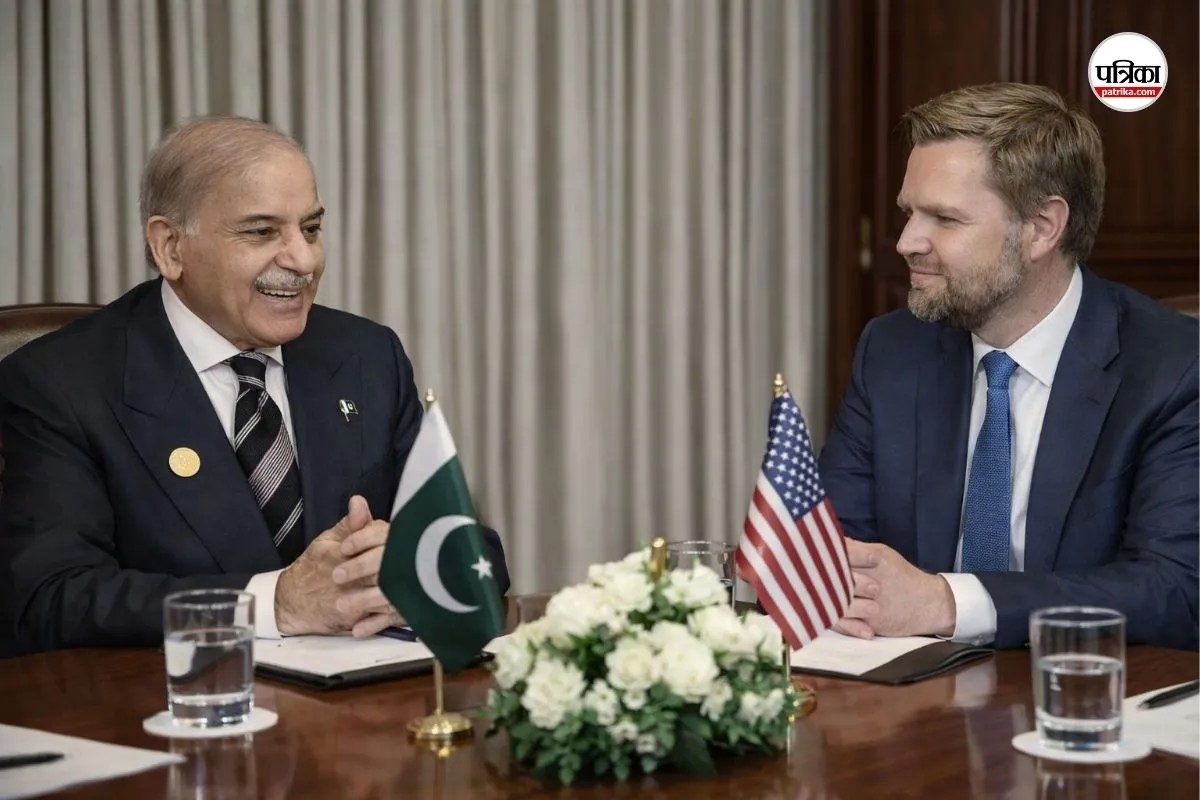
The convergence of United States and Iranian interests—or more accurately, their conflicting mandates—within the borders of Pakistan represents a rare breach in the standard policy of total isolation. When senior officials from Washington and Tehran arrive in Islamabad simultaneously, it is not a coincidence of travel logistics but a calculated response to Pakistan’s unique position as a dual-facing security partner. This intersection is defined by three specific drivers: the containment of Afghan-origin instability, the management of the Balochistan insurgency corridor, and the competition for energy infrastructure dominance in South Asia.
The Triangulation of Pakistani Neutrality
Pakistan operates under a "Strategic Neutrality Framework" necessitated by its physical geography. To its west lies Iran, a primary energy source and a complicated security partner; to its north lies Afghanistan, the source of regional kinetic friction; and across the oceans remains the United States, its primary provider of military hardware and fiscal stabilization through international lending institutions.
When US and Iranian representatives occupy the same diplomatic space in Islamabad, the Pakistani state transitions from a bilateral actor into a regional clearinghouse. The logic of this interaction is dictated by the Security-Economic Trade-off. Pakistan requires US approval for IMF tranches and military-to-military cooperation to maintain parity with India. Simultaneously, it requires Iranian cooperation to manage the restive border regions of Sistan-Baluchestan and to potentially alleviate its chronic energy deficit.
The Border Security Cost Function
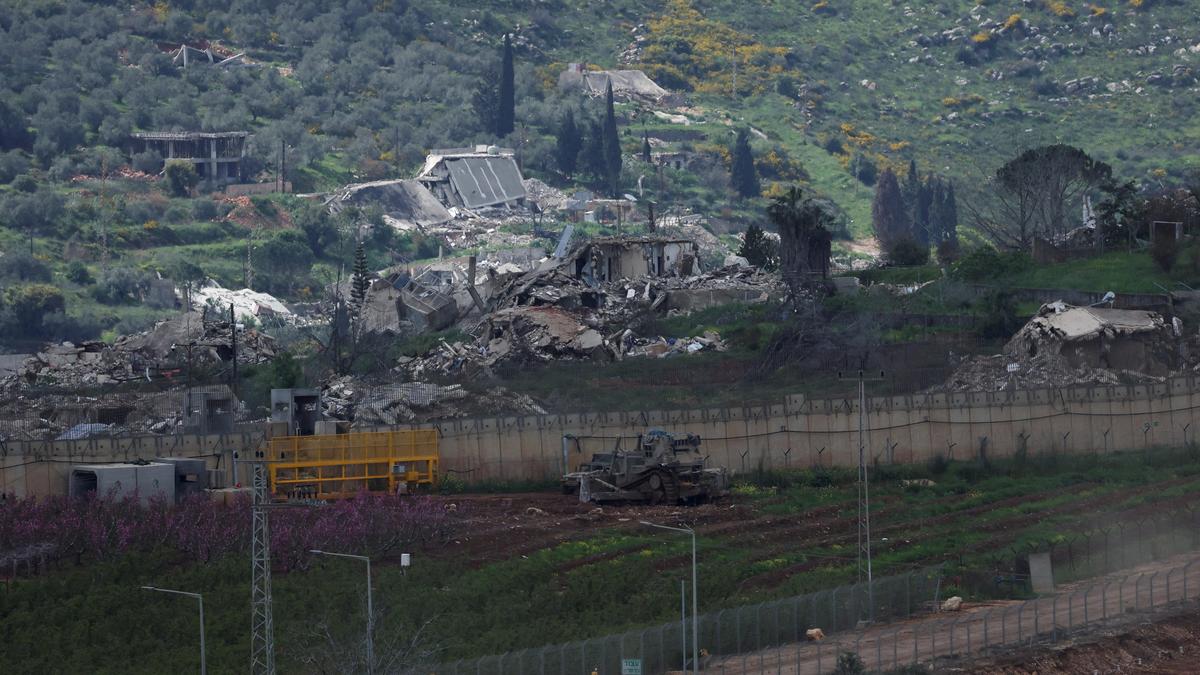
The primary mechanism driving this specific diplomatic collision is the volatile border shared by Iran and Pakistan. Recent kinetic exchanges—missile strikes and counter-strikes targeting insurgent groups like Jaish al-Adl—have elevated the border from a local policing issue to a regional flashpoint.
The US interest here is twofold. First, preventing a full-scale escalation that would force Pakistan to divert troops from the Afghan border or the Line of Control. Second, ensuring that Iranian influence does not consolidate into a "Trans-Asian Security Bloc" that includes the Taliban and elements of the Pakistani establishment.
Iran’s objective is the "Sanitization of the Periphery." Tehran views the presence of US-aligned security apparatuses in Pakistan as a direct threat to its internal stability. By engaging Islamabad, Iran attempts to force a choice: either Pakistan actively suppresses anti-Iranian militants, or Iran reserves the right to violate Pakistani sovereignty to neutralize perceived threats.
The Energy Infrastructure Bottleneck
The IP (Iran-Pakistan) Gas Pipeline project serves as the most significant variable in this three-way calculation. This project is a physical manifestation of the tension between regional necessity and global sanctions.
- The Iranian Position: Tehran has completed its portion of the pipeline and holds a legal sword over Islamabad. Under the original agreement, Pakistan faces billions of dollars in penalties for non-completion. Iran uses this financial leverage to demand diplomatic concessions and security cooperation.
- The United States Position: Washington utilizes the "Secondary Sanctions Architecture" to block the project. By threatening to cut off Pakistan’s access to the dollar-denominated global financial system, the US effectively vetoes Pakistani-Iranian economic integration.
- The Pakistani Dilemma: The cost of the penalty to Iran vs. the cost of US sanctions. Currently, the Pakistani state is attempting to navigate this by requesting "Sanctions Waivers" from the US, citing an existential energy crisis.
The presence of both parties in Islamabad indicates a high-stakes negotiation over the definition of "essential infrastructure." The US is pushing alternative energy corridors—likely involving Central Asian republics—to bypass Iranian territory, while Iran is offering immediate, low-cost supply to solidify its footprint.
Strategic Participants and Functional Roles
The composition of these diplomatic delegations reveals the underlying priorities.
- The Intelligence Tier: Representatives from the ISI (Pakistan), the CIA (US), and the IRGC (Iran) engage in what is known as "backchannel deconfliction." Their goal is to set "red lines" regarding drone usage, signal intelligence gathering, and the movement of proxy actors across the Durand Line and the Iran-Pakistan border.
- The Technocratic Tier: Finance and energy ministers focus on the "Sanctions Escape Velocity." This involves discussing barter trade mechanisms—exchanging Pakistani rice and textiles for Iranian petroleum—to bypass the SWIFT banking system, a move the US monitors with extreme scrutiny.
- The Diplomatic Tier: The public-facing ministers manage the "Perception Index." For Pakistan, hosting both parties is a signal of sovereign autonomy. For the US, it is an exercise in "Influence Maintenance." For Iran, it is an "Isolation Breaking" maneuver.
The Afghan Vacuum as a Catalyst
The withdrawal of US forces from Afghanistan created a power vacuum that neither Washington nor Tehran can ignore. Both nations share a superficial goal: preventing the Islamic State Khorasan Province (ISKP) from destabilizing the region. However, their methods are diametrically opposed.
The US prefers a "Remote Sensing" strategy, using Pakistani airspace and logistical cooperation to monitor threats. Iran views any US "Over-the-Horizon" capability as a permanent threat to its own regime security. Islamabad, therefore, becomes the theatre where these two conflicting security architectures are negotiated. Pakistan's refusal to host permanent US bases is a direct concession to both internal pressure and Iranian/Chinese demands, yet it continues to provide technical cooperation to satisfy Washington.
Operational Constraints and Failure Points
This diplomatic balancing act is subject to high-velocity failure points. The most prominent is the "Proxy Volatility Factor." Neither the US nor Iran has total control over the non-state actors operating in the region. A rogue attack by a militant group can force the hand of any of the three nations, collapsing the structured dialogue.
Furthermore, the "Fiscal Fragility" of Pakistan means its bargaining power is diminishing. If the Pakistani economy enters a terminal default, the US gains significant leverage through the IMF, potentially forcing Islamabad to take a harder line against Tehran. Conversely, if Iran successfully integrates into the BRICS+ framework and strengthens its "Look East" policy with China, it may offer Pakistan an alternative financial lifeline that circumvents US influence entirely.
Regional Alignment Forecast
The trajectory of US-Iran relations in the Islamabad context is moving toward a "Managed Friction" model. There will be no grand bargain or total rupture. Instead, expect a series of transactional arrangements.
Pakistan will likely continue to delay the IP Pipeline while seeking US-funded green energy projects as a substitute. Simultaneously, it will increase military intelligence sharing with Iran to prevent border skirmishes that would invite unwanted international scrutiny. The US will maintain its "Sanctions Pressure" while offering enough military and economic aid to ensure Pakistan does not fully pivot into the Iranian-Russian-Chinese orbit.
The strategic priority for Islamabad is the maintenance of "Equidistant Engagement." The moment Pakistan leans too far toward Tehran, it risks financial collapse; the moment it leans too far toward Washington, it risks domestic unrest and a hot border with Iran. Success in this environment is measured not by resolution, but by the absence of an explosion.