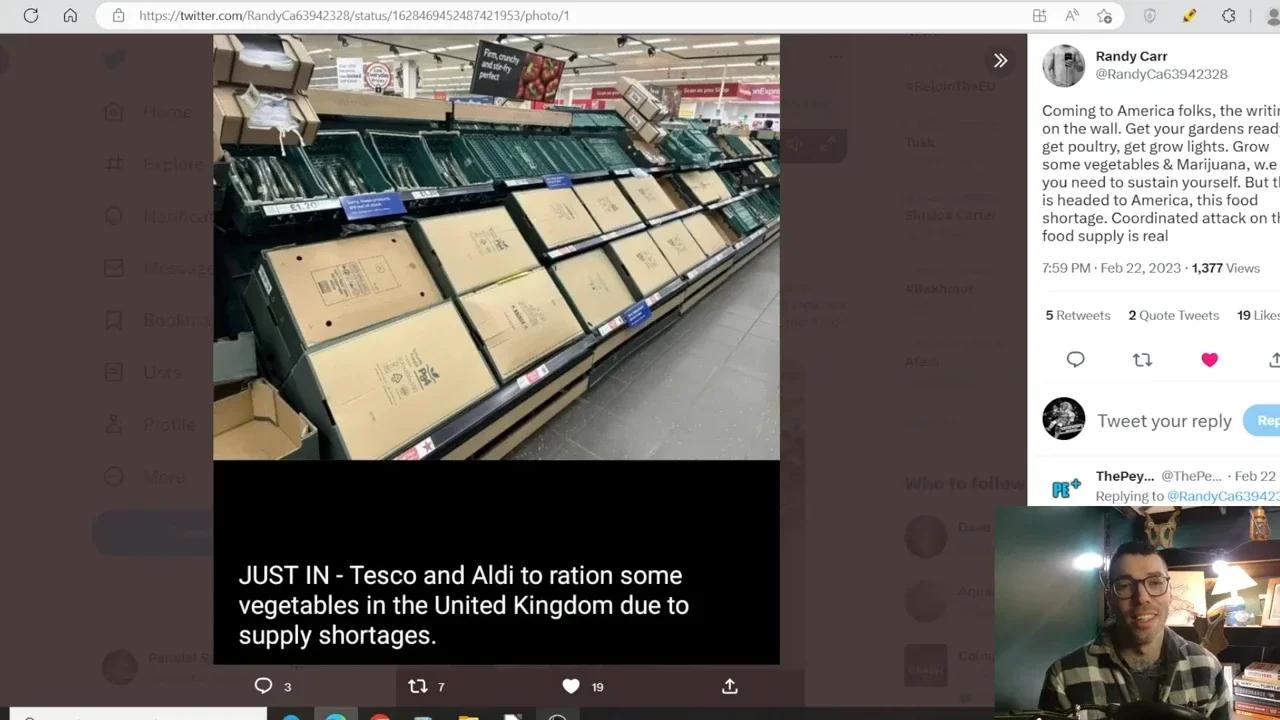
The panic is predictably loud. Headlines across the financial press are screaming about "supply chain fragility" and "national security threats" because a few hundred service stations in Australia ran dry. Bloomberg and the rest of the legacy media are treating a minor logistical hiccup like the preamble to an apocalypse. They want you to believe that the solution is more storage, more government intervention, and a desperate return to the status quo.
They are wrong.
The current fuel shortage isn't a crisis of supply. It is a crisis of inefficient habit. For decades, Australia has operated on a "Just-In-Time" inventory model that prioritized razor-thin margins over actual resilience. Now that the bill is due, the "experts" are crying for a bailout of a dying system. What they call a shortage, I call a necessary stress test.
We don't need more diesel sitting in rusting tanks in Botany Bay. We need the system to break so we finally stop pretending that a 1950s energy distribution model can power a 21st-century economy.
The Myth of the Strategic Reserve
The most common "lazy consensus" you'll hear is that Australia needs to bolster its Sovereign Petroleum Reserve to meet IEA (International Energy Agency) standards. The argument goes like this: if we just had 90 days of net imports sitting in a hole somewhere, the economy would be safe.
This is a fantasy.
Physical stockpiles are a static solution to a dynamic problem. In my years analyzing supply chain logistics for heavy industry, I’ve seen companies dump millions into "safety stock" only to realize that when a real disruption hits, the bottleneck isn't the volume of product—it’s the throughput. You can have a billion liters of 95-unleaded, but if your trucking fleet is sidelined by a shortage of AdBlue or a localized labor strike, that fuel is just expensive decorative sludge.
Storing more fuel doesn't fix a broken distribution network. It just hides the rot for a few extra weeks. The real "security" isn't in what you store; it's in how quickly you can pivot. Australia’s problem isn't that the tanks are empty; it's that our entire infrastructure is built on the assumption that ships will always arrive every Tuesday morning. When they don't, we realize we have no Plan B.
The AdBlue Illusion: A Lesson in Complexity
Remember the AdBlue scare? It’s the perfect example of why the "buy more fuel" crowd is missing the point. Modern diesel engines—the ones that move every piece of food and every liter of fuel across this continent—don't just need fuel. They need a specialty urea-based fluid that cleans their exhaust to meet emissions standards.
The 2021-22 AdBlue crunch wasn't a "fuel" crisis. It was a chemical supply chain crisis.
The industry insiders I talk to are all saying the same thing: we are one major chemical manufacturing plant closure away from every truck in Australia turning into a paperweight. Yet, the media is still hyper-focused on the price at the pump and the number of petrol stations with "No Fuel" signs.
They are looking at the smoke and ignoring the fire.
If we want actual resilience, we don't need more fuel. We need to stop building systems that have a single point of failure. We have a national logistics network that relies on a handful of global manufacturers for critical additives. If those manufacturers sneeze, Australia catches a cold.
The Price of Inconvenience
One of the most annoying "People Also Ask" tropes is: "When will fuel prices go down?"
The brutally honest answer is: they shouldn't.
Cheap fuel is a drug. It's an incentive to waste energy and delay innovation. When fuel is cheap, we build sprawling suburbs that require two-hour commutes in gas-guzzling SUVs. When fuel is cheap, we fly avocados across the desert instead of building local food loops. When fuel is cheap, we ignore the fact that our heavy rail system is a joke.
A localized shortage is a signal. It’s an "Out of Order" sign on a system that was never sustainable to begin with. The "inconvenience" of 400 service stations being dry is exactly the kick in the teeth that the Australian logistics sector needs to stop kicking the can down the road.
If you want the "secret" to never worrying about fuel shortages again, it’s not to lobby the government for more reserves. It’s to move your supply chain closer to home. It's to electrify everything that doesn't need to cross the Nullarbor.
The Sovereignty Trap
Every time a tanker is late, the politicians start talking about "Energy Sovereignty." It sounds great on a bumper sticker, but it’s a pipe dream in a globalized market.
Australia exports raw energy and imports refined product. We sold our refining capacity to the lowest bidder decades ago because it was "economically efficient." Now, the same people who cheered for those closures are demanding a government-funded return to onshore refining.
Let's be clear: building new refineries in Australia today is a terrible investment. The capital costs are astronomical, and by the time they are commissioned, the world will (hopefully) be moving away from the internal combustion engine anyway.
If you're a business leader, the contrarian move isn't to hope for a return to the 1990s. It's to build a business that doesn't depend on the price of Brent Crude.
- Stop: Waiting for the government to "fix" the fuel supply.
- Start: Hedging your fuel costs with long-term contracts that prioritize reliability over the spot price.
- Stop: Thinking about fuel as a commodity you can always buy at the corner store.
- Start: Thinking about fuel as a high-risk liability.
The Efficiency Paradox
There is a concept in economics called Jevons Paradox. It suggests that as technological progress increases the efficiency with which a resource is used, the rate of consumption of that resource actually rises because of increasing demand.
The "lazy consensus" says that more efficient cars and trucks will solve our fuel security problems. It won't. If we make trucks 20% more efficient, we'll just put 20% more trucks on the road.
The only way to win is to change the game. We need to decouple our economic growth from our liquid fuel consumption. This isn't just "green" posturing; it's cold, hard business logic. A company that runs its fleet on locally generated electricity or green hydrogen has a strategic advantage over a company that is at the mercy of a shipping lane in the South China Sea.
The Real Danger: Complacency
The real risk isn't that we run out of fuel. The real risk is that we find a temporary fix.
If the government steps in, subsidizes some more storage, and the ships start arriving on time again, everyone will breathe a sigh of relief and go back to sleep. We'll continue to rely on a brittle, fragile, and outdated energy model until the real crisis hits.
The current shortage is a warning shot. It's a gift. It's an opportunity to see exactly where the cracks are before the whole foundation gives way.
Why you’re asking the wrong questions:
- Don’t ask: "Why is the fuel gone?"
Ask: "Why was our business model so dependent on a single, globalized commodity in the first place?" - Don’t ask: "When will the government step in?"
Ask: "How can I redesign my logistics to bypass the retail fuel network entirely?" - Don’t ask: "Is Australia’s fuel security at risk?"
Ask: "Why are we still calling it 'security' when it’s clearly an addiction?"
The next time you see a "No Fuel" sign, don't get angry. Get smart. Realize that the era of easy, cheap, and reliable liquid fuel is over. The winners of the next decade won't be the ones who complained the loudest for a bailout. They will be the ones who saw the shortage for what it truly was: a signal to evolve.
Stop waiting for the tanks to fill up. Start building a system that doesn't need them.