The machinery of American mediation in the Middle East has long relied on a predictable, often rigid playbook. For decades, the script remained the same regardless of who sat in the Situation Room. Success was measured by incrementalism and the maintenance of a fragile status quo. However, the current shift in the Vice President’s office suggests a departure from this bureaucratic muscle memory. This is not merely a change in tone or a different choice of words during a press briefing. It represents a fundamental recalibration of how the United States exerts its influence over its most volatile partners and adversaries.
Veteran diplomats often speak of "red lines" as if they are etched in granite. In reality, they are usually drawn in sand. The previous approach to mediation focused heavily on quiet back-channel assurances and a reluctance to air grievances in public. The logic was simple. If you criticize an ally openly, you lose your seat at the table. But that logic has reached a breaking point. The current administration, specifically through the Vice President’s direct engagement, is testing a theory that public pressure and explicit humanitarian benchmarks can achieve what decades of private whispering could not.
The Strategy of Discomfort
The Vice President is leaning into a role that traditionally belongs to the outsider, not the incumbent. By centering the human cost of conflict as a primary metric for diplomatic success—rather than a secondary byproduct of security—the office is moving the goalposts. This creates a specific kind of friction. It forces domestic political leaders in the region to account for their actions to a global audience, rather than just to a handful of intelligence officers in Washington.
Traditionalists at the State Department view this as a gamble. They argue that diplomacy requires a certain level of "strategic ambiguity" to allow all sides to save face. When the Vice President speaks with more clarity and perhaps more edge than the President, it creates a "good cop, bad cop" dynamic that either clarifies American intent or muddies it, depending on who you ask.
Breaking the Pentagon Playbook
Former defense advisors who spent years managing the military-to-military relationships in the Middle East point to a specific tension. The Pentagon values stability and interoperability. It wants to know that the planes will fly and the bases will remain open. Diplomacy, by contrast, is often about introducing instability to force a new equilibrium.
The Vice President’s approach deviates from the Pentagon’s comfort zone by prioritizing political resolution over tactical management. For years, the U.S. managed conflicts. It did not try to solve them. It kept the "pilot light" of war low enough to ignore but never high enough to extinguish. By demanding more immediate results and placing tighter constraints on the use of American-supplied hardware, the Vice President is effectively telling the regional powers that the blank-check era has ended.
The Power of the Narrative
Diplomacy is as much about the audience as it is about the actors. When a mediator speaks, they are talking to the leaders across the table, but they are also talking to the protesters in the streets of London, New York, and Amman. The Vice President’s rhetoric is tuned to a frequency that resonates with a younger, more skeptical generation of voters.
- Public Accountability: Using speeches to set deadlines that weren't agreed upon in private.
- Humanitarian Primacy: Elevating aid delivery to the same level of importance as ceasefire terms.
- Direct Engagement: Moving beyond the typical circle of elites to acknowledge the grievances of the disenfranchised.
This isn't just about optics. It's about leverage. If the Vice President can demonstrate that the American public’s patience is exhausted, it provides a powerful tool to use against recalcitrant negotiators. It is a way of saying, "I want to help you, but my hands are being tied by the reality on the ground back home."
The Risk of Dual Tracks
A major concern within the intelligence community is the perception of a "dual-track" foreign policy. If the Vice President appears to be on a different page than the President, foreign leaders will try to exploit the gap. They will "shop" for the best deal, appealing to one office to bypass the other. This is a classic move in the diplomatic chess game.
However, the reality is likely more coordinated. By allowing the Vice President to take a harder line, the administration can explore the limits of its influence without fully committing the President to a position he might have to retreat from later. It is a high-stakes experiment in political positioning. If it works, it creates a new model for how a Vice President can be utilized in high-stakes negotiations. If it fails, it risks signaling a fractured and indecisive superpower.
Changing the Mediator Profile
In the past, mediators were chosen for their anonymity and their ability to blend into the woodwork. They were gray men in gray suits. The Vice President, by definition, cannot be a gray man. The office brings a level of celebrity and scrutiny that changes the temperature of the room.
When a Vice President enters a negotiation, the stakes are automatically elevated. You don't send the second-highest-ranking official in the land for a routine check-in. You send them to close a deal or to signal that the current path is unsustainable. This shift in the mediator profile suggests that the U.S. is no longer content with being the "honest broker" that stays neutral. Instead, it is becoming a broker with an agenda.
The Limits of Soft Power
Critics argue that words, no matter how sharp, cannot replace the hard reality of munitions and money. The Middle East is a region that respects the "physics" of power—who has the most tanks, who controls the water, who has the backing of a nuclear state.
Can a change in diplomatic style really overcome these structural realities?
Probably not on its own.
But style dictates the flow of substance. If the Vice President changes the criteria for what constitutes a "successful" partnership, the money and the munitions will eventually follow that lead. We are seeing the early stages of a pivot where the U.S. stops asking what it can do for its partners and starts asking what its partners are doing for the regional order.
The Burden of Consistency
The greatest challenge for this "different approach" is consistency. Diplomacy is a marathon, not a sprint. It requires showing up month after month, year after year, with the same message. If the Vice President’s more assertive stance is just a temporary reaction to poll numbers or a specific crisis, it will be ignored. Regional leaders are experts at waiting out American election cycles. They have seen "new approaches" come and go with the changing of the seasons.
To make this stick, the Vice President must integrate this approach into the actual bureaucracy of the State Department and the National Security Council. It cannot just be a series of speeches. It has to be reflected in the cables, the aid packages, and the military cooperation agreements.
The Institutional Resistance
There is an old saying in Washington: "Personnel is policy." The people who have spent thirty years climbing the ranks of the foreign service are not always eager to embrace a Vice President’s "new" ideas. They have seen the fallout when aggressive diplomacy goes wrong. They remember the blowback.
This creates an internal tug-of-war. On one side, you have the Vice President’s team pushing for a more vocal, principled stand. On the other, you have the career diplomats urging caution and the preservation of long-term relationships. This tension isn't necessarily a bad thing; it can act as a safety valve. But it also means that the "different approach" often gets diluted by the time it reaches the ground.
Redefining National Interest
What we are witnessing is a quiet debate over the definition of the American national interest. For a long time, the interest was defined as "stability at any cost." Now, there is a growing faction, led by the Vice President’s actions, that argues there is no such thing as stability without justice and basic human rights.
This isn't an idealistic whim. It is a pragmatic realization that the old version of stability was a facade. It was a pressure cooker with no release valve. By forcing these issues into the mediation process, the Vice President is attempting to build a more durable, if more difficult, peace.
The Economic Leverage
We often forget that the Vice President also chairs various economic and space councils, bringing a different set of carrots to the table. Diplomacy in the modern era isn't just about borders; it's about chips, energy, and supply chains.
The "different approach" involves weaving these economic threads into the peace talks. It’s no longer just about where the fence goes. It’s about who gets the high-speed rail contract and who gets to join the next generation of tech partnerships. By broadening the scope of the negotiation, the Vice President increases the "surface area" of the deal, making it harder for parties to walk away.
The Feedback Loop
The Vice President’s team is also more attuned to the digital feedback loop. They are watching how their statements play out on social media in real-time. This allows for a more agile, responsive form of diplomacy, but it also increases the risk of making long-term mistakes for short-term "likes."
In the high-pressure environment of Middle East mediation, a single tweet or a 15-second clip can derail weeks of careful negotiation. The challenge is to use this modern toolset without becoming a slave to it. The Vice President is currently walking that tightrope, trying to be both a modern communicator and a serious statesman.
The Architecture of a New Deal
If this approach succeeds, the next peace treaty won't look like the ones from the 1970s or 90s. It will be more transparent, more focused on civil society, and more reliant on regional integration than on American guarantees alone.
It will require the U.S. to step back from being the sole guarantor of security and instead become the architect of a system that can sustain itself. This is the ultimate goal of the Vice President’s shift. It’s an attempt to design an exit strategy for American hegemony while still maintaining American influence.
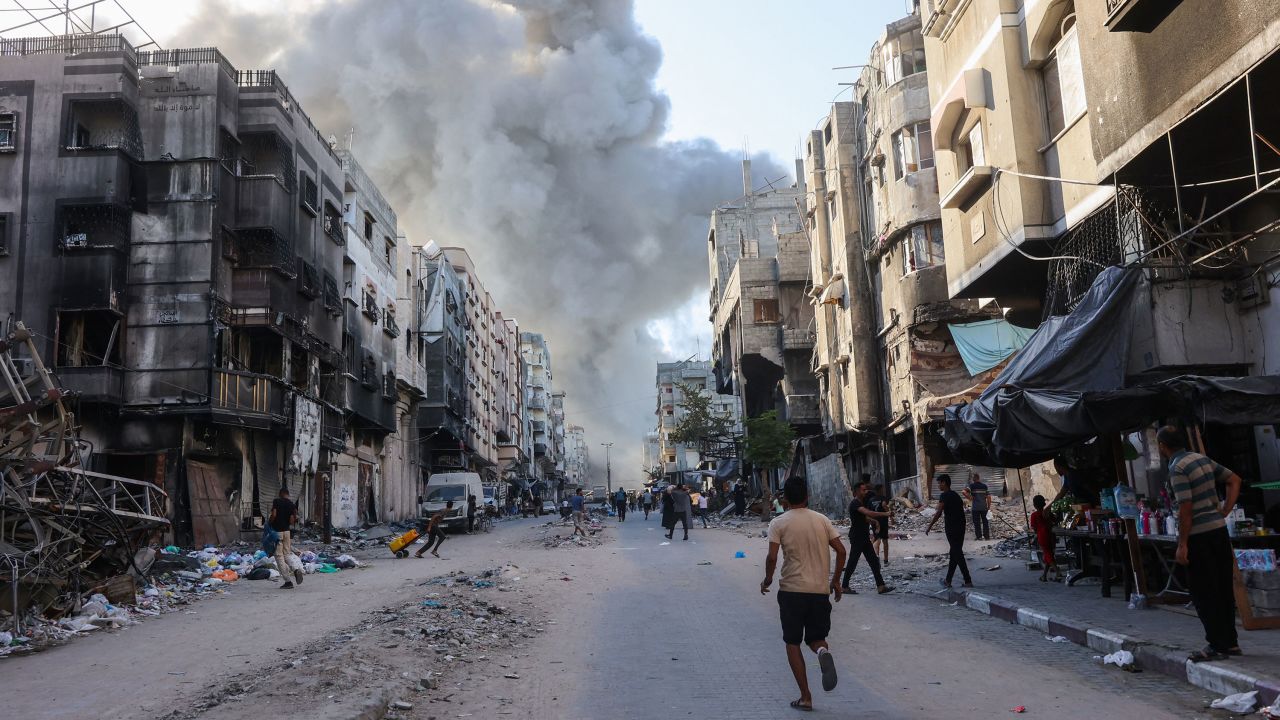
The results are not yet in. The bodies are still being buried, the aid is still being blocked, and the leaders are still posturing. But the shift in Washington is real. The "different approach" isn't a theory anymore; it's an active operation. The question is no longer whether the Vice President will change the script, but whether the actors on the stage will bother to learn the new lines.
Stop looking for the old landmarks of American diplomacy. They are being dismantled in favor of a more vocal, more volatile, and perhaps more honest engagement with the world. The era of the silent mediator is dead, and the era of the high-stakes advocate has begun. This is the new reality of power. It is messy, it is loud, and it is the only way forward in a world that has stopped listening to the old whispers. Leaders in the region who fail to recognize this change will find themselves negotiating with a ghost of an America that no longer exists. Prepare for the fallout of a superpower finding its voice again.