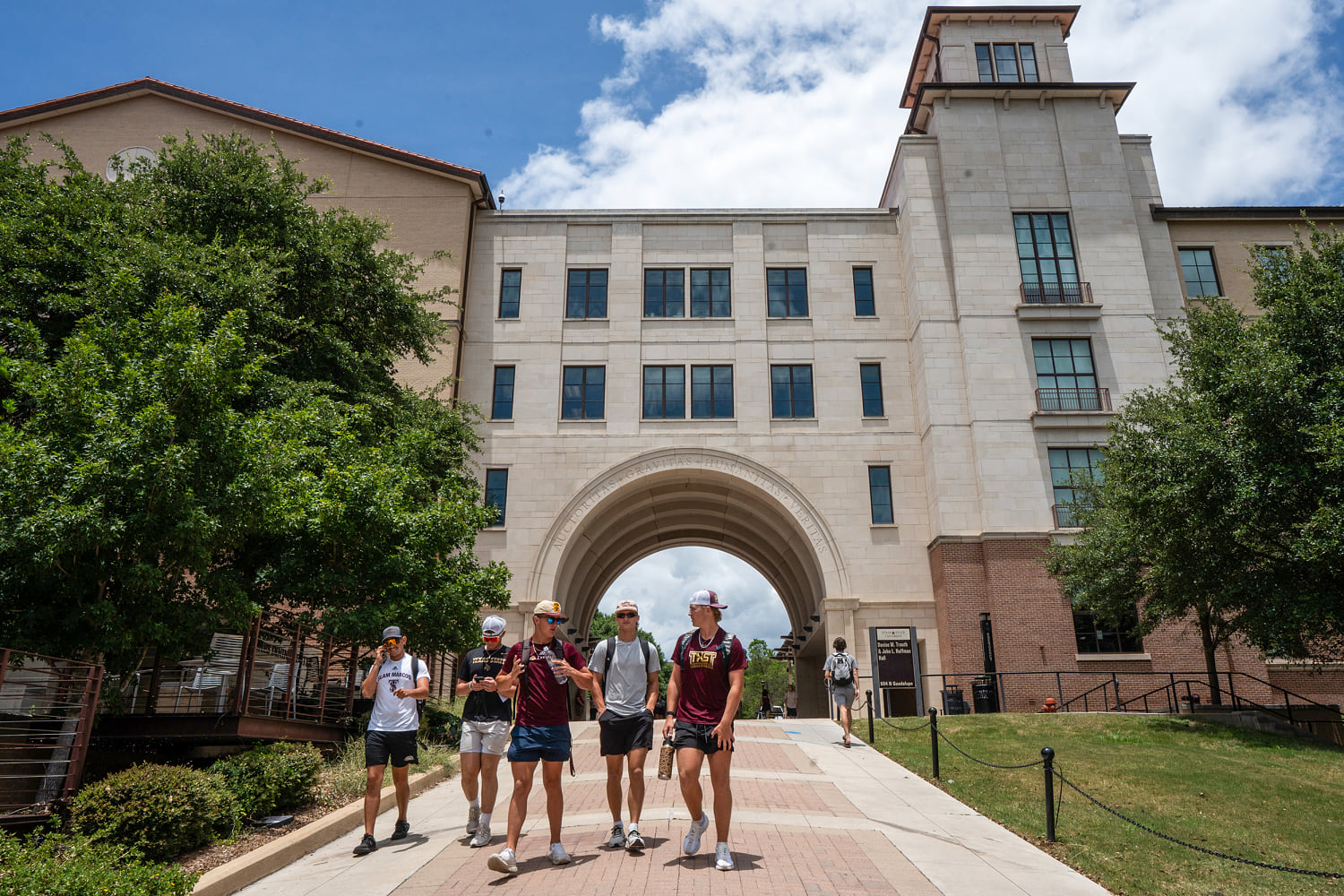
The suspension of a veteran professor at a major Texas institution is not an isolated HR dispute. It is the opening salvo in a coordinated campaign to redefine the boundaries of academic freedom in the American South. When a faculty member is escorted from their office or silenced via administrative leave for political speech, the ripple effect reaches far beyond a single classroom. It signals to every researcher and student that certain topics are now off-limits, regardless of tenure or constitutional protections.
At the heart of the current legal battle is a fundamental disagreement over where a professor’s right to free speech ends and a university’s right to "maintain order" begins. In this specific case, the institution argues that pro-Palestinian rhetoric crossed a line into disruption. The professor argues that the university is practicing viewpoint discrimination—a direct violation of the First Amendment. This isn't just a legal technicality. It is a fight for the soul of higher education in an era where state legislatures are increasingly viewing campus activism as a threat to public stability.
The Administrative Weaponization of Paid Leave
Administrative leave was once a tool reserved for clear-cut cases of gross misconduct or immediate physical danger. Today, it has become a "soft" firing mechanism. By placing a professor on leave, a university can effectively remove a controversial voice from the ecosystem without the immediate messiness of a termination hearing. It buys the administration time. It exhausts the professor’s resources. Most importantly, it creates a cooling effect that muzzles other faculty members who might be inclined to speak out.
The legal strategy employed by the school relies on the "disruption" standard. Under various Supreme Court precedents, public institutions can limit speech if it substantially interferes with the operation of the school. However, "disruption" is a notoriously slippery term. If a donor pulls a check because they dislike a professor's speech, does that count as a disruption? If students protest a lecture, is the professor responsible for the noise? Universities are increasingly betting that the courts will side with institutional stability over individual expression.
The Political Pressure Cooker
Texas has become the primary laboratory for testing how far a state government can go in regulating campus discourse. With the recent passage of state laws targeting Diversity, Equity, and Inclusion (DEI) offices and tenure protections, the climate for academic staff has turned refrigerated. Administrators are not acting in a vacuum. They are looking over their shoulders at a legislature that holds the purse strings.
When a professor gives a talk on Palestine, they aren't just engaging in a historical or political debate. They are walking into a minefield of state-level mandates and donor expectations. The "talk" that triggered the suspension in this case was likely viewed through a lens of risk management rather than intellectual exchange. For the university board, the risk of a political firestorm outweighs the risk of a First Amendment lawsuit. They calculate that a settlement or a lost court case years down the line is cheaper than losing state funding or private endowment money today.
The Myth of Protected Speech
Many faculty members believe that tenure is an impenetrable shield. It isn’t. Tenure protects against being fired for one’s research or teaching, but it offers little protection against "conduct" violations. By framing speech as a conduct issue—claiming the professor created a "hostile environment"—universities can bypass the traditional protections of academic freedom.
This shift from content-based evaluation to conduct-based discipline is the most significant development in campus law in the last decade. It allows an administration to say, "We aren't punishing you for what you said, but for how the campus reacted to it." It is a heckler’s veto dressed up in HR terminology.
The Courtroom as the Final Classroom
The lawsuit filed by the professor seeks more than just a return to the classroom. It seeks to establish a precedent that prevents "administrative leave" from being used as a gag order. If the court finds in favor of the faculty member, it could force public universities across the country to raise the bar for what justifies a suspension.
Current jurisprudence is mixed. In some circuits, courts have been hesitant to micromanage university personnel decisions, citing "academic deference." In others, the First Amendment remains a high wall. The Texas case is particularly critical because it involves a public institution, meaning the Fourth Circuit’s interpretation of state action will be under the microscope.
The Role of Donor Influence
Follow the money. Public universities are becoming less "public" every year as state funding per student continues to decline. To fill the gap, they rely on massive gifts from private individuals and corporations. These donors often have specific political leanings and do not hesitate to make their displeasure known.
Investigative look into university communications often reveals a flurry of emails from wealthy alumni following any controversial event. These emails aren't just venting frustration; they are threats. When a provost decides to suspend a professor, they are often checking a "damage control" box on a spreadsheet. The academic mission becomes secondary to the brand management mission.
A Precarious Future for Tenure
If this trend continues, the very concept of the university as a "marketplace of ideas" will cease to exist. Instead, we will see the rise of the "Corporate Campus," where speech is treated as a liability to be mitigated. Faculty will move toward a model of self-censorship, sticking to the safest possible interpretations of their subjects to avoid the HR office.
The professor in Texas is currently the face of this struggle, but the issue is systemic. We are seeing similar suspensions at institutions from the Ivy League to small liberal arts colleges. The difference in Texas is the overt involvement of state politics, creating a pincer movement between administrative caution and legislative hostility.
The Collateral Damage of Silence
Students are the ultimate losers in this equation. When a professor is removed, the curriculum is disrupted, and the intellectual diversity of the campus shrinks. Students learn that the best way to survive a professional environment is to have no public opinions at all. They witness the "disappearing" of a mentor and internalize the lesson: silence is safety.
This isn't just about one talk or one conflict in the Middle East. It is about whether a university can remain a place where uncomfortable ideas are interrogated rather than suppressed. If the legal system allows "administrative leave" to become a permanent exile for dissenters, the First Amendment on campus is a dead letter.
The path forward requires a total overhaul of how universities handle complaints regarding speech. Instead of immediate removal, there must be a transparent, peer-reviewed process that separates genuine threats from mere controversy. Without this, the administrative state will continue to prune the faculty until only the most compliant voices remain.
Check your own institution's faculty handbook for "disruption" clauses and "conduct" definitions. These are the tools currently being used to dismantle the protections you think you have. See if your university has a clear policy on how it handles donor complaints regarding faculty speech. Knowing the rules of engagement is the only way to survive the coming wave of administrative overreach.