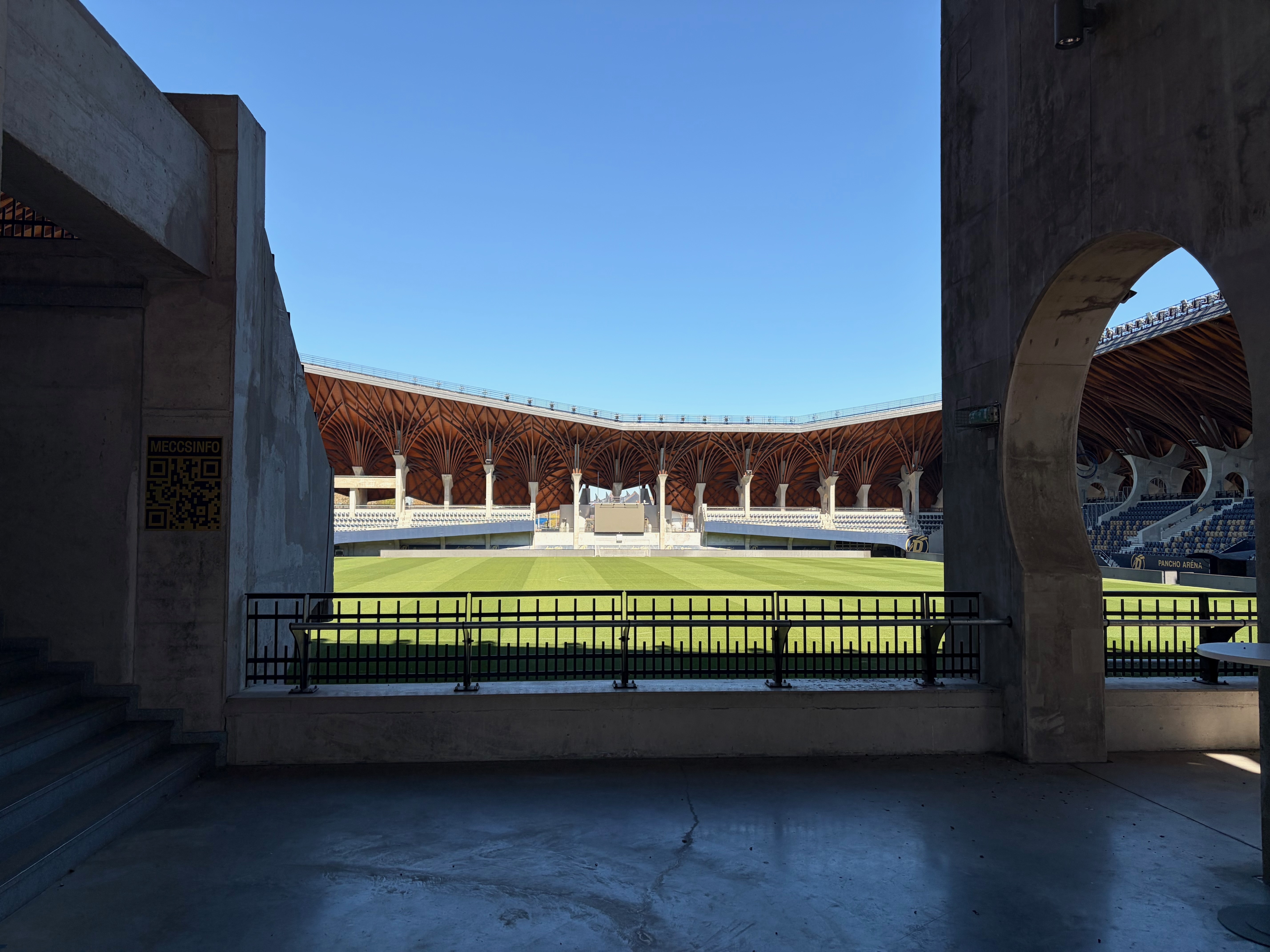
Foreign correspondents love a simple villain. They fly into Budapest, take a forty-minute drive to the village of Felcsút, snap a photo of a 3,800-seat stadium sitting next to a village of 1,800 people, and file a story about "monumental ego." They call it the Pancho Aréna—a gold-shingled, organic-architecture marvel—and label it the ultimate symbol of Viktor Orbán’s corruption.
They are looking at the bricks, but they are missing the blood.
The standard narrative claims Felcsút is a black hole for EU funds and state taxes, a vanity project for a Prime Minister obsessed with his childhood home. That is the lazy consensus. It ignores the brutal reality of Eastern European demographics and the intentional cultivation of a "National Bourgeoisie." If you think Felcsút is about football, you’ve already lost the argument.
The Death of the European Village
Travel across rural Hungary, Romania, or Poland. You see a graveyard of ambition. Young people flee to London, Berlin, or Budapest. The villages that remain become open-air nursing homes. This isn't just a Hungarian problem; it is a continental hemorrhage.
The critics scream that a village of 1,800 doesn't "need" a world-class football academy or a narrow-gauge "nostalgia" railway. From a spreadsheet perspective, they are right. It is an economic absurdity. But politics isn't a spreadsheet. Felcsút is a controlled experiment in reversing the gravity of urban centralization.
By pouring capital—yes, often through questionable "friendly" oligarchs like Lőrinc Mészáros—into a rural hub, the government creates a gravity well. It forces the elite to travel to the periphery. It creates high-end maintenance jobs, hospitality needs, and infrastructure in a place that should, by all market logic, be a ghost town.
The Myth of the Neutral Market
Western critics operate under the delusion that "market-neutral" investment is the only moral path. They believe EU development funds should be sprinkled like fairy dust across a thousand tiny projects that leave no lasting mark.
I have seen billions in development aid vanish into "consultancy fees" and "capacity building" workshops that leave behind nothing but PowerPoint decks. Felcsút leaves behind concrete. It leaves behind a stadium that draws international scouts. It leaves behind a railway that, while mocked for its low ridership, establishes a physical claim on the land.
The "excess" isn't an accident; it is the point. You don't break the cycle of rural decay with a modest community center. You break it with something so loud it cannot be ignored.
Lőrinc Mészáros and the National Bourgeoisie
Let’s address the elephant in the room: the gas-fitter turned billionaire. Mészáros is the favorite target of every anti-corruption NGO from Brussels to Washington. They point to his meteoric rise as proof of a rigged system.
They are correct. The system is rigged. But they fail to ask: Rigged for what?
After the fall of Communism, Hungary’s industry was hollowed out. Western firms bought up domestic competitors only to shut them down and turn Hungary into a captive market for German and French goods. The "liberal" 1990s were a fire sale of national assets.
The Orbán strategy—of which Felcsút is the spiritual headquarters—is the creation of a "National Bourgeoisie." The goal is to ensure that the people owning the banks, the construction firms, and the energy companies are Hungarian. Does this involve cronyism? Undeniably. But for the strategist, the question is simple: Would you rather have a billionaire who answers to the national interest (and invests his money back into a Hungarian village), or a faceless multinational corporation that sends 100% of its profits back to shareholders in Frankfurt?
The Stadium as a Power Play
The Pancho Aréna is a masterpiece of organic architecture by Imre Makovecz. It is objectively beautiful. It is also, logically, too big.
The critics call this a "waste." They miss the psychological utility of the structure. In a region defined by centuries of being told they are "backward" or "peripheral," building a structure of this caliber in a cornfield is a middle finger to the West. It is an assertion of excellence where none was expected.
Football in Hungary is more than a sport; it is the ghost of the 1954 "Golden Team." By anchoring the Puskás Akadémia in Felcsút, Orbán isn't just indulging a hobby. He is attempting to manufacture a cultural renaissance through sheer force of will and capital. Success in football provides a visceral sense of national pride that a 2% increase in GDP simply cannot match.
The Narrow-Gauge Railway Fallacy
The Vál Valley Light Railway is the darling of the "corruption" beat. Reporters love to count the passengers—often in the single digits—and compare them to the millions of euros spent.
Again, they are playing the wrong game.
Infrastructure in a declining region is never about current demand; it is about future possibility. When the United States built the Transcontinental Railroad, the "ridership" in the Nevada desert was zero. You build the capacity to create the demand. The Felcsút railway connects the stadium to the Alcsút Arboretum, creating a tourist corridor. Is it profitable today? No. But it creates a permanent footprint of state presence in the countryside.
The Risks of the Contrarian Path
The danger of the Felcsút model isn't the "excess." The danger is the lack of a succession plan.
When you build an ecosystem around the willpower of a single leader and a handful of loyalists, you create a fragile state. If the "National Bourgeoisie" only knows how to compete for state contracts and forgets how to compete in a global market, the entire project collapses the moment the political winds shift.
I’ve watched domestic champions in other nations grow fat and lazy on state patronage. If Mészáros and his ilk don't eventually transition from "friends of the party" to "global competitors," then Felcsút will indeed become the tombstone its critics claim it is.
What the Critics Get Wrong About Corruption
The West views corruption as a bug. In the Orbánist model, "centralized allocation" is a feature.
The "People Also Ask" sections of search engines are filled with queries like "How much EU money did Felcsút get?" and "Is Felcsút the most corrupt village in Europe?" These questions assume that "fairness" is the ultimate goal of governance.
In the eyes of the Hungarian right, the ultimate goal is survival.
They see a Europe that is culturally dissolving and economically stagnating. They see a Brussels that wants to dictate social policy. In that context, "corruption" is just the word liberals use for "sovereign resource allocation." By funneling money into Felcsút, the government is signaling to every other village mayor in the country: Stay loyal, keep your community together, and we will build you something magnificent.
It is a patronage system that rewards stability. It is the antithesis of the neoliberal model, which rewards whatever is most efficient for the global supply chain.
The Harsh Reality
You can hate the aesthetics. You can loathe the politics. You can be disgusted by the cronyism.
But do not pretend Felcsút is a mistake. It is a deliberate, high-stakes gamble to prove that the rural heartland can be revived through sheer, unapologetic favoritism.
The "excesses" aren't a sign of a system failing; they are the signs of a system working exactly as intended. While the rest of Europe’s villages fade into the grey fog of history, Felcsút is vibrant, paved, and loud.
If you want to understand the future of nationalistic governance, stop looking at the spreadsheets and start looking at the copper roof of the stadium. It isn't a monument to the past. It's a fortress for the future.
Stop asking why they built it. Start asking why you’ve stopped building anything at all.