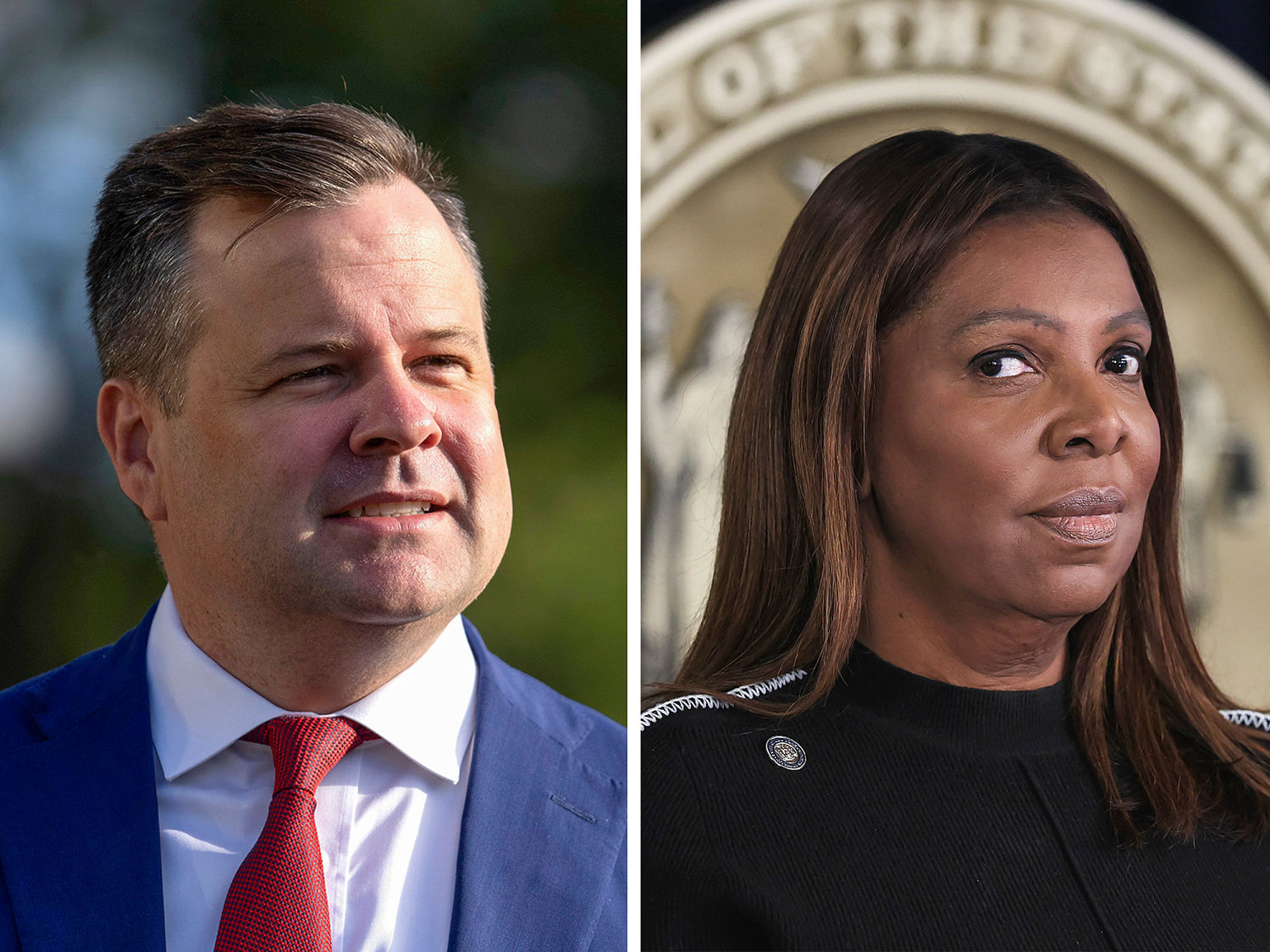
The recent demand by a former Trump administration housing official for a Department of Justice (DOJ) investigation into New York Attorney General Letitia James represents more than a political grievance; it is a test of the Civil Rights Act of 1964 and the scope of 18 U.S.C. §§ 241 and 242 regarding the "deprivation of rights under color of law." This maneuver seeks to pivot the narrative from state-level civil fraud judgments to federal criminal oversight, centering on the allegation that a state prosecutor utilized the machinery of the law to target a specific individual based on political animus. Understanding the viability of such a prosecution requires a cold-eyed analysis of prosecutorial immunity, the evidentiary threshold for "intent," and the structural tension between state sovereignty and federal intervention.
The Tripartite Framework of Prosecutorial Accountability
To evaluate the merits of a federal referral against a sitting Attorney General, we must examine the three distinct layers of legal insulation that typically protect state officials from federal interference.
1. Absolute vs. Qualified Immunity
The Supreme Court has long maintained that prosecutors enjoy absolute immunity from civil liability for actions taken within the scope of their advocacy role. This includes initiating a prosecution and presenting the state’s case. However, this immunity is a shield against civil lawsuits (under 42 U.S.C. § 1983), not a total bar against federal criminal investigation. The DOJ maintains the theoretical authority to prosecute state actors if their conduct crosses from "zealous advocacy" into a criminal conspiracy to violate constitutional rights.
2. The Specific Intent Requirement
Under 18 U.S.C. § 241 (Conspiracy Against Rights), the government must prove that two or more persons conspired to "injure, oppress, threaten, or intimidate" a person in the free exercise of a federal right. The barrier here is the Screws v. United States standard: the "willfulness" requirement. A prosecutor merely being aggressive or even biased is insufficient; the government must prove they acted with the specific intent to deprive the target of a clearly defined constitutional right, such as Due Process or Equal Protection under the 14th Amendment.
3. The Federalism Constraint
The DOJ operates under the "Petite Policy," which generally discourages federal prosecution of matters already addressed by state proceedings unless a "substantial federal interest" remains unvindicated. A move to prosecute Letitia James would require the DOJ to argue that the New York civil fraud trial was not a legitimate exercise of state police power but a weaponized instrument of a "political bill of attainder."
The Burden of Probative Evidence in Political Targeting Claims
The request for prosecution hinges on the public record of Letitia James’s campaign rhetoric. To elevate this from a political talking point to a legal strategy, an analyst must categorize the evidence into three buckets of varying utility.
- Pre-Election Statements: Public declarations of intent to "get" a specific individual. While powerful in the court of public opinion, these are often protected by the First Amendment and are difficult to link to the subsequent legal filings if the filings themselves meet the "probable cause" or "preponderance of evidence" standards in court.
- Procedural Anomalies: The use of Executive Law § 63(12) in a manner that deviates from historical precedent. If it can be shown that the Attorney General’s office ignored similar conduct by other entities and uniquely applied a "zero-loss" fraud theory only to the Trump Organization, it builds a case for selective prosecution.
- Coordination with Federal Actors: The most potent, yet currently unproven, path for a DOJ referral involves evidence of "collusion" between state prosecutors and federal executive branch officials. If evidence exists of non-routine coordination designed to influence a federal election, the jurisdictional hook for a Section 241 or 242 charge becomes significantly stronger.
The Economic and Institutional Cost Function
The push for a DOJ counter-suit introduces a high-stakes cost function for the American legal system. The variables include:
- The Precedent of Reciprocal Prosecution: If the DOJ initiates an investigation into a state AG for their prosecutorial choices, it sets a "tit-for-tat" cycle. Future administrations may feel compelled to investigate any prosecutor who secures a conviction against a high-ranking political figure.
- Resource Misallocation: Federal civil rights divisions have limited bandwidth. Diverting these resources to investigate a case that has already undergone extensive judicial review in state courts (including multiple appeals) creates a bottleneck for traditional civil rights cases involving police misconduct or voting rights.
- Market Perception of Legal Stability: In the business realm, the perception that the legal system is a tool for personal vendettas—rather than a predictable arbiter of contracts and fraud—increases the "risk premium" for doing business in that jurisdiction. The New York real estate market has already factored in some of this volatility, but a federal intervention would signal a total breakdown in the comity between state and federal law.
Structural Bottlenecks in the Referral Process
Even with a formal request from a high-ranking former official, the path to a DOJ indictment faces several systemic "kill switches."
First, the Office of Professional Responsibility (OPR) or the Inspector General would likely conduct a preliminary review. They look for "colorable claims" of misconduct. If the state court judge in the underlying case (Justice Engoron) affirmed the validity of the Attorney General’s evidence, the DOJ would find it nearly impossible to argue that the prosecution was "baseless" or "fraudulent" on its face.
Second, the Grand Jury hurdle. A federal prosecutor must convince a grand jury that a crime occurred. Given that the New York civil trial resulted in a massive judgment—which implies a court found the evidence of fraud compelling—a grand jury would likely view the "victim" (Trump) as a legally adjudicated wrongdoer, making the "oppression" argument a difficult sell.
The Distinction Between Bias and Illegality
A critical flaw in many analyses of this situation is the conflation of "prosecutorial bias" with "prosecutorial misconduct." Bias is common in elected offices; many prosecutors run on "tough on crime" or "reform" platforms that target specific classes of behavior or individuals.
Illegal misconduct occurs when that bias leads to the fabrication of evidence, the withholding of exculpatory material (Brady violations), or the use of perjured testimony. The current request for a DOJ investigation does not primarily cite fabricated evidence; it cites the motivation behind the investigation. In the eyes of the law, if the fraud occurred, the motive for looking for it is often treated as secondary or irrelevant to the validity of the conviction.
Strategic Forecast for DOJ Action
The DOJ is unlikely to move forward with a full-scale criminal indictment of Letitia James under the current legal architecture, but they may utilize a "soft power" approach. This would involve:
- A formal "Review" without Indictment: This allows the administration to signal its disapproval of the state-level tactics while avoiding the scorched-earth precedent of arresting a state AG.
- Amicus Curiae Filings: The DOJ could intervene in the ongoing appeals of the New York civil case, arguing that the application of NY Executive Law § 63(12) violated federal constitutional standards. This is a more traditional and legally defensible route.
- Legislative Recommendations: Using the investigation as a platform to propose federal "Anti-Lawfare" statutes that would provide federal courts with more power to remove state-level cases that involve federal candidates.
The most effective strategic play for those seeking to challenge James is not a direct criminal prosecution—which faces nearly insurmountable immunity hurdles—but a sustained legal challenge to the standing and proportionality of the penalties under the Eighth Amendment’s "Excessive Fines" clause. This shifts the battle from the intent of the prosecutor to the constitutionality of the result, a domain where the Supreme Court has recently shown a willingness to curtail state overreach.
Any analyst suggesting an imminent arrest or "slam dunk" case of criminal conspiracy is ignoring the robust protections built into the American prosecutorial system to prevent exactly this kind of federal-state internecine warfare. The real war will be fought in the appellate briefs regarding the definition of "fraud" where no bank suffered a monetary loss, rather than in a federal criminal courtroom in D.C.