Brussels just opened a formal investigation into French state aid for six new EPR-2 reactors. The headlines read like a routine regulatory hurdle—a dry, bureaucratic check-and-balance to ensure "fair competition" in the single market.
That narrative is a lie.
It assumes there is a "market" for nuclear energy that looks anything like the market for sneakers or software. It assumes that "state aid" is a distortion rather than the literal foundation of every successful nuclear program in human history. By applying 20th-century antitrust logic to 21st-century existential infrastructure, the European Commission isn't protecting consumers. It’s strangling the only scalable pathway to European energy independence.
The Myth of the "Level Playing Field"
The core of the Commission’s probe rests on the idea that EDF’s financing model—where the French state essentially guarantees the massive upfront capital—might disadvantage other energy players.
Which players? The wind farm developers who rely on massive subsidies and priority grid access? The gas-fired plants that only exist because the carbon market hasn't fully crushed them yet?
Nuclear energy is not a commodity. It is a 60-year geopolitical asset. When you build a reactor, you aren't just selling electrons; you are securing the industrial base of a nation for three generations. Treating this like a regional monopoly dispute is like investigating a national defense budget because it "unfairly competes" with private security firms.
The "lazy consensus" says that state intervention makes projects inefficient. I’ve spent two decades watching infrastructure finance, and I can tell you the opposite is true for atoms. Private capital hates nuclear because the payback periods outlive the career of any fund manager. When the state steps back, the cost of capital skyrockets.
When the cost of capital hits $10%$ or $12%$, the project dies. When the state provides a floor at $2%$ or $3%$, the project thrives. Brussels knows this. By "investigating" these aids, they are intentionally injecting uncertainty into the one thing nuclear needs to survive: long-term financial predictability.
The EPR-2 Is Not Your Father’s Flamanville
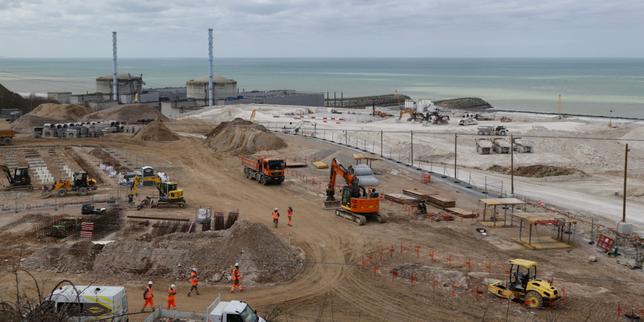
Critics point to the disaster at Flamanville 3—years late, billions over budget—as proof that the state shouldn't be trusted with the checkbook. They use the "first-of-a-kind" (FOAK) failures to justify blocking the "nth-of-a-kind" (NOAK) series.
This is a fundamental misunderstanding of industrial scaling.
The six EPR-2 reactors are designed for "constructability." They are a simplified version of the original EPR, optimized for serial production. In any other industry, the government would be praised for buying in bulk to drive down the unit cost. In the EU, buying in bulk triggers a multi-year probe into whether you’re being too mean to intermittent renewables that can't provide baseload power anyway.
Let's look at the math of the strike price. If the Commission forces France to raise the price at which EDF sells this nuclear power to reflect "market conditions," they are effectively taxing the French consumer to satisfy German ideological discomfort.
Why "Neutrality" Is a Suicide Pact
The EU claims to be "technology neutral." This is the most dangerous phrase in modern policy.
Technology neutrality is a luxury for a continent that isn't facing an energy crisis. When you are neutral between a source that works $90%$ of the time and a source that works $25%$ of the time, you are actively choosing failure.
Brussels uses the investigation process as a tool for "strategic delay." By the time the Commission clears the aid—likely with a list of "remedies" that weaken the project's economics—two or three years have vanished. In the world of high-interest rates and supply chain bottlenecks, time is more than money. Time is the difference between a revived industrial sector and a hollowed-out economy.
The Subsidy Double Standard
If we are going to talk about state aid, let's talk about the offshore wind industry.
When Siemens Gamesa or Orsted ran into trouble because inflation ate their margins, did Brussels open "formal investigations" to ensure their bailouts didn't hurt EDF? No. They launched the "Wind Power Package" to accelerate permits and financing.
The hypocrisy is breathtaking. Renewable energy aid is framed as "saving the planet." Nuclear energy aid is framed as "distorting the market."
The truth? The grid cannot survive on renewables alone without massive, unproven battery storage or a return to coal. By handicapping the French nuclear program, the Commission is forcing a reliance on the European "balancing market," which is often just a fancy term for burning gas when the wind stops blowing.
Stop Asking If Nuclear Is "Fair"
The "People Also Ask" section of the internet is full of questions like: Is nuclear energy too expensive?
The question is a trap. Compared to what? To a blacked-out grid? To $€300/MWh$ spot prices during a cold snap?
Nuclear is expensive to build, but it is the cheapest way to run a civilization. The Commission’s investigation focuses entirely on the "entry cost" while ignoring the "system cost."
When you add wind or solar to a grid, the system cost goes up because you need redundant backup and massive grid reinforcements. When you add a 1.6 GW reactor, the system cost stabilizes. Brussels is hyper-fixated on the "aid" given to the generator, but ignores the "hidden tax" imposed on the public by an unstable, renewable-heavy grid.
The High Cost of Regulatory "Certainty"
I’ve sat in the rooms where these deals get sliced up. The Commission will eventually demand that France allows "alternative suppliers" access to a portion of the nuclear output at a fixed price. They call this "competition."
In reality, it is a parasitic arrangement. It allows private retailers to skim profits when prices are high, while the state-owned producer carries $100%$ of the risk and $100%$ of the maintenance cost.
If the French government wants to build six reactors to lower the cost of living for its citizens and provide a competitive edge for its factories, that is the definition of good governance. Calling it a "distortion" is an insult to the intelligence of every taxpayer in Europe.
The Real Investigation Should Be on Brussels
We need to flip the script. Instead of asking if France is helping EDF too much, we should be asking why the European Commission is allowed to use competition law as a weapon against decarbonization.
If the EU were serious about its Green Deal, it would be standardizing reactor designs across the continent and providing low-interest EU-backed loans for every member state brave enough to break ground. Instead, we get a "formal investigation" into the only country that actually has a plan.
The downsides to my stance? It requires admitting that the "Free Market" cannot solve every problem. It requires acknowledging that energy is a sovereign duty, not a retail product. It requires a level of dirigisme that makes neoliberal economists break out in hives.
But the alternative is what we see now: a continent that pays the highest energy prices in the developed world while its industrial giants migrate to the US and China.
Stop investigating the solution and start investigating the bureaucracy that turned energy into a legal battlefield. France isn't "distorting" the market. They are the only ones trying to save it from its own volatility.
Build the reactors. Ignore the paperwork.