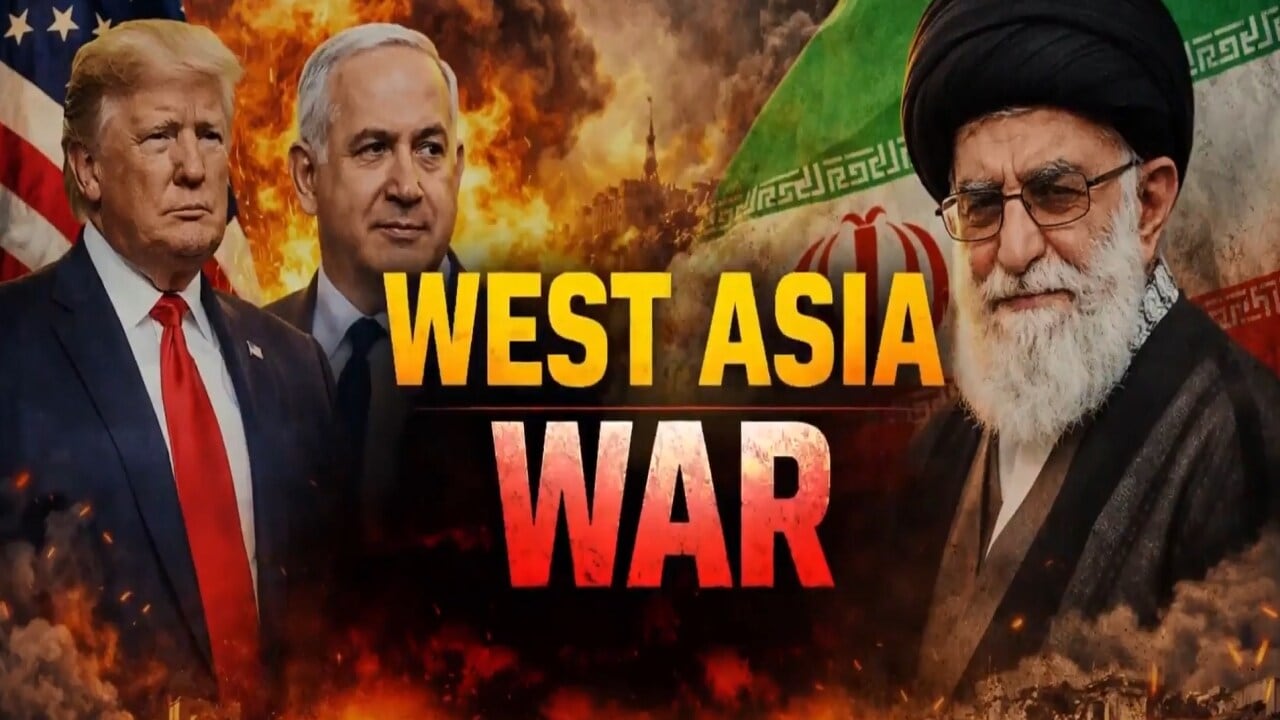
The global energy market is currently navigating a dual-crisis architecture where immediate supply-chain disruptions intersect with long-term structural transitions. While conventional reporting focuses on the surface-level volatility of Brent Crude, a deeper analysis reveals that the West Asia conflict acts as a catalyst for a permanent shift in how sovereign states define energy sovereignty. The crisis is not merely a price shock; it is a stress test for three specific mechanisms: the elasticity of global LNG logistics, the viability of strategic petroleum reserves (SPR), and the acceleration of the decarbonization-security nexus.
The Geopolitical Risk Premium and the Strait of Hormuz Bottleneck
Energy markets currently price in a risk premium dictated by the "Hormuz Probability." Approximately 21 million barrels of oil per day, or roughly 21% of global petroleum liquid consumption, transit through the Strait of Hormuz. Unlike the Red Sea disruptions, which primarily increase shipping costs and transit times (the "Cape of Good Hope detour"), a closure or significant restriction in Hormuz represents a hard supply ceiling that cannot be mitigated by simply rerouting vessels.
The cost function of this instability is calculated through three primary variables:
- Insurance Premiums: War risk surcharges for tankers have seen nonlinear increases, directly impacting the landed cost of crude regardless of the nominal spot price on the NYMEX.
- Freight Rates: The diversion of vessels around Africa to avoid the Suez Canal/Red Sea corridor has tightened the global tanker supply, reducing effective capacity and increasing the $/tonne rate for all global routes.
- Inventory Depletion: To stabilize domestic prices, nations like the United States and India have historically tapped into strategic reserves. However, the marginal utility of this tactic diminishes as reserve levels hit historical floors, leaving zero cushion for a secondary supply shock.
The Tri-Sector Response Framework
Countries are not reacting with a singular strategy; they are deploying a tri-sector framework to insulate their economies from the West Asian contagion.
1. The Diversification of Hydrocarbon Origin
The primary defensive move is the aggressive pursuit of non-OPEC+ supply. This manifests as increased capital expenditure in the Guyana-Suriname basin, the expansion of Brazilian pre-salt production, and a heavy reliance on U.S. shale exports. The objective is to decouple the national energy price index from the political stability of the Levant and the Persian Gulf. This is a structural pivot away from the lowest-cost producer (Middle East) toward the highest-certainty producer (Americas).
2. The Weaponization of the LNG Supply Chain
Liquefied Natural Gas (LNG) has transitioned from a bridge fuel to a primary strategic asset. For European and Asian economies, the reliance on fixed pipeline infrastructure (Russian or Middle Eastern) is being replaced by the flexibility of Floating Storage Regasification Units (FSRUs).
This shift introduces a new set of risks:
- The Arbitrage War: Nations must now compete in real-time for spot-market cargoes. If a conflict in West Asia disrupts Qatari LNG exports, the resulting bidding war between Japan, South Korea, and the EU creates a price floor that threatens industrial output in emerging markets.
- Infrastructure Lead Times: While FSRUs can be deployed relatively quickly, the onshore infrastructure required to integrate these into a national grid often lags by 18 to 36 months, creating a "vulnerability gap."
3. The Decarbonization-Security Nexus
The West Asia war has rebranded the Green Transition. Renewable energy is no longer discussed solely in the context of climate targets; it is now framed as "domestic energy generation." Every megawatt of solar or wind capacity installed reduces the volume of imported molecules required to maintain the base load. This is a transition from an OpEx-heavy energy model (buying fuel every month) to a CapEx-heavy model (building the generator once).
The Mathematical Reality of Energy Substitution
A common fallacy in recent analysis is the assumption that renewables can immediately offset a fossil fuel supply shock. In reality, the substitution rate is governed by the Intermittency Factor and the Grid Storage Capacity.
To quantify the challenge, one must look at the Energy Density Differential. Hydrocarbons provide high-density, dispatchable energy. Replacing the energy equivalent of 1 million barrels of oil requires an immense footprint of renewable infrastructure and, more critically, chemical battery storage to manage the duck curve.
$$E_{total} = (P_{renew} \times \eta_{grid}) + (S_{battery} \times \eta_{roundtrip})$$
Where:
- $E_{total}$ is the effective energy delivered.
- $P_{renew}$ is the nameplate renewable capacity.
- $\eta_{grid}$ is the efficiency of the transmission system.
- $S_{battery}$ is the stored energy capacity.
- $\eta_{roundtrip}$ is the round-trip efficiency of the storage medium.
The bottleneck is not the generation ($P_{renew}$), but the storage ($S_{battery}$). Until long-duration energy storage (LDES) reaches commercial parity, the global economy remains tethered to the West Asian oil supply for peaking power and industrial heat.
National Strategies: Case Studies in Realpolitik
India: The Multi-Alignment Model
India's strategy involves the simultaneous expansion of Russian crude imports (at a discount), the signing of long-term LNG contracts with Qatar and the UAE, and a massive scale-up of green hydrogen initiatives. By refusing to align with a single bloc, India maintains a "buyer's leverage," forcing exporters to compete for its massive market share. However, this strategy is contingent on the continued neutrality of the maritime corridors in the Indian Ocean.
The European Union: The Forced Decoupling
Europe is executing the most rapid energy pivot in modern history. The cessation of cheap Russian gas and the threat to Middle Eastern supply has triggered the REPowerEU plan. The focus is on the "Hydrogen Backbone" and the integration of North Sea wind. The risk here is the "Deindustrialization Trap": if energy prices remain structurally higher than those in North America or China during this transition, Europe's manufacturing core may migrate before the new energy system is fully operational.
China: The Mastery of the Value Chain
China has adopted a different approach. Rather than focusing solely on the fuel, they have secured the supply chains for the energy transition. They control over 80% of the global processing capacity for critical minerals (lithium, cobalt, rare earths). In a scenario where West Asian oil is restricted, China's ability to pivot to an electrified transport sector is higher than any other nation because they own the means of production for the batteries and EVs themselves.
The Breakdown of Global Energy Coordination
The International Energy Agency (IEA) and OPEC were designed for a world of predictable state actors. The current conflict involves non-state actors and proxy warfare, which invalidates traditional diplomatic de-escalation tactics.
The primary structural failure is the Information Gap. Markets are currently unable to accurately price "Dark Fleet" movements—the thousands of tankers operating under obscured ownership and without standard insurance. This shadow market now accounts for a significant portion of global trade, making it impossible for regulators to apply sanctions effectively or for analysts to predict the true impact of a blockade.
Operational Limitations of Current Mitigations
Strategists must acknowledge three hard limits to current energy security plans:
- Mineral Constraints: The transition to "secure" domestic renewables requires an exponential increase in copper and nickel. These minerals are often concentrated in geographically volatile regions (e.g., the DRC, Indonesia), essentially trading one form of geopolitical dependency for another.
- Capital Cost: High-interest rate environments significantly penalize renewable projects, which are front-loaded with costs. This creates a "Green Premium" that developing nations cannot afford during an inflationary shock.
- Refinery Mismatch: Not all crude is equal. Many refineries are calibrated for the specific "Sour" grades coming out of the Middle East. Replacing this with "Sweet" U.S. shale oil requires a technical reconfiguration of the refinery, a process that takes months and costs millions.
Strategic Realignment Requirements
To navigate the current West Asian volatility, the following structural adjustments are mandatory for any state or large-scale industrial energy consumer:
- Buffer Calibration: Strategic reserves must be expanded beyond crude oil to include finished products (diesel, jet fuel) and critical mineral stockpiles. A 90-day supply is the new minimum, not the goal.
- Dual-Fuel Redundancy: Industrial plants must invest in the capability to switch between gas, electricity, and liquid fuels within a 24-hour window. The cost of this redundancy is high, but the cost of a total shutdown during a supply pinch is terminal.
- Synthetic Fuel Investment: Accelerated R&D into E-fuels and Carbon Capture and Utilization (CCU) is necessary to provide high-density liquid fuels for sectors like aviation and heavy shipping that cannot be electrified.
The era of "Just-in-Time" energy is over. It has been replaced by "Just-in-Case" energy. The conflict in West Asia is not a temporary disruption; it is the final signal that the global energy architecture must be rebuilt on a foundation of local generation and diversified logistics. Organizations and nations that fail to price in the permanent disappearance of cheap, stable energy from the Middle East will find their economic models obsolete before the decade ends.
Map your exposure to the Hormuz Choke Point and calculate the cost of a 30% sustained increase in energy inputs over a 24-month horizon. This is no longer a tail risk; it is a baseline planning assumption.