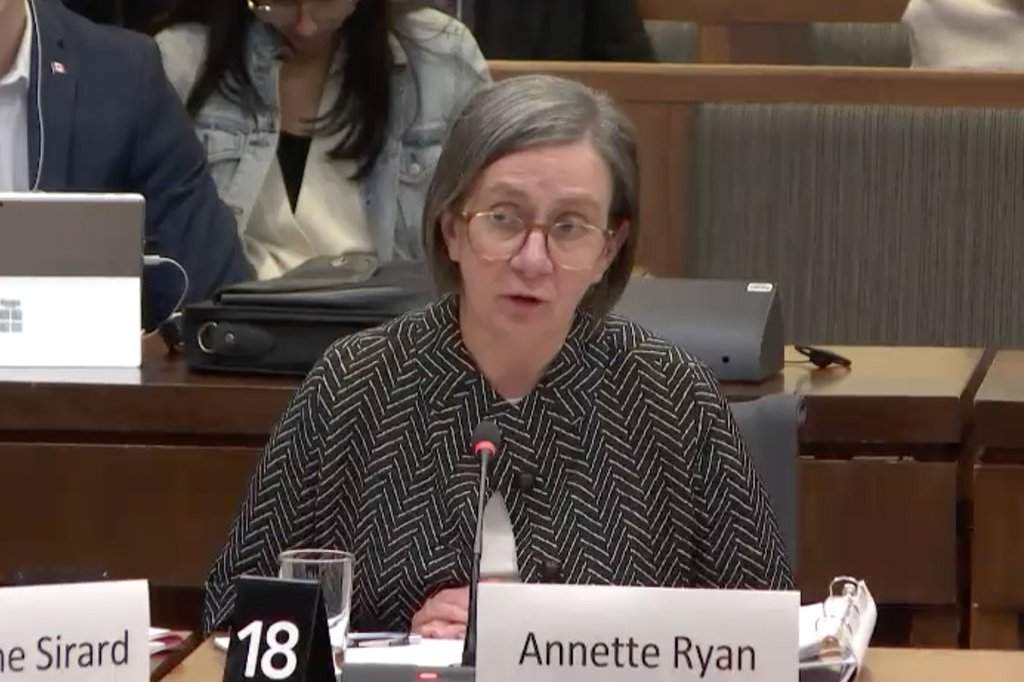
The hand-wringing in Ottawa has reached a fever pitch. MPs are reportedly "gravely concerned" about the vacant seat at the head of the Parliamentary Budget Office (PBO). They are hauling nominees into committee rooms, fretting over "oversight gaps," and acting as if the entire fiscal machinery of the state has ground to a halt because one specific office doesn't have a name on the door.
They are wrong. In fact, they have never been more wrong.
The standard narrative—the one your favorite legacy media outlet is currently spoon-feeding you—is that the PBO is a "watchdog" that keeps the government honest. The logic follows that without a permanent Parliamentary Budget Officer, the government can spend with impunity, hidden from the prying eyes of independent analysis.
This is a fundamental misunderstanding of how power, data, and bureaucracy actually function in a modern capital. The vacancy isn't a crisis; it’s a rare moment of clarity. It reveals that the "independent watchdog" model is a comfortable myth designed to give the illusion of fiscal discipline while the debt clock continues its relentless sprint.
The Myth of the Independent Watchdog
Let’s be precise about what the PBO actually does. It takes data provided by the government, runs it through models that are often lagging behind real-time market shifts, and produces a report that both sides of the aisle then cherry-pick to bash each other over the head.
I have spent years watching how these "independent" figures are selected. The process isn't about finding the most ruthless economic mind; it’s about finding someone who can navigate a committee without causing a cardiac arrest for the governing party or the official opposition.
When the role is filled, it creates a "fiscal security blanket." The public sees a headline saying "PBO reviews budget," and they assume someone is actually stopping the waste. They aren't. The PBO has no power to veto a single cent of spending. It has no teeth. It is a mirror, not a shield.
The Hidden Benefit of the Vacancy
When the office is "leaderless," something fascinating happens. The responsibility for fiscal literacy shifts back to where it belongs: the individual Member of Parliament and the inquisitive citizen.
For too long, MPs have used the PBO as an intellectual crutch. They don't read the estimates. They don't dive into the supplementary mandates. They wait for the PBO's summary so they can read the three bullet points their staff highlighted.
A vacancy forces a confrontation with the raw data. It removes the middleman. If an MP can’t tell if a billion-dollar green energy subsidy is a boondoggle without a 40-page report from a nominated bureaucrat, that MP shouldn't be in the House of Commons.
Why "Oversight" is Often Just "Performance"
The competitor articles on this topic focus on the "delay" in the nomination process. They frame it as a failure of governance. I frame it as an accidental audit of the office's necessity.
If the PBO was truly the "pivotal" (to use a word the bureaucrats love) pillar of democracy, the country would be in a visible state of collapse within forty-eight hours of a vacancy. Instead, the sun came up. The markets moved. The Treasury Board continued to function.
The truth is that the PBO is often a tool for Retroactive Justification.
- The government decides on a policy.
- The policy is implemented.
- The PBO writes a report six months later saying it cost more than expected.
- Everyone acts shocked for one news cycle.
- Nothing changes.
By leaving the role empty, we stop the cycle of performative outrage. We stop pretending that a small office with a limited budget can effectively "police" a federal budget that has ballooned to nearly half a trillion dollars.
The Data Trap
The "People Also Ask" sections of the internet want to know: "How does the PBO calculate the cost of a carbon tax?" or "Is the PBO non-partisan?"
These questions miss the point entirely. The issue isn't whether the PBO's math is "right." The issue is that their math is based on static modeling.
In the real world, economies are dynamic. When you tax a behavior, people change their behavior. When you subsidize an industry, the market distorts. The PBO’s models frequently struggle to account for these secondary and tertiary effects because they operate within the "consensus" framework of neoclassical economics.
I’ve seen this in the private sector a thousand times. A company hires an "independent auditor" to check their books. The auditor finds a few thousand dollars in travel expense errors while missing the massive, systemic risk in the derivatives portfolio. Why? Because they were looking where they were told to look.
The PBO looks where the mandate tells them to look. They are not looking for the "unknown unknowns."
Stop Trying to "Fix" the Appointment Process
The cry from the pundits is to "streamline the appointment" or "depoliticize the selection committee." This is a fool’s errand. You cannot depoliticize an office whose entire existence is to comment on political spending.
Instead of rushing to fill the seat with another career economist who will provide the same safe, middle-of-the-road projections, we should be asking why we aren't decentralizing the entire function.
Imagine a scenario where, instead of a centralized PBO, the budget for that office was redirected into a "Transparency API." Every line item of government spending, every departmental projection, and every internal audit would be pushed to a public, real-time database.
Rather than one "Watchdog," you would have ten thousand:
- Short-sellers looking for government waste.
- Investigative journalists with Python scripts.
- Data scientists at universities.
- Taxpayers who actually care about their specific region.
That is real oversight. A single nominee sitting in a wood-paneled office in Ottawa is not.
The Cost of the Status Quo
The downside of my approach is obvious: it’s chaotic. It requires the public to be informed and the media to be competent. It’s much easier to have a "trusted authority figure" tell us if the budget is "sustainable" or not.
But that ease is exactly what got us into $1.2 trillion in federal debt. We outsourced our skepticism to a "nominee." We traded our critical thinking for a press release.
The current vacancy is a gift. It is a temporary reprieve from the "expert" consensus that has overseen decades of fiscal drift. It is an opportunity to realize that the person meant to protect your wallet isn't a government appointee—it’s you.
Every day that role remains empty is a day we aren't being lied to by a sophisticated model. Every day the MPs are "forced" to do their own math is a win for the taxpayer.
The next time you hear a politician lamenting the "unfilled role" at the PBO, ask yourself: are they worried about the budget, or are they worried they’ve lost their favorite scapegoat?
Stop waiting for a savior in a suit. The vacancy isn't the problem. The belief that we need the office at all is.
Go download the Excel sheets yourself. The truth is in the cells, not the nominees.