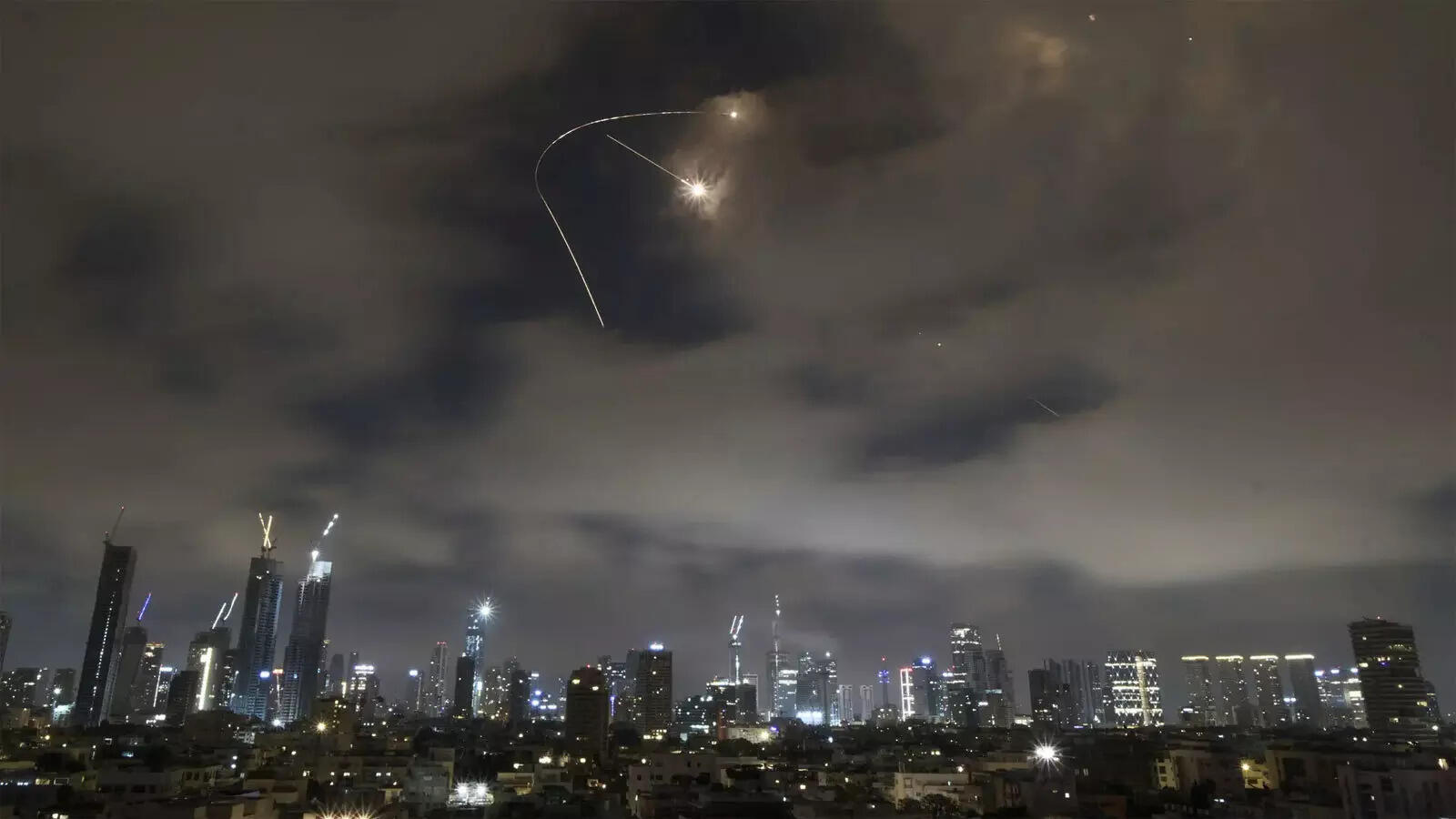
The defense establishment is currently hyperventilating over a spreadsheet error. You’ve seen the headlines: "US Missile Stocks Depleted," "Iran Conflict Leaves Navy Defenseless," or "The Pentagon's Empty Quivers." The prevailing wisdom suggests that because we are firing million-dollar interceptors at hundred-dollar drones and depleting our inventory of Standard Missile 2 (SM-2) and SM-6 variants, we are losing our edge.
This panic is built on a fundamental misunderstanding of modern attrition. Meanwhile, you can explore similar stories here: The Logistics of Electrification Uber and the Infrastructure Gap.
The bean-counters are staring at inventory levels while missing the structural revolution. We aren't "running out" of weapons; we are finally clearing the shelf of legacy hardware that was designed for a war that will never happen. The obsession with "stockpile depth" is a 20th-century relic. If you’re measuring military might by the number of physical tubes sitting in a warehouse in Kentucky, you’ve already lost the next decade.
The Interceptor Trap
The "lazy consensus" argues that the US Navy is vulnerable because the Red Sea and Iranian-backed escalations have burned through the production cycles of Raytheon’s premier interceptors. They point to the fact that we produce fewer than 200 SM-6s a year while using them at a clip that suggests we'd be dry in a high-intensity conflict with a peer adversary. To see the full picture, check out the excellent report by CNET.
Here is the nuance the "experts" missed: The SM-6 is an over-engineered solution for a low-tier problem. We are currently using a Ferrari to deliver mail. The depletion of these high-end stocks isn't a crisis; it’s the ultimate forcing function. It is forcing the Pentagon to abandon the "Gold-Plated Interceptor" doctrine that has drained the treasury for thirty years.
I’ve watched defense primes pitch "exquisite" systems for decades. They love low-volume, high-margin missiles. They want the US to remain dependent on a handful of bespoke weapons that take 24 months to build. By "depleting" these stocks in active combat, the US is being shoved—kicking and screaming—toward the only reality that matters in 2026: The democratization of lethality.
Why Quantity Has a Quality of Its Own (Again)
We’ve spent billions on the Aegis Combat System and the family of Standard Missiles. They are marvels of engineering. They are also a liability.
When an Iranian-made OWA (One-Way Attack) drone costing $20,000 forces a US destroyer to launch a $2 million interceptor, the drone has already won the economic engagement. The competitor article calls this a "failure of readiness." I call it a failure of imagination.
The "depletion" narrative assumes we need to replace every SM-6 with another SM-6. That is a loser’s game. The real shift is moving toward "Attritable Defense."
- Directed Energy is No Longer Science Fiction: For the cost of ten SM-6s, we could be fast-tracking shipboard laser integration that has a "magazine" limited only by the ship's fuel supply.
- Microwave Emitters: Why target one drone with one missile when you can drop a swarm with a high-power microwave pulse for the price of a gallon of diesel?
- Low-Cost Interceptors: We need missiles that cost $50,000, not $2 million. The depletion of the "high-end" inventory is the only thing that will break the lobbyist-driven cycle of buying overpriced ordnance.
The Myth of the "Peer Conflict" Stockpile
There is a common fear that if we "waste" our missiles on Iranian proxies, we won't have enough for a hypothetical showdown in the Taiwan Strait. This assumes a Pacific war would look like a giant version of the Red Sea. It won't.
In a high-end conflict with a near-peer, your stationary stockpiles are the first things to get hit by hypersonic glide vehicles. Having 10,000 missiles in a centralized depot is just providing the enemy with 10,000 targets.
True readiness isn't a static number in a ledger. It is industrial throughput.
The US military-industrial complex has become a boutique shop. We build masterpieces. We need a factory. By burning through the current "high-end" stock, we are exposing the "Just-In-Time" logistics failure of the defense industry. This is the "battle scar" moment. We saw it in Ukraine, and we’re seeing it in the Middle East. The "depletion" is the diagnostic test that proves our current manufacturing model is a fantasy.
Dismantling the "People Also Ask" Delusions
Q: Is the US Navy currently "defenseless" against Iranian missiles?
No. This is the kind of sensationalism that sells newsletters but ignores the reality of layered defense. A ship's defense isn't just a missile; it’s electronic warfare (EW), decoy systems like Nulka, and close-in weapons systems (CIWS). The "stockpile" is only the outermost layer of the onion.
Q: Why can't we just build more missiles faster?
Because the Pentagon’s procurement process is designed to prevent failure, not to achieve speed. We treat a missile build like a moon landing. We need to start treating it like a Ford F-150 assembly line. The bottleneck isn't "raw materials"; it's the specialized workforce and the "exquisite" requirements that demand every bolt be hand-turned by a PhD.
The Business of Fear
Let’s talk about who benefits from the "depleted stocks" panic. It isn’t the sailor on the deck of a destroyer. It’s the C-suite at major defense contractors.
When the media screams about empty silos, the immediate reaction in Washington is to write a "Supplemental Appropriation" check. This money rarely goes to innovation. It goes to "restarting lines" for 40-year-old technology. We are literally paying a premium to build the past.
If we were serious about national security, we wouldn't be crying about SM-6 numbers. We would be demanding to know why we aren't 3D-printing modular interceptor bodies at sea. We would be asking why the software-defined radio on a drone can outmaneuver a missile that costs more than a house.
The Tactical Pivot: Software Over Steel
The real "high-end" stock isn't the rocket motor; it's the sensor fusion.
Imagine a scenario where we stop viewing the missile as the "weapon" and start viewing the network as the weapon. If a drone can be jammed, spoofed, or blinded by a software patch sent over the horizon, the number of physical missiles in the hold becomes irrelevant.
The competitor article focuses on the "kinetic" depletion. This is 1944 thinking. In 2026, the depletion of kinetic interceptors is a signal to pivot toward non-kinetic dominance.
- Electronic Attack (EA): We should be burning through lines of code, not solid-fuel rocket boosters.
- Cognitive EW: Systems that learn an enemy’s frequency in real-time and shut it down.
The downside to this contrarian approach? It’s hard to "parade" a software update. It doesn't look as good as a missile launch on a recruitment poster. It doesn't provide thousands of manufacturing jobs in a specific congressional district. But it wins wars.
The Industrial Reality Check
We have spent three decades optimizing for "efficiency" in defense, which is a polite word for "fragility." We have one or two suppliers for critical components like solid rocket motors or thermal batteries.
The current "crisis" is the best thing that could happen because it forces a "Cold Start" of the American industrial base. We are learning—under pressure—where the cracks are. You don't find those cracks when your silos are full and your spreadsheets look pretty. You find them when you’re forced to wonder what happens on day 31 of a conflict.
The "depletion" is not a sign of weakness. It is the clearing of the brush before a new growth. We are moving away from a Navy that relies on a few expensive "silver bullets" and toward a force that uses distributed, low-cost, high-volume systems.
Stop looking at the inventory levels of the SM-6. Start looking at the venture capital flowing into autonomous systems, rapid-prototyping for loitering munitions, and solid-state lasers. That is where the war is being won.
The old guard wants you to be afraid of empty tubes. I’m telling you to be excited that the tubes are finally empty, because it means we can finally put something relevant inside them.
The era of the "High-End Missile" as the primary metric of power is dead.
Fire the last one and don't look back.