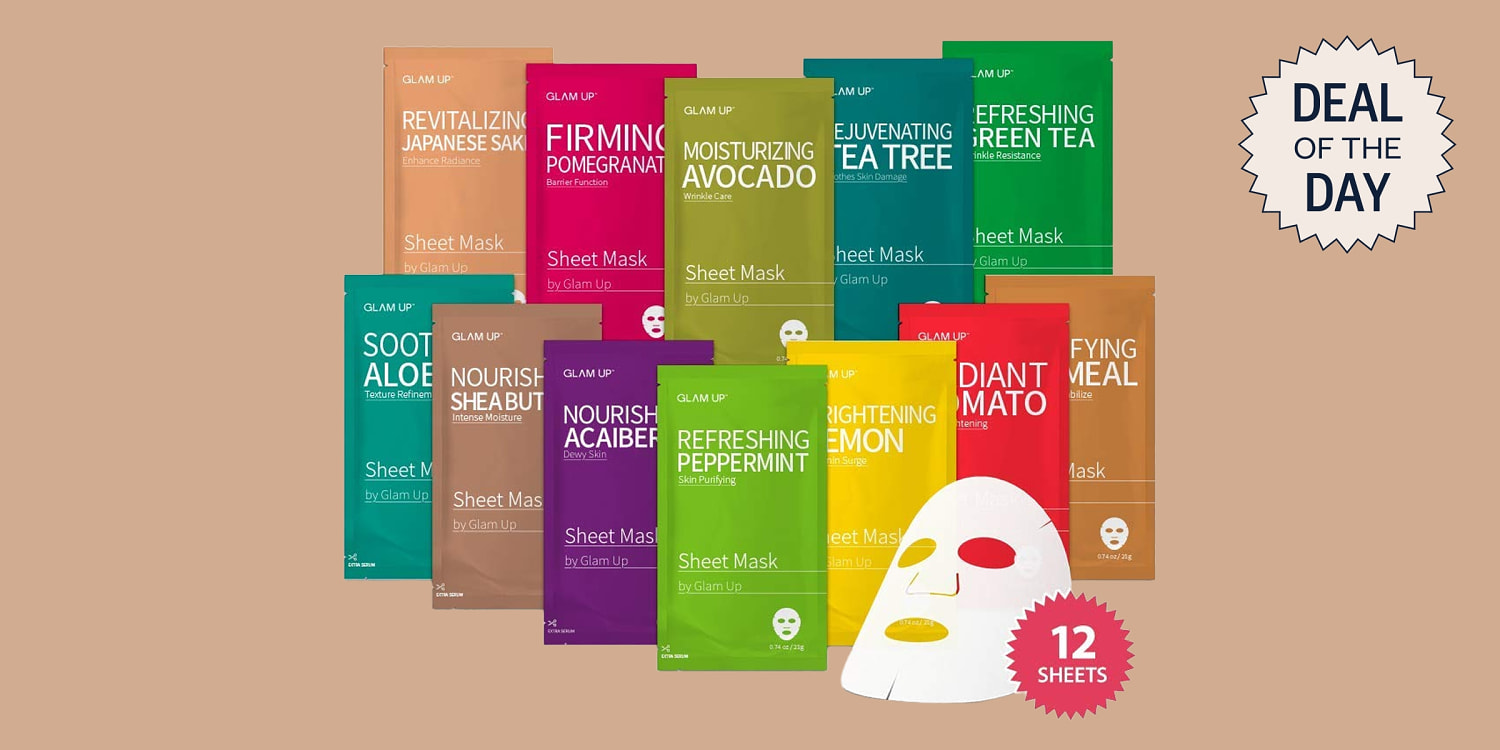
The current 60% price compression in Korean sheet masks represents a temporary market inefficiency that savvy consumers can exploit to optimize their dermatological ROI. While most consumers view "Deal of the Day" promotions as simple discounts, a rigorous analysis reveals these events as strategic entry points for high-performance skincare ingredients that are typically gated by premium pricing. The value proposition of a sheet mask is not found in the cloth itself, but in the delivery kinetics of the serum and the occlusion effect created by the physical barrier.
The Mechanics of Occlusion and Transdermal Delivery
The primary function of a sheet mask is to create a temporary semi-occlusive environment on the skin's surface. In standard topical applications, a significant percentage of active ingredients is lost to evaporation before it can penetrate the stratum corneum—the skin's outermost layer. Sheet masks solve this evaporation bottleneck.
By physically trapping a concentrated serum against the skin for 15 to 20 minutes, the mask increases the hydration level of the stratum corneum. This swelling of the skin cells decreases the density of the lipid barrier, allowing for a more efficient diffusion of humectants and antioxidants. This process follows Fick’s First Law of Diffusion, where the flux of a substance is proportional to the concentration gradient. The sheet mask maintains a high concentration gradient at the skin interface for an extended duration, maximizing the total mass transfer of the serum into the epidermis.
The Three Pillars of K-Beauty Formulation Superiority
Korean skincare, or K-beauty, often outclasses Western counterparts not through branding, but through a specific three-pillar formulation strategy that prioritizes barrier repair, botanical synergy, and fermentation chemistry.
- Bio-Available Humectants: Unlike basic moisturizers that rely heavily on occlusive petrolatum, these masks utilize a hierarchy of hyaluronic acid molecular weights. Low-molecular-weight hyaluronic acid penetrates deeper to provide structural hydration, while high-molecular-weight versions sit on the surface to film-form and prevent Trans-Epidermal Water Loss (TEWL).
- Soothe-Centric Actives: Ingredients such as Centella Asiatica (Cica), Mugwort (Artemisia), and Madecassoside are staples in these discounted masks. These compounds modulate the skin's inflammatory response, making them particularly effective for post-procedure recovery or environmental stress.
- Fermentation Technology: The use of Galactomyces or Bifida ferment lysate breaks down active ingredients into smaller molecules. This enzymatic breakdown increases the bioavailability of the nutrients, ensuring the skin can actually process the complex vitamins and amino acids delivered during the 15-minute window.
Quantifying the Cost Function of Skincare Maintenance
To understand why a 60% discount is significant, one must calculate the cost-per-treatment (CPT) versus the cost-per-ounce (CPO) of bottled serums. A high-end serum may cost $80 for 30ml, resulting in a CPO of approximately $2.66. However, a single sheet mask at a 60% discount often falls below $2.00 per unit, while containing nearly 25ml of concentrated essence.
The mask serves as a "booster" treatment. If a consumer uses a mask twice weekly, the annual expenditure at full price might reach $500. At a 60% discount, this falls to $200. This $300 surplus can then be reallocated to "un-discountable" staples like high-SPF sunscreen or prescription retinoids, creating a more balanced and effective skincare portfolio.
The Material Science of the Carrier
The efficacy of the mask is constrained by the material of the sheet itself. The 60% discount often applies across various material types, each with distinct performance characteristics:
- Microfiber and Cotton: High absorbance but prone to drying out faster. These are best for basic hydration.
- Hydrogel: A thickened, jelly-like sheet that reacts to skin temperature. These offer superior cooling and adhere more closely to the facial contours, minimizing air pockets where the serum cannot reach the skin.
- Bio-cellulose: Derived from fermented coconut water, these fibers are chemically similar to human skin. They can hold up to 100 times their dry weight in serum and provide the highest level of occlusion available in the consumer market.
Navigating the Risks of Discounted Inventory
A 60% price reduction is rarely altruistic; it is typically driven by inventory lifecycles or brand repositioning. Consumers must audit three specific variables before a bulk purchase:
Expiration vs. Manufacture Dates
Skincare actives, particularly antioxidants like Vitamin C or green tea polyphenols, degrade over time. A mask nearing its three-year expiration date will likely have diminished potency. Check the "제조" (manufactured) or "까지" (until) dates on the crimp of the packaging.
Preservative Systems
Because sheet masks are "wet" environments, they require robust preservative systems to prevent microbial growth. If a mask is heavily discounted and marketed as "preservative-free," the risk of bacterial contamination increases significantly as the product nears the end of its shelf life.
Ingredient Sensitivity
The "occlusion effect" that makes these masks effective also increases the risk of irritation. Ingredients that are tolerable in a wash-off cleanser may become sensitizing when trapped against the skin for 20 minutes. High concentrations of synthetic fragrance or denatured alcohol in cheap masks can lead to contact dermatitis, negating any financial savings through the cost of dermatological intervention.
Strategic Protocol for Maximum Absorption
To extract the full value from a discounted K-beauty mask, the application must be preceded by a specific physiological preparation. Applying a mask to dry, "closed" skin is a waste of capital.
First, utilize a chemical exfoliant (AHA or BHA) to remove dead skin cells that act as a physical barrier to the serum. Second, apply the mask while the skin is still damp from a toner or essence. This lowers the surface tension and allows the mask’s serum to "wick" into the skin more effectively. Finally, once the mask is removed, immediately apply a ceramide-rich occlusive moisturizer. This "locks in" the mass of hydration delivered by the mask, preventing the "rebound dryness" that occurs when the excess water on the skin's surface evaporates and takes internal moisture with it.
The current market volatility in K-beauty pricing allows for the stockpiling of bio-cellulose and hydrogel variants which typically sit at the highest price tier. Prioritize masks containing Niacinamide for barrier function and Snail Mucin for reparative properties, as these ingredients maintain stability longer than volatile acids. Shift the procurement strategy from "trial" to "bulk acquisition" of known-good formulations while the 60% margin exists. Focus on the ingredient list's top five components; if water and glycerin are followed immediately by a high-value ferment or botanical extract, the technical value of the mask exceeds the discounted market price. Stop treating sheet masks as a luxury and start treating them as a tactical delivery system for epidermal health.