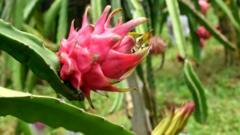
The media is currently obsessed with "superfoods" and the supposed miracles they perform for rural economies. The latest darling is the dragon fruit, or Kamalam as the Indian government rebranded it to sound more indigenous. If you believe the headlines, this neon-pink cactus fruit is a one-way ticket out of poverty for drought-stricken farmers. They call it a "cash boost." I call it a speculative bubble built on precarious logistics and a fundamental misunderstanding of luxury agronomics.
Betting the farm on a single exotic crop because it looks good on Instagram is not a strategy. It is a gamble.
The Myth of the Low-Maintenance Savior
The prevailing narrative suggests that because dragon fruit is a cactus, you can just stick it in the ground and watch the money grow. This is a dangerous oversimplification. Yes, Hylocereus undatus survives in arid conditions, but "surviving" and "commercially yielding" are two different biological realities.
To produce export-quality fruit that fetches the prices promised in those glowing puff pieces, a farmer needs an intensive trellis system. We are talking about concrete poles and iron rings. This isn't traditional farming; it’s a construction project. I have seen smallholders sink their entire life savings into these structures, often taking out high-interest loans because the initial capital expenditure for a single hectare can exceed ₹6,00,000.
If the market price dips—which it will, as supply gluts become inevitable—those poles won't pay for themselves. You can't eat concrete.
The Logistics Nightmare Nobody Mentions
Dragon fruit has a shelf life that can be measured in minutes if the "cold chain" isn't perfect. In a country where nearly 30% of produce is lost post-harvest due to poor infrastructure, pushing a high-value, highly perishable exotic fruit is reckless.
The "cash boost" only exists if the fruit reaches a Tier-1 city or an export hub within a specific window. The moment a farmer in a remote district of Gujarat or Karnataka harvests, they are in a race against cellular breakdown. Without refrigerated transport and sophisticated packing houses—which most of these "boosted" farmers lack access to—the power lies entirely with the middlemen.
The middleman knows the fruit is rotting. He knows the farmer is desperate. The "premium" price evaporates at the farm gate, leaving the farmer with the scraps while the retail markup happens in a sanitized supermarket in Dubai or Mumbai.
The Yield Gap and the Pollination Problem
Let’s talk about the biology that the boosters ignore. Many varieties of dragon fruit are self-incompatible. They require cross-pollination. In their native habitats in Central and South America, specific bats and moths do this heavy lifting. In an Indian monoculture setting, farmers often have to resort to manual pollination.
Imagine hundreds of laborers out in the fields at night with paintbrushes, because the flowers only bloom in the dark. This isn't "low-cost" farming. It is labor-intensive micro-management. If you miss the window, your yield drops to zero.
Furthermore, the "high yield" figures quoted by government agencies often come from experimental plots under "perfect" conditions. In the real world, you deal with:
- Sunscald: The Indian sun is often too intense, requiring expensive shade netting.
- Fungal Rot: Too much rain during the monsoon can turn a "drought-resistant" cactus into a mushy mess in days.
- Nutrient Mining: To keep the fruit large and pink, you need heavy doses of potassium and micronutrients, not just "a bit of water."
The Rebranding Gimmick
Changing the name to Kamalam was a masterstroke of marketing, but it does nothing to address the structural flaws of the industry. You can call a risky asset whatever you want; it remains a risky asset. The government's push to expand cultivation to thousands of hectares is creating a classic "cobweb model" in economics.
- Price is high because the fruit is rare.
- Every farmer rushes to plant it.
- The crop takes 2-3 years to reach full production.
- Everyone harvests at the same time.
- Price crashes.
- Farmers go into debt and rip out the plants.
We saw this with Jatropha. We saw it with Emu farming. The "miracle crop" cycle is a recurring fever in Indian agriculture, and dragon fruit is the current temperature spike.
The Consumption Fallacy
Who is actually eating this? In India, dragon fruit is a novelty. It is used as a garnish or a status symbol in fruit bowls. It lacks the cultural ubiquity of the mango or the caloric necessity of the potato.
The demand is "thin." It exists in a small segment of the urban middle class. Once that segment is saturated, where does the extra tonnage go? If the export market doesn't materialize because Vietnam (the world's largest producer) can underprice Indian farmers on every metric, the local market will collapse under the weight of its own supply.
Vietnam has thousands of hectares of contiguous, high-tech plantations and established sea-freight protocols. An Indian farmer with two acres and a paintbrush cannot compete on price.
Stop Chasing the Aesthetic
If you want to help Indian farmers, stop telling them to grow the "fruit of the month." Real wealth in agriculture comes from:
- Processing: Turning surplus into powder, jam, or spirits.
- Aggregated Logistics: Owning the cold chain, not just the soil.
- Crop Diversification: Not replacing one monoculture with a prettier one.
The dragon fruit trend is a symptom of "solutionism"—the idea that a single technological or botanical "hack" can fix a systemic economic issue. It can’t.
I’ve stood in fields where the "cash boost" resulted in nothing but rows of skeletal concrete posts and rotting fruit. The farmers weren't empowered; they were over-leveraged. They followed the advice of "experts" who had never spent a night hand-pollinating flowers in the humidity of a pre-monsoon July.
Stop romanticizing the cactus. Start analyzing the cost of capital.
If the math doesn't work at a price point 40% lower than today’s retail, don't plant it. Because that 40% drop isn't a possibility—it's an eventuality.
The flashy pink skin of the dragon fruit is a warning, not an invitation.