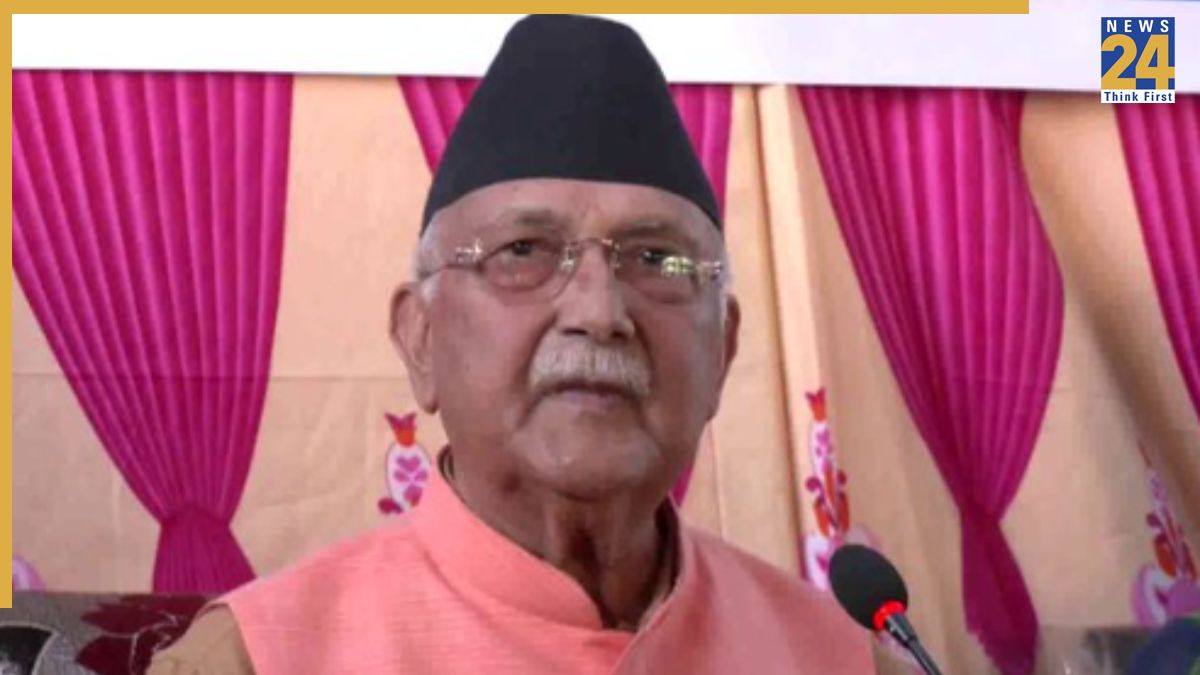
The headlines are screaming about justice. They are painting a picture of a fallen strongman finally meeting his match in a courtroom. If you believe the mainstream narrative, the detention of former Prime Minister K.P. Sharma Oli regarding his role in protest crackdowns is a victory for human rights and the rule of law in Nepal.
It isn't. Expanding on this theme, you can also read: Why the Green Party Victory in Manchester is a Disaster for Keir Starmer.
What we are witnessing is not a "triumph of democracy." It is a calculated, cyclical ritual of political cannibalism that defines the Kathmandu power structure. By focusing on the "justice" of the detention, the global media is missing the cold, hard mechanics of how power actually shifts in the Himalayas. This isn't about the dead from years ago; it is about the living who want his seat today.
The Myth of the Accountability Breakthrough
Every few years, Nepal’s political elite rediscover their conscience. They suddenly find the "evidence" they ignored while sharing tea and forming coalition governments with the very person they are now handcuffing. Observers at TIME have also weighed in on this matter.
To suggest that this detention is a spontaneous eruption of judicial independence is to ignore how the Supreme Court and the Commission for the Investigation of Abuse of Authority (CIAA) have historically been used as blunt instruments. I have watched this cycle repeat since the 2006 Comprehensive Peace Accord. One day you are the Prime Minister orchestrating the state’s response to civil unrest; the next, your successor uses that same response to label you a criminal.
The "deadly protest crackdown" cited is real. The blood on the streets was real. But the sudden urgency to prosecute is a political convenience. If accountability were the true north of the current administration, the entire front bench of the ruling coalition would be in the same holding cell.
Weapons of Mass Distraction
Oli’s detention serves a much more practical purpose than "justice": it is the ultimate distraction from a tanking economy and a stalled constitution.
Nepal’s youth are fleeing to the Gulf at a rate of over 2,000 people per day. The trade deficit is a gaping wound. Foreign direct investment is a joke. When a government cannot provide jobs or electricity, it provides a villain. Oli, with his penchant for nationalist rhetoric and his history of bypassing parliamentary norms, makes for a perfect villain.
By focusing the national conversation on the "crimes" of the previous administration, the current leadership buys itself six to twelve months of breathing room. It is a classic diversionary tactic. You don’t need to fix the roads if the public is busy watching a former titan get hauled into a van.
The Stability Paradox
The "lazy consensus" argues that holding leaders accountable leads to a more stable democracy. In a mature system, perhaps. In Nepal’s fragile ecosystem, it does the exact opposite.
Oli is not just a man; he represents a massive, highly organized cadre of the UML (Unified Marxist-Leninist) party. To think they will sit quietly while their leader is "dealt with" is a fundamental misunderstanding of party loyalty in South Asia.
Imagine a scenario where the state successfully convicts a leader of Oli's stature. You haven't created a precedent for justice; you've created a roadmap for revenge. The moment the pendulum swings—and it always swings in Kathmandu—the current accusers become the next defendants. This isn't progress. It’s a revolving door of litigation that ensures no leader ever focuses on long-term policy because they are too busy preparing their legal defense for the inevitable day they lose power.
The Cost of Symbolic Justice
- Erosion of Institutional Trust: When the law is only applied to the "out" group, the law ceases to be an arbiter and becomes a weapon.
- Policy Paralysis: Civil servants are already terrified of making decisions. Seeing a former PM detained ensures that the bureaucracy stays frozen, fearing that any signed document could be used against them in the next political purge.
- Geopolitical Vulnerability: While Nepal eats its own, its neighbors—India and China—tighten their grip on the country's infrastructure and resources. Internal chaos is a gift to external interests.
Why You’re Asking the Wrong Question
People are asking, "Is Oli guilty?"
That is the wrong question. In the context of Nepal’s transition from monarchy to republic, almost every senior leader has "guilt" attached to the violence of the last two decades.
The right question is: Who benefits from the timing?
If you look at the fractured state of the current coalition, the answer becomes obvious. This is a survival play. By removing the most formidable opposition voice from the board, the current government isn't fixing the past; they are rigging the future.
The Professional’s Take on the Fallout
I’ve seen this script play out in dozens of emerging markets. A "crackdown on corruption" or a "human rights trial" is announced. The international community cheers. The NGO sector gets a fresh round of funding. Meanwhile, the underlying structural issues—the patronage networks, the rent-seeking, the lack of transparency—remain untouched.
If you want to understand Nepal, stop reading the human rights reports for a second and start looking at the numbers. Look at who is getting the new hydropower contracts. Look at who is controlling the import licenses for gold and fuel. You will find that while the faces in the headlines change, the hands in the pockets do not.
The detention of K.P. Sharma Oli is a high-stakes gamble. It might temporarily satiate a public hungry for a scapegoat, but it does nothing to build a state.
Stop cheering for the arrest and start looking at the void it leaves behind. If the goal was a better Nepal, they would be building factories, not filling prison cells with their predecessors. This isn't a new chapter. It’s the same old book with a slightly more aggressive font.
Next time you see a headline about a "corrupt leader" being "brought to justice" in a developing nation, check the calendar. Check the proximity to the next election or the next fiscal crisis. The timing isn't a coincidence. It’s the strategy.
Don't mistake the theater for the truth.
Would you like me to analyze the specific economic shifts occurring in the wake of this political instability?