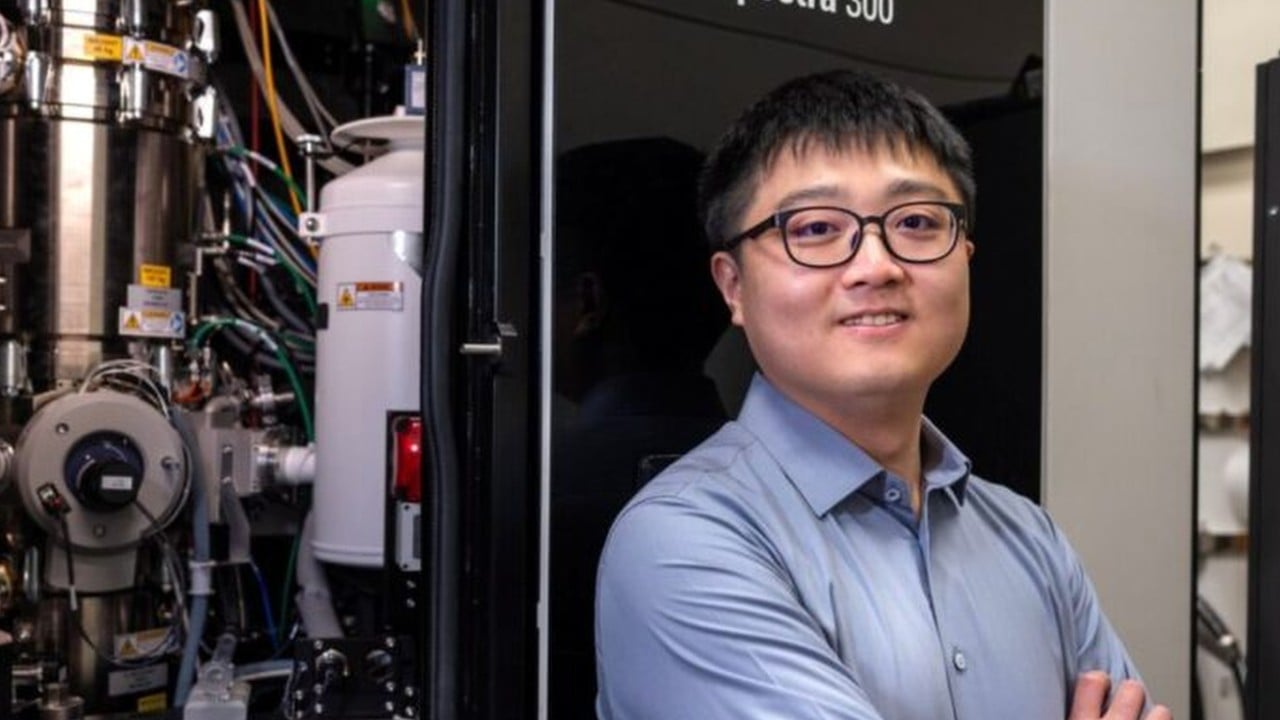
A brilliant mind doesn't just vanish without a ripple. On March 19, 2026, the quiet halls of the University of Michigan’s George G. Brown Building became the scene of a tragedy that is now vibrating through the global semiconductor industry. Danhao Wang, a researcher whose work was literally lighting the path for the next generation of electronics, fell from an upper level of that building. He was pronounced dead the next morning.
The Chinese embassy in the US has now confirmed his death, and the details they’re highlighting paint a grim picture of the pressure cooker that is modern academic research. They aren't just calling it a tragedy; they’re calling it the result of "hostile questioning" by American law enforcement.
The genius we just lost
Wang wasn't some mid-level lab tech. He was an Assistant Research Scientist in the Department of Electrical Engineering and Computer Science at Michigan. If you follow the world of wide bandgap semiconductors, you knew his name. His research into III-nitride materials wasn't just incremental; it was foundational.
He had just published work in Nature that basically cracked the code on switching and charge compensation in emerging ferroelectric nitrides. For those of us who don't spend our days in cleanrooms, that means he was figuring out how to make the chips in our future devices faster, more efficient, and capable of things today's silicon simply can't do.
His dean described him as a "promising and brilliant young mind." It’s an understatement. We're talking about a guy who was bridging the gap between material science and photonics. He was the kind of talent that only comes around a few times a decade. Now, that expertise is gone, and the circumstances are fueling a massive diplomatic firestorm.
Interrogations and the pressure of the new crackdown
According to statements from the Chinese Consulate in Chicago and the Ministry of Foreign Affairs, Wang’s death by suicide followed intense scrutiny from federal authorities. This didn't happen in a vacuum. We’re currently in the middle of a massive push by the Trump administration to root out "foreign influence" in American labs.
Michigan has been a focal point of this heat. The university was recently dragged through the mud for allegedly misreporting funding from the Chinese government. Just months ago, five other Chinese students at the same university were hit with federal charges involving biological materials.
When federal agents show up at your door—or your lab—to talk about "national security," the psychological toll is immense. The Chinese embassy is claiming Wang was harassed and interrogated about his work. They’re demanding a "responsible explanation," and frankly, the academic community is demanding one too.
The cost of turning labs into battlegrounds
I’ve seen this play out before, but the intensity right now feels different. It feels like 1950s McCarthyism with a high-tech coat of paint. When we treat every elite researcher with a foreign passport as a potential spy, we don't just protect our "secrets"—we kill the very environment that produces innovation.
Scientists don't work well when they’re looking over their shoulders. They work well when they’re obsessed with data, light, and electricity. Wang was deep into the study of ferroelectric ScAlN materials. This is the stuff that will power future 6G networks and ultra-efficient power electronics. If the price of doing that research in the US is a federal interrogation that leads to a researcher jumping from a building, the best minds are going to stop coming here. It’s that simple.
What happens next for the research community
The University of Michigan Police Department is still technically investigating this as a "possible act of self-harm," but the political machinery has already moved past the local police report. This is now a high-level diplomatic incident.
If you’re a researcher in the US on a visa right now, you’re likely re-evaluating everything. I’ve talked to folks in the field who are genuinely afraid that their next publication could be the thing that triggers a "hostile questioning" session.
Here is what needs to happen to prevent this from becoming the new normal:
- Demand Transparency: We need to know exactly what the "questioning" involved. If federal law enforcement drove a world-class scientist to suicide over paper-filing errors or vague "influence" concerns, that needs to be public.
- Legal Protection for Academics: Universities can't just "support" staff with links to counseling after the fact. They need to provide robust legal shields for their researchers before the feds even walk in the door.
- Separate Science from Spying: Lawmakers need to realize that wide bandgap semiconductors are a global scientific pursuit. Criminalizing the natural exchange of information in academia is a losing strategy for everyone.
Wang Danhao’s death is a wake-up call that we're currently ignoring. We are sacrificing the people who build the future on the altar of short-term political posturing. If this doesn't change, the "brain drain" from the US won't just be a trickle—it'll be a flood. And we’ll have nobody to blame but ourselves.