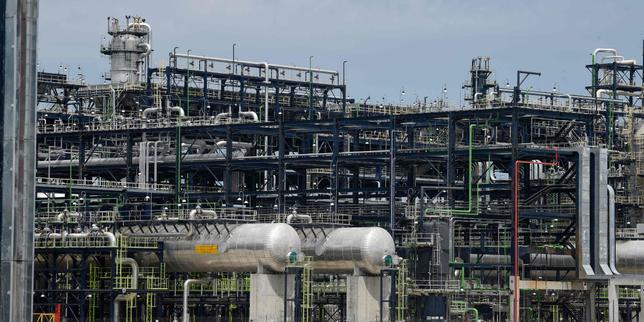
Nigeria is finally producing its own gasoline at scale. For decades, the narrative was the same. Africa’s largest oil producer exported its crude only to buy it back as expensive, refined fuel from Europe. It was a cycle of economic absurdity that drained foreign reserves and left citizens at the mercy of global supply chains. Now, Aliko Dangote’s $20 billion mega-refinery is operating at high capacity. It’s a massive shift. But if you look at the gas lines in Lagos or the price hikes in Abuja, you'll realize the story isn't just about "turning on the taps." It's about a brutal transition from a state-subsidized fantasy to a hard-nosed market reality.
The refinery is a beast. Located in the Lekki Free Zone, it’s designed to process 650,000 barrels per day. That’s enough to meet Nigeria’s entire domestic demand and still have plenty left over for export. For the first time in a generation, the country has the hardware to be energy independent. But hardware is only half the battle. The other half is the messy politics of crude supply and the painful death of the fuel subsidy.
The Crude Supply Tug of War
You’d think the Nigerian National Petroleum Company (NNPC) would be falling over itself to supply the refinery. It hasn't been that simple. For months, a standoff over pricing and currency stalled progress. Dangote needed crude in Naira to keep domestic prices stable. The government, desperate for US dollars, wanted to sell its oil at international market rates.
They eventually reached a deal to trade in local currency, but the tension remains. It’s a classic case of conflicting interests. The refinery needs cheap, consistent input to stay profitable. The state needs every cent of revenue to plug a massive budget deficit. This friction is why, even with the refinery running at "full tilt," the pumps aren't suddenly overflowing with cheap fuel.
It’s also worth noting that the refinery isn't just making gasoline. It’s pumping out diesel, aviation fuel, and polypropylene. While the public focuses on the price of "petrol" for their cars, the industrial impact of local diesel production is arguably more important for the economy. It lowers transport costs for goods. It provides a steady supply for the thousands of generators that keep Nigerian businesses running.
Why Prices Are Rising Despite Local Production
There’s a common misconception that local refining equals cheap fuel. It doesn't. Not in a world where the Naira has lost significant value. Even if the oil is pulled from Nigerian soil and refined in Lekki, the costs are still tied to global benchmarks.
The Nigerian government has spent years burning through billions of dollars to keep fuel prices artificially low through subsidies. That era is over. President Tinubu’s administration scrapped the subsidy, and the Dangote refinery is now the primary price setter. When the refinery announced its initial prices, many were shocked to find they weren't much lower than imported fuel.
Here is the reality. Dangote is a businessman, not a charity. He took on massive debt to build this facility. He needs to pay back lenders and turn a profit. Producing fuel locally removes the "freight" and "insurance" costs of shipping oil to Europe and back, but it doesn't change the base price of crude. Nigerians are feeling the sting of "market-reflective" pricing for the first time, and it’s a bitter pill to swallow.
The Logistics Nightmare
Even with the fuel sitting in tanks at Lekki, getting it to a filling station in Kano or Port Harcourt is a logistical headache. Nigeria’s pipeline infrastructure is either non-existent or riddled with holes from decades of vandalism. This means thousands of trucks have to hit the road.
- Road Degradation: Heavy fuel tankers destroy roads that are already in poor condition.
- Security Risks: Transporting high-value fuel across volatile regions is expensive and dangerous.
- Inefficiency: A truck can only carry so much. It’s the least efficient way to move liquid energy.
Until the distribution network catches up to the production capacity, localized shortages will continue. You can have the biggest refinery in the world, but if the "last mile" is broken, the consumer still waits in line.
Impact on the West African Region
The Dangote refinery isn't just a Nigerian project. It’s a regional disruptor. For years, refineries in the Netherlands and Belgium (the "ARA" hub) have relied on the West African market to offload their low-grade "African quality" fuels. Those European refiners are now looking at a massive drop in demand.
Ghana, Togo, and Benin are already watching Lekki closely. If Dangote can provide cheaper, faster delivery than a ship coming from Rotterdam, the entire trade flow of the Atlantic shifts. We’re seeing the beginning of a new energy axis in Africa. This isn't just about Nigerian pride. It's about taking the lunch of European industrial giants who have had a monopoly on this market for a century.
Quality Control and Standards
Another angle often ignored is fuel quality. Imported fuel in West Africa has notoriously high sulfur content, often way above what’s legal in Europe. Dangote’s facility is built to Euro V standards. This means cleaner-burning fuel, less engine damage for car owners, and slightly better air quality in congested cities like Lagos.
It's a huge upgrade. Most people don't think about sulfur parts per million (ppm) when they're stuck in traffic, but their mechanics certainly do. Lower sulfur means longer-lasting injectors and less soot. It’s a hidden win for the Nigerian consumer that rarely makes the front-page news.
Breaking the Monopoly of the Middleman
For years, the fuel trade in Nigeria was a playground for well-connected middlemen. These "briefcase businessmen" made fortunes on import licenses and subsidy scams. By moving production onshore, Dangote is effectively cutting them out of the loop.
This is why you see so much pushback and negative PR surrounding the project. There are powerful interests that benefit from Nigeria being a "broken" energy market. Every barrel refined at Lekki is a barrel that a middleman didn't get to skim a profit from. The refinery's success is a direct threat to the status quo that has held the country back since the 1970s.
Navigating the New Energy Era
If you're a business owner or a consumer in Nigeria, don't wait for prices to drop back to 200 Naira. That world is gone. The focus now should be on reliability. The real value of the Dangote refinery isn't "cheap" fuel; it's the end of "no" fuel.
The volatility of the global market still dictates the price, but the physical availability of the product is now within Nigerian borders. That's a massive strategic win. It reduces the risk of the country grinding to a halt because a shipment got delayed in the Atlantic or a bank in London refused to open a Letter of Credit for an importer.
The next few months will be rocky. Expect more debates over pricing and more complaints about the NNPC's role. But the hard part—the actual construction and commissioning of a world-class refinery—is done. The shift from an import-dependent nation to an industrial hub is messy, expensive, and loud. That’s exactly what we’re watching right now.
Stop looking at the pump price as a failure of the refinery. Look at it as the true cost of energy in a country that is finally stopped pretending it can't afford to be real. The refinery is working. The market is adjusting. It’s painful, but it's necessary for any long-term stability. Keep your eye on the industrial output and the export numbers. That's where the real wealth will be built, even if the daily commute still feels like a punch to the wallet.