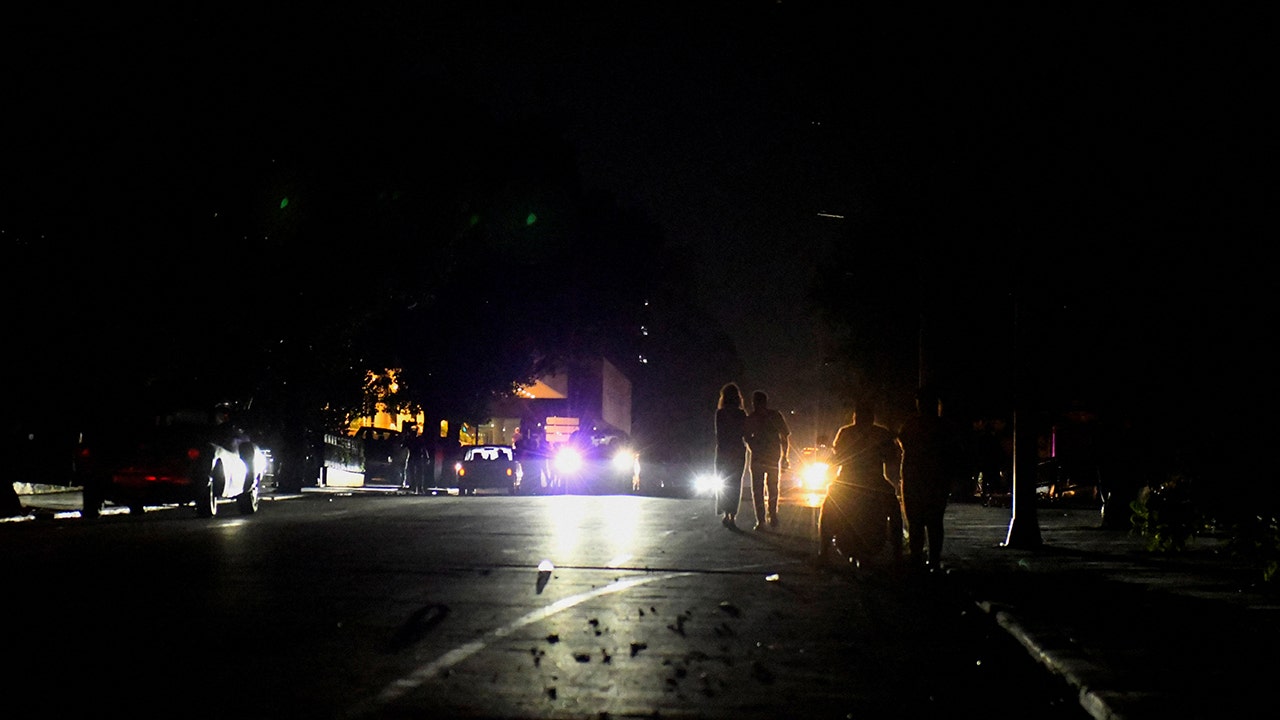
Cuba's power grid didn't just break; it's decomposing in real-time. If you've been following the news out of Havana or Holguín lately, you know the "alumbrones"—those brief moments when the lights actually stay on—are becoming rarer than a full grocery shelf. Mapping Cuba’s blackouts isn't just about drawing lines on a grid. It's about tracking the collapse of an entire national infrastructure that was built on borrowed time and Soviet subsidies that dried up decades ago.
The reality is grim. When the Antonio Guiteras plant—the island's largest thermoelectric facility—trips, the whole country goes dark. We aren't talking about a flickering bulb. We're talking about a total systemic failure that leaves millions without refrigeration, water pumps, or internet. It's a domino effect that starts with a rusted pipe in Matanzas and ends with a family in Santiago de Cuba cooking over charcoal in their backyard.
The Geography of Energy Despair
You can't understand the blackout crisis without looking at the map of the island’s aging thermoelectric plants. Most of these facilities are well past their thirty-year expiration date. They’re running on heavy, sulfur-rich Cuban crude oil that eats through the machinery like acid.
Havana usually gets preferential treatment. The government tries to keep the capital lit to prevent social unrest, but even that strategy is failing now. The provinces, meanwhile, bear the brunt of the "programación de apagones." In places like Pinar del Río or Guantánamo, twelve to eighteen hours of darkness a day is the new normal. It’s a geographic lottery where everyone loses, but some lose much faster than others.
The logic behind these scheduled cuts is simple but brutal. The Unión Eléctrica (UNE) looks at the projected deficit—often exceeding 1,000 megawatts during peak hours—and starts cutting circuits. They try to rotate them. They promise four hours on and eight hours off. But when a plant fails unexpectedly, the schedule goes out the window. You're left sitting in the heat, swatting mosquitoes, wondering if the power will come back before your milk spoils.
Why the Grid Keeps Failing
It's easy to blame the U.S. embargo, and the Cuban government certainly does at every opportunity. While sanctions definitely make it harder to buy spare parts or secure financing, the rot goes deeper. It's a story of chronic underinvestment and a stubborn refusal to modernize.
- Ancient Infrastructure: Most plants are 40 to 50 years old. They require constant maintenance that they simply don't get.
- Fuel Shortages: Venezuela used to ship massive amounts of oil to Cuba. Now, Venezuela is struggling with its own production, and Cuba has to hunt for tankers on the global market with zero cash.
- The Floating Power Plant Band-Aid: Cuba has rented Turkish "powerships"—huge barges that sit in the harbor and plug into the grid. It's an expensive, temporary fix that doesn't solve the underlying transmission problems.
If you look at the technical data from UNE, the "deficit" is the number to watch. On a bad day, the demand might be 3,300 MW while the system can only produce 2,000 MW. That 1,300 MW gap represents millions of people sitting in the dark. It’s a math problem with human consequences.
The Human Cost of a Dark Island
A blackout isn't just an inconvenience. It's a direct hit to the economy and public health. When the power goes, the water pumps stop. No electricity means no running water in high-rise apartments. It means surgeons in provincial hospitals working by the light of cell phones.
Small businesses—the "mipymes" that were supposed to save the Cuban economy—are getting crushed. How do you run a bakery if you don't know when the ovens will work? How do you run a cold storage facility when the compressor dies every six hours? The uncertainty is a silent killer for any kind of growth. People are exhausted. They're frustrated. And they're leaving. The record-breaking migration waves we've seen in the last two years are fueled by the lack of a future, and nothing says "no future" like a city in total darkness.
The Renewable Energy Pipe Dream
The government talks a big game about moving to 20% or even 30% renewable energy by 2030. Right now, they're at less than 5%. They've signed deals with Chinese firms to install massive solar parks across the island. It sounds great on paper.
But here’s the catch. Solar doesn't help at 8:00 PM when everyone turns on their fans and lights. Without massive battery storage—which is incredibly expensive—renewables can't stabilize a collapsing grid. The island needs a total overhaul of its base-load capacity. That means new plants, new transmission lines, and a massive influx of foreign capital that currently isn't coming.
How to Track the Situation
If you want to know what's actually happening on the ground, don't just read the state-run Granma. You have to look at the daily reports from the Unión Eléctrica on Facebook and Telegram. They post a morning "nota informativa" that breaks down which units are out of service and what the expected deficit will be.
Look for terms like "avería" (breakdown) and "mantenimiento" (maintenance). If you see multiple units in "mantenimiento" during the peak of summer or the dead of winter, it's a sign the system is on the verge of another total collapse. Also, watch the social media feeds from independent journalists in the provinces. They often report protests or "cacerolazos" (pot-banging protests) long before the official media acknowledges any tension.
Real Steps for Understanding the Crisis
Don't expect a quick fix. There is no magic switch to flip. If you're analyzing this or planning to visit, keep these points in mind.
First, check the daily deficit numbers. Anything over 1,000 MW means widespread, long-term blackouts across the entire island. Second, monitor the status of the Antonio Guiteras and Felton plants. If both are down, the country is in a state of emergency. Third, understand that the "energy crisis" is actually a "currency crisis." Without hard cash, Cuba can't buy the fuel or the parts needed to keep the lights on.
The map of Cuba's blackouts is a map of a nation's struggle to stay functional in the 21st century with mid-20th-century tools. It's a warning about what happens when infrastructure is treated as an afterthought for decades. For now, the best advice for anyone on the island is to keep the batteries charged and the charcoal ready. The dark isn't going away anytime soon.
Pay attention to the fuel tanker arrivals at the Port of Matanzas via maritime tracking sites. If the tankers stop coming, the grid stops spinning. It's that simple.