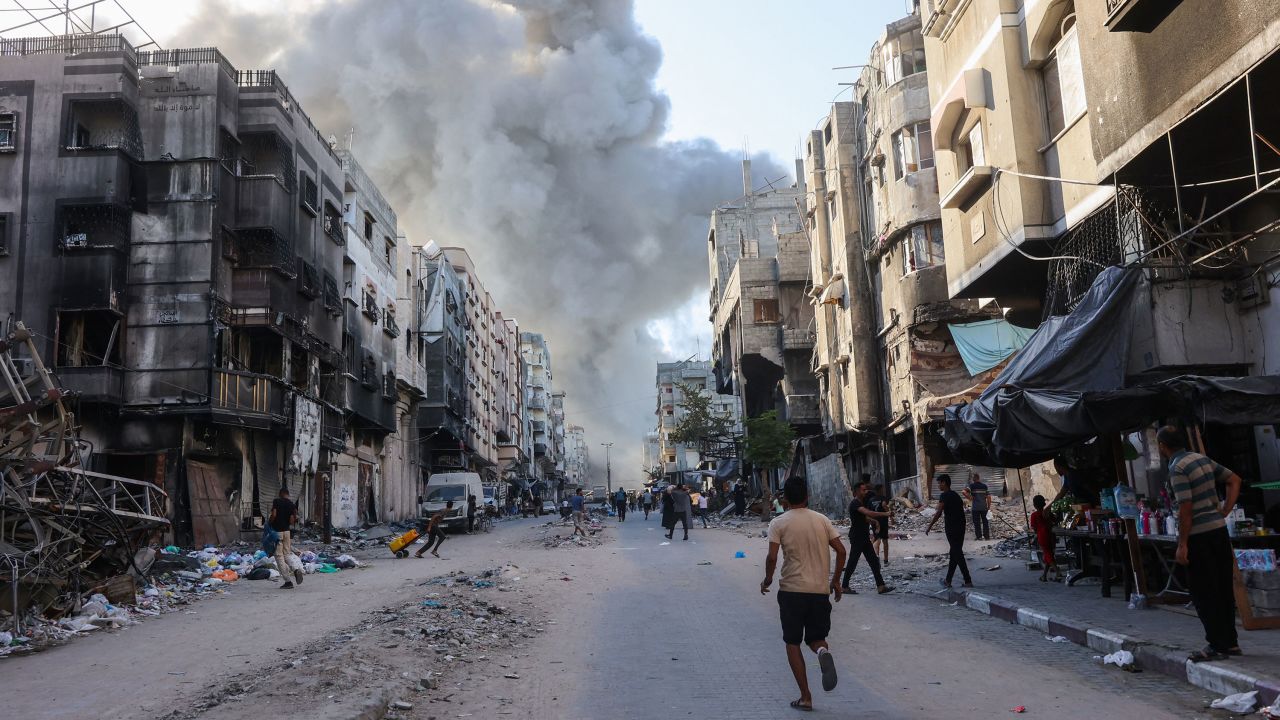
The death of a student inside a classroom is not merely a localized tragedy; it is the physical manifestation of a collapsed safety net. In Gaza, the line between a civilian refuge and a front line has been erased. This most recent incident, where an Israeli strike claimed the life of a young girl seated at her desk, underscores a grim reality that international law has failed to mitigate. While official reports often categorize these events as collateral damage or accidental strikes, the frequency of these incidents points to a systemic breakdown in the rules of engagement that are meant to protect educational institutions.
The Shrinking Perimeter of Safety
Schools were once considered the last "red lines" in urban warfare. Under the Geneva Conventions, these buildings are protected civilian objects, provided they are not being used for military purposes. However, the reality on the ground in the Gaza Strip has rendered this protection almost entirely theoretical. When a shell or a bullet enters a classroom, the immediate cause is often attributed to a tactical error or a response to nearby militant activity. Yet, from an investigative standpoint, the focus must shift to the escalation of force protocols that allow such strikes to be authorized in the first place.
The student killed in this latest incident was reportedly in a facility managed by the United Nations. These buildings are tagged with GPS coordinates shared directly with the Israeli Defense Forces (IDF) to prevent exactly this type of outcome. When a strike occurs despite these precautions, it suggests one of three things: a total failure of communication between intelligence and field units, a deliberate decision to prioritize a target over civilian lives, or a loosening of the "proportionality" standard that governs modern combat.
The Mechanics of an Urban Strike
Modern munitions are terrifyingly precise. When a drone or a tank targets a specific floor of a building, it is rarely a random act. The technology exists to hit a single window from miles away. This precision makes the "stray fire" argument difficult to swallow for those who track military hardware.
If the fire was directed, the investigative question is what intelligence prompted it. The IDF frequently maintains that Hamas uses schools for storage or as launch sites. While independent verification is difficult during active hostilities, the presence of a single militant near a school does not, under international law, automatically turn every child in that building into a legitimate target. The "proportionality" test requires that the military advantage gained must outweigh the harm to civilians. It is hard to find a military advantage significant enough to justify the death of a girl holding a notebook.
The Psychological Siege
Beyond the physical debris and the immediate loss of life, these strikes serve a broader, more insidious purpose. They dismantle the psychological concept of a safe space. For a child in Gaza, the school is the only remaining structure that offers a semblance of normalcy. When that space is breached, the trauma is not just individual; it is generational.
We are seeing the creation of a vacuum where education becomes impossible because the physical requirement for it—safety—no longer exists. This is not just about one school or one girl. It is about the systematic destruction of the civilian infrastructure required to sustain a society once the guns fall silent.
- Total School Closures: Almost every school in the Gaza Strip has been shuttered, repurposed as a shelter, or destroyed.
- The Shelter Paradox: Families flee to schools because they are "safe," but the concentration of thousands of people in a single building makes it a high-stakes target for any military operation.
- The Loss of Records: It isn't just the students dying; it is the records of their existence. Diplomas, transcripts, and history books are being buried under the same rubble.
Patterns of Accountability and Silence
History shows that these incidents rarely result in transparent investigations. Typically, a spokesperson will issue a statement promising a "review" of the event. These reviews are internal, conducted by the same military that authorized the strike, and the results are seldom made public unless there is overwhelming international pressure.
The lack of an independent, third-party investigative body on the ground means that the narrative is controlled by the combatants. Medics at the scene provide the "what"—the body count and the nature of the injuries—but they cannot provide the "why." Without access to the mission logs or the drone footage held by the IDF, the world is left with a series of "he said, she said" arguments while the body of a student is carried to a morgue.
The Problem with Proportionality
The concept of proportionality is the most abused term in the conflict. Military lawyers argue that if a high-value target is in the vicinity, the death of a civilian is a regrettable but legal byproduct. However, the definition of "high-value" has expanded significantly. In current urban warfare, a low-level operative with a radio might be deemed enough of a threat to justify a strike on a populated area. This sliding scale of value is what leads to the death of children in classrooms.
We must ask: at what point does the "collateral damage" become the primary feature of the war rather than an accidental byproduct? When the number of students killed exceeds the number of confirmed high-value targets eliminated in those specific zones, the math of war is no longer about defense. It becomes about the total erosion of civilian life.
The Educational Infrastructure as a Battlefield
The destruction of schools in Gaza is not an isolated phenomenon. It follows a pattern of "scholasticide," where the intellectual and educational foundations of a people are targeted to ensure that even if they survive the war, they have no path toward rebuilding. This isn't just about the bricks and mortar. It is about the teachers who are killed, the professors who are displaced, and the students who are now more familiar with the sound of an incoming shell than the sound of a school bell.
When we analyze the "Israeli fire" mentioned in the competitor's reports, we must look at the caliber of the munitions used. If a tank shell was used in a crowded urban neighborhood, the outcome was predictable. Tanks are direct-fire weapons designed for the open battlefield, not for sniping "terrorists" out of crowded schoolrooms. Using them in this capacity is a choice that accepts civilian death as a guaranteed outcome.
Weaponizing the Narrative
There is a secondary battle taking place in the aftermath of every strike: the battle for the "truth." Pro-Israel analysts will point to videos of rockets being fired from civilian areas. Pro-Palestinian advocates will point to the shredded remains of textbooks. Both can be true at the same time, but they do not cancel each other out. The presence of an enemy does not absolve a professional military of its duty to protect the innocent.
The failure of the international community to enforce the sanctity of UN-flagged schools has given a green light to this behavior. If there are no consequences for hitting a school, then schools will continue to be hit. It is a simple, brutal logic.
The Logistics of Displacement
The girl who died was likely one of the hundreds of thousands who had been displaced multiple times. In Gaza, "fleeing to safety" is a cruel joke. You move from a house that is about to be bombed to a school that is eventually bombed. You move from the north to the south, only to find the south is the new front line.
This constant movement creates a state of permanent vulnerability. People are living in hallways, using desks as beds, and trying to maintain a shred of dignity in a situation designed to strip it away. When a strike hits, it doesn't just hit a student; it hits a family that thought they had finally found a corner of the world where they wouldn't die.
The Role of International Oversight
The United Nations Relief and Works Agency (UNRWA) has repeatedly called for an end to the targeting of its facilities. Their pleas are mostly ignored. The agency itself has been under intense political fire, which has conveniently served to distract from the physical fire being directed at its buildings. By delegitimizing the organization that runs the schools, the attackers find it easier to justify the "accidental" destruction of the schools themselves.
It is a strategy of attrition. If you cannot stop the education, you stop the educator. If you cannot find the combatant, you fire at the building where you think he might be, regardless of who else is inside. This isn't high-level strategy; it is the abandonment of the most basic principles of human civilization.
The Finality of the Incident
The medics who arrived at the scene reported a "girl student" dead. They didn't list her dreams, her favorite subject, or the fact that she was likely trying to finish an assignment in the middle of a nightmare. She becomes a statistic in a report, a data point for an analyst, and a talking point for a politician.
The immediate action required is not another internal military review. It is the immediate and unconditional implementation of a "no-fire" zone around all educational and medical facilities, backed by international monitors with the power to impose sanctions. Anything less is just waiting for the next headline about another dead child in another ruined classroom. The world watches, the reports are filed, and the desks continue to be stained with the blood of those who only wanted to learn.
Every time a classroom becomes a tomb, the prospect of a peaceful future for both sides of this border retreats further into the distance. You cannot build a neighbor out of a child whose classmates were killed beside her. Stop looking for excuses in the fog of war and start looking at the trajectory of the bullets. They are hitting the target they were meant to hit: the future of a people.