On the island of Ishigaki, the wind carries the scent of salt and crushed hibiscus. For centuries, the rhythm here was dictated by the tides and the seasonal migration of birds. Now, a new sound cuts through the Pacific breeze: the low, industrial hum of construction. Massive trucks grind gears against the steep volcanic slopes, hauling the weight of a nation’s anxiety. Japan is planting something in this soil, and it isn’t sugar cane.
To understand why a quiet island closer to Taiwan than to Tokyo is suddenly bristling with missile launchers, you have to look past the steel and the radar domes. You have to look at the map through the eyes of a strategist who sees the ocean not as a bridge, but as a chessboard where the squares are shrinking. For a more detailed analysis into this area, we recommend: this related article.
The Geography of Fear
For decades, Japan’s military posture was a quiet thing, tucked away behind a constitution that renounced war. The Self-Defense Forces were a shield, never a sword. But shields can become brittle if the blows they are expected to catch grow too heavy. To the west, China’s naval reach has expanded with a speed that defies historical precedent. North Korea’s missile tests have turned the Sea of Japan into a splash zone for experimental ballistics.
The strategy has shifted. Tokyo is no longer content to wait for a threat to reach its main islands. They are pushing the line of defense out to the "First Island Chain." This is a string of emerald specks in the Philippine Sea that forms a natural barrier between the Chinese mainland and the open blue of the Pacific. To get more background on this issue, detailed reporting can be read on Reuters.
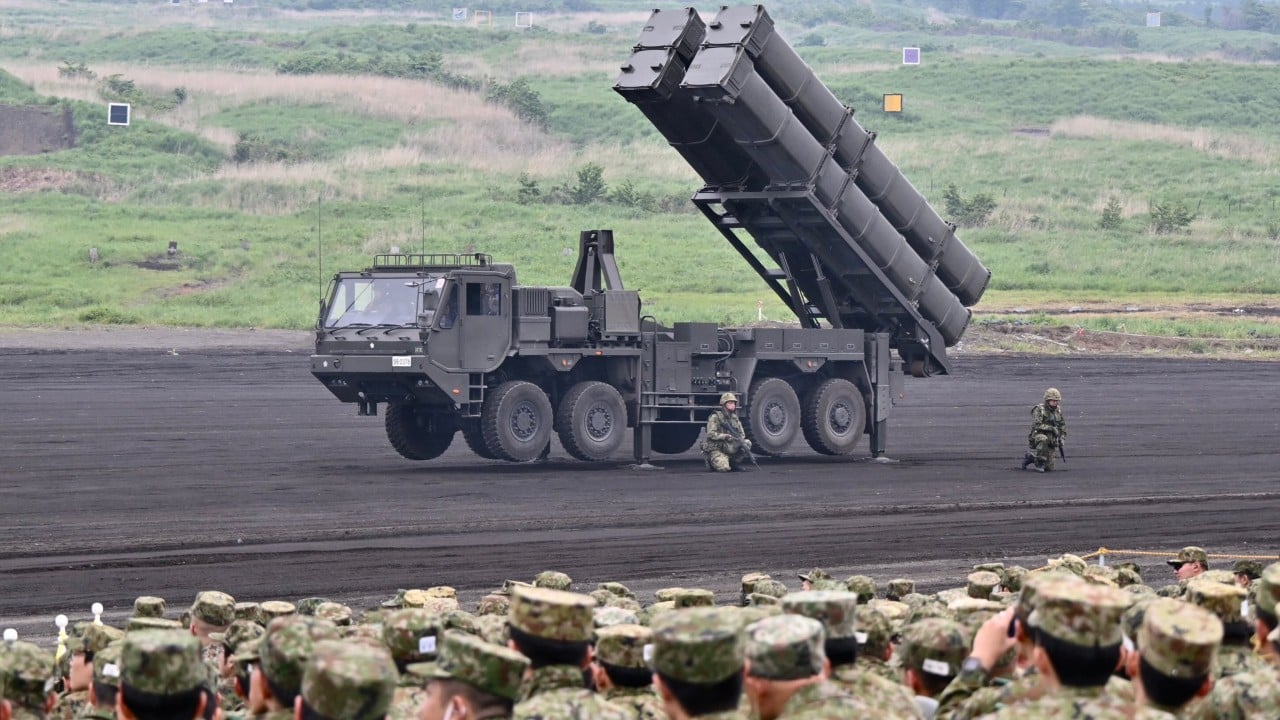
Ishigaki is one of the most vital links in this chain. If you stand on its western shore on a clear day, you are looking toward a horizon where the geopolitical stakes are highest. By placing Type-12 surface-to-ship missiles and modern interceptors on these remote outposts, Japan is effectively slamming a gate. It is a message written in high-grade explosives: the passage is no longer free.
A Farmer and a Battery
Consider a man we will call Kenji. He has farmed pineapples on the northern skirts of Ishigaki for forty years. His concerns used to be limited to the price of fruit in Osaka and the strength of the next typhoon. Now, he looks out his window and sees the olive-drab silhouettes of mobile launch vehicles.
For Kenji, the "defense of the liberal international order" is a vague, academic phrase. For him, the reality is a battery of missiles parked within earshot of his fields. He represents the friction at the heart of Japan’s rearmament. While the government in Tokyo speaks of deterrence and national survival, the people living on the front line see themselves as targets. They remember the history of the Second World War, where the presence of a military often meant the arrival of destruction.
This is the invisible cost of security. To protect the whole, you must place the parts in harm's way. Japan is spending billions of yen to upgrade these remote bases, not because it wants a fight, but because it is terrified of being unprepared for one. The "remote island defense" plan is a desperate attempt to create a "stand-off" capability—the ability to strike an enemy fleet before it can even see the Japanese coastline.
The Tech of the Trench
The hardware arriving on these islands is a marvel of modern engineering, though its purpose is grim. The Type-12 missile, once a short-range coastal defense tool, is being "upgraded." In technical terms, this means its range is being stretched from 200 kilometers to over 1,000 kilometers.
This isn't just a tweak; it’s a transformation. It allows Japan to strike targets deep within the East China Sea. When combined with the purchase of American-made Tomahawk cruise missiles, the message becomes even louder. Japan is gaining "counterstrike" capabilities. If an adversary prepares an attack, Japan now has the reach to hit the "archers" rather than just trying to catch the "arrows."
The logistics of this are a nightmare. Transporting sensitive electronics and volatile fuels to islands with limited infrastructure requires a constant stream of military transport ships. The islands are being wired with subterranean fiber optics and hardened command centers designed to survive a first strike. It is a slow, methodical turning of a vacation paradise into a fortress.
The Silence of the Pacific
There is a specific kind of silence that falls over a place when it is waiting for something to happen. It is the silence of a coiled spring.
The international community watches these developments with a mixture of relief and apprehension. To the United States, a stronger Japanese presence in the Ryukyu Islands is a force multiplier. It lightens the load on the U.S. Navy and creates a more formidable wall against any potential move toward Taiwan. To Beijing, it is an act of encirclement, a provocation that justifies further military expansion of their own.
But for the sailor on a Japanese destroyer or the technician monitoring a radar screen on Ishigaki, the politics are secondary to the shift. They are the ones who will be the first to know if the deterrence fails. They live in the gap between "defensive posture" and "active conflict."
The Shadow on the Water
The stakes are not merely about territory or sea lanes. They are about the soul of a nation that has spent seventy years trying to forget what it feels like to be a military power. The sight of missiles on a tropical beach is a jarring reminder that history is not a straight line toward peace. Sometimes, it circles back to the same rugged coastlines and the same strategic bottlenecks.
Japan’s defense goals are no longer about staying out of trouble. They are about making trouble too expensive for anyone else to start. It is a gamble played with high-tech sensors and long-range fire, set against a backdrop of turquoise water and white sand.
As the sun sets over the East China Sea, the shadow of a missile launcher grows long, stretching across the dirt roads and the pineapple fields. It reaches toward the sea, a finger of steel pointing toward an uncertain future. The trucks eventually stop their grumbling, and the island returns to its quiet. But it is a different kind of quiet now. It is the heavy, expectant stillness of a shield being raised, held steady by a hand that hopes it never has to strike.
The hibiscus still blooms, but the island has forgotten how to be small. It is now as large as the conflict it seeks to prevent, a tiny speck of rock carrying the weight of an empire’s survival on its shoulders.